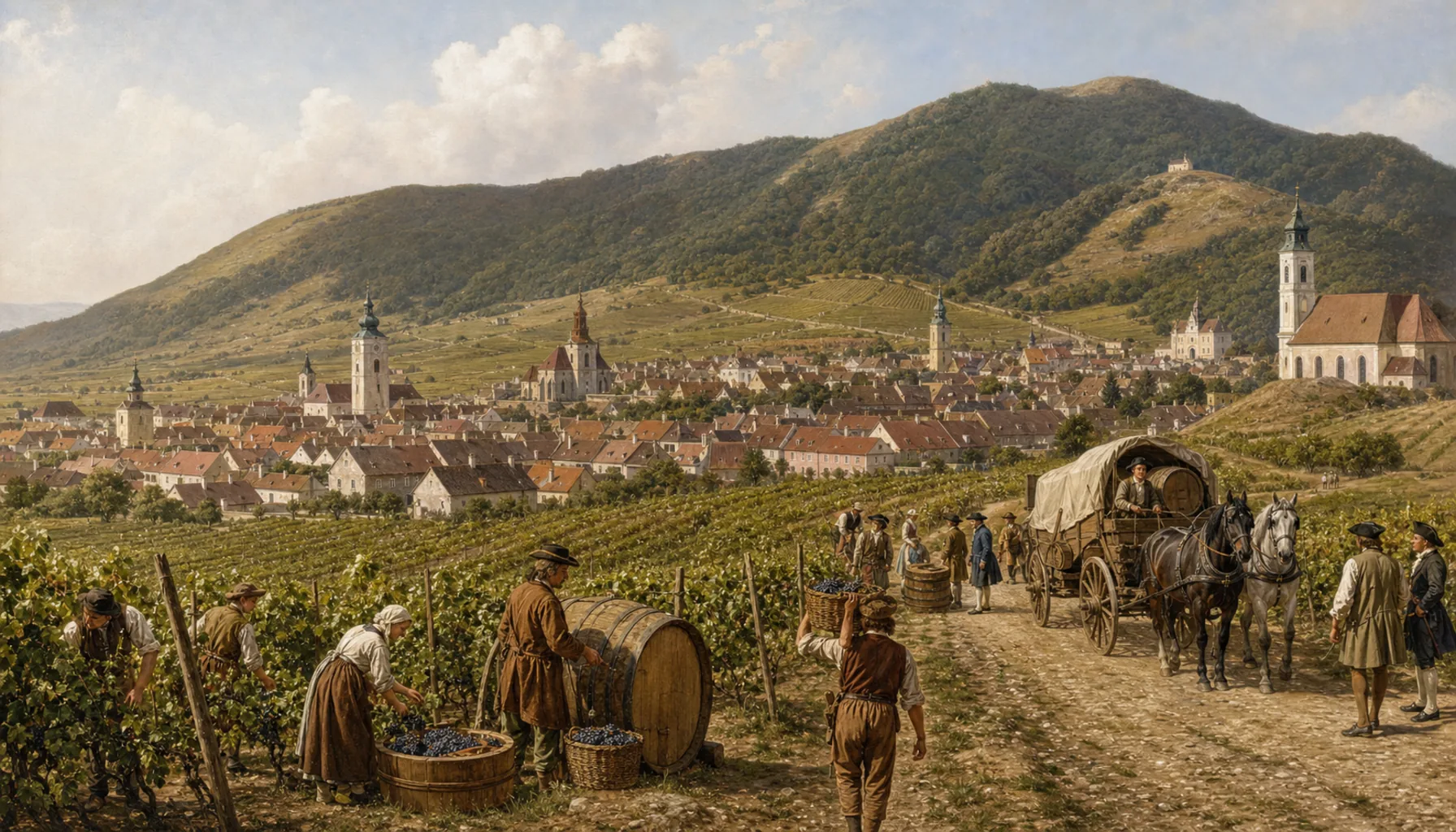
The seventeenth and eighteenth centuries were Modra's richest, and the reason was in the ground: the whole southern edge of the town was vineyard, and wine from under the Little Carpathians sold. A free royal town collected its own taxes, ran its own court and decided who was allowed to trade inside its walls, while the crafts were run by guilds — trade associations that set prices, trained apprentices and kept outsiders out. The town was split fairly evenly between Lutherans and Catholics, in a kingdom whose Habsburg rulers were pressing hard to bring everyone back to the Catholic church. That is why Modra has two large churches on one street instead of one, and both are still standing.Sedemnáste a osemnáste storočie boli pre Modru najbohatšie a dôvod bol v pôde: celý južný okraj mesta tvorili vinice a víno spod Malých Karpát sa predávalo. Slobodné kráľovské mesto si vyberalo vlastné dane, súdilo si vlastných ľudí a rozhodovalo, kto smie vnútri hradieb obchodovať, a remeslá držali v rukách cechy — združenia, ktoré určovali ceny, vychovávali učňov a cudzích k slovu nepustili. Mesto bolo pomerne rovnomerne rozdelené medzi evanjelikov a katolíkov, a to v kráľovstve, ktorého habsburskí panovníci tvrdo tlačili na návrat ku katolíckej cirkvi. Preto má Modra na jednej ulici dva veľké kostoly namiesto jedného a oba tam stoja dodnes.