Bratislava region · TownsBratislavský kraj · Mestá
ModraModra
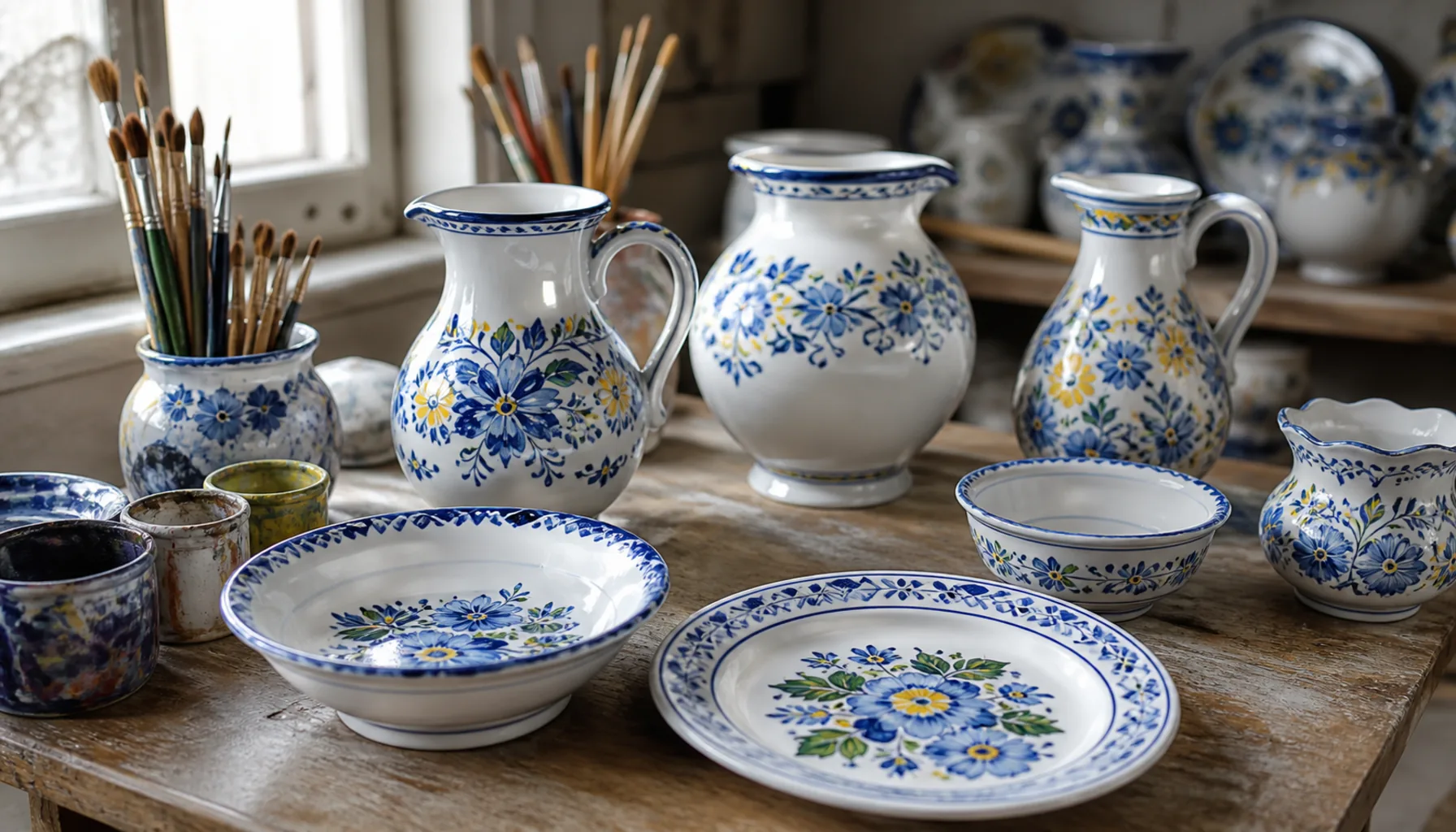
The far end of the wine road, and the only town on it that fires pottery: Modra has hand-painted its yellow-and-blue majolika for well over a century. Ľudovít Štúr spent his last years here and is buried in the town.Vzdialenejší koniec vínnej cesty a jediné mesto na nej, ktoré páli keramiku: Modra maľuje svoju žlto-modrú majoliku už vyše storočia. Ľudovít Štúr tu prežil posledné roky a je tu aj pochovaný.
Freshly painted Modra majolika drying in a pottery workshopČerstvo maľovaná modranská majolika schnúca v keramickej dielni
Where it standsKde leží
Modra lies under the Little Carpathians about 30 kilometres north-east of Bratislava, the last of the three wine towns along the foot of the hills. Behind it the slope rises steeply to the main ridge; the wooded settlements of Harmónia and Piesok, a couple of kilometres up the hill, belong to the town.Modra leží pod Malými Karpatmi asi 30 kilometrov severovýchodne od Bratislavy, ako posledné z trojice vinohradníckych miest na úpätí kopcov. Za ňou svah prudko stúpa k hlavnému hrebeňu; k mestu patria aj lesné osady Harmónia a Piesok pár kilometrov vyššie.
The vineyards run along the whole southern edge of the town, and the country lane eastwards leads within a few kilometres to Červený Kameň, the great artillery castle above Častá.Vinice sa tiahnu po celom južnom okraji mesta a poľná cesta na východ dovedie po pár kilometroch k Červenému Kameňu, veľkej delovej pevnosti nad Častou.
The storyHistória
The town appears in the records in the thirteenth century and grew, like its neighbours, on wine. In the sixteenth century, with Ottoman raiding parties reaching this far, it was allowed to wall itself; a stretch of that wall and one of its gates still stand. In 1607 Modra was raised to a free royal town, forty years ahead of Pezinok and Svätý Jur.Mesto sa v písomnostiach objavuje v 13. storočí a rástlo, tak ako susedia, na víne. V 16. storočí, keď sem dosahovali osmanské výpady, dostalo povolenie opevniť sa; kus tohto múru a jedna z brán stoja dodnes. V roku 1607 sa Modra stala slobodným kráľovským mestom, o štyridsať rokov skôr ako Pezinok a Svätý Jur.
Pottery arrived from a different direction. Anabaptist refugees — the Habans — brought tin-glazed faience to western Slovakia in the sixteenth and seventeenth centuries, and the tradition survived in the villages long enough for Modra to build a trade on it. A ceramics school opened in the town in the 1880s and a manufactory grew out of it; the yellow, blue and green floral pattern on white glaze has been the town's signature ever since.Keramika prišla z inej strany. Novokrstenskí utečenci — habáni — priniesli v 16. a 17. storočí na západné Slovensko cínovo glazovanú fajansu a tradícia sa v dedinách udržala dosť dlho na to, aby na nej Modra postavila remeslo. V 80. rokoch 19. storočia tu vznikla keramická škola a z nej manufaktúra; žlto-modro-zelený kvetinový vzor na bielej glazúre je odvtedy vizitkou mesta.
Ľudovít Štúr, the codifier of literary Slovak and leader of the national revival, moved to Modra in the early 1850s to raise his late brother Karol's orphaned children, living under police supervision after the failed revolution. He was injured in a hunting accident and died in the town in January 1856.Ľudovít Štúr, kodifikátor spisovnej slovenčiny a vodca národného obrodenia, sa začiatkom 50. rokov 19. storočia presťahoval do Modry, aby vychoval osirelé deti svojho zosnulého brata Karola; žil tu pod policajným dozorom po neúspešnej revolúcii. Zranil sa pri poľovačke a v januári 1856 v meste zomrel.
What to seeČo vidieť
The Ľudovít Štúr Museum, part of the Slovak National Museum, holds his papers and possessions and tells the story of the revival generation; his grave in the town cemetery is a place of national pilgrimage on the anniversaries. Between the two, the town has a claim on Slovak history that its size would not suggest.Múzeum Ľudovíta Štúra, súčasť Slovenského národného múzea, uchováva jeho písomnosti a osobné veci a rozpráva príbeh obrodeneckej generácie; jeho hrob na mestskom cintoríne je v dňoch výročí miestom národných pútí. Mesto tak má na slovenských dejinách podiel, aký by sa podľa jeho veľkosti nečakal.
The old town is a single long street: the surviving town gate, the burgher houses, the Catholic parish church and the large Lutheran church that records how evenly the town was once divided between the two confessions. Ceramic workshops and shops along the same street sell majolika made in the town.Staré mesto je jedna dlhá ulica: zachovaná mestská brána, meštianske domy, katolícky farský kostol a veľký evanjelický kostol, ktorý pripomína, ako rovnomerne bolo mesto kedysi rozdelené medzi dve konfesie. Keramické dielne a predajne na tej istej ulici ponúkajú majoliku vyrobenú v meste.
Above the town the road climbs to Harmónia and Zochova chata, the old chalet that is the usual starting point for walks on this part of the ridge; the lookout tower on Veľká homoľa, an hour or so up through the beeches, gives the view back over the vineyards to the plain.Nad mestom stúpa cesta k Harmónii a Zochovej chate, starej chate, ktorá býva východiskom vychádzok po tejto časti hrebeňa; rozhľadňa na Veľkej homoli, asi hodinu chôdze hore cez bučiny, ponúka pohľad späť cez vinice na rovinu.
Work and industryPráca a priemysel
Wine and ceramics are both still made here. The majolika workshops fire and hand-paint in the town, though the trade has been through hard years and is smaller than it was, and Modra has trained winemakers for generations at its viticultural school. Around them are small manufacturing, forestry on the slopes above, and tourism.Víno aj keramika sa tu stále vyrábajú. Majolikové dielne v meste pália a ručne maľujú, hoci remeslo má za sebou ťažké roky a je menšie než kedysi, a Modra vychováva vinárov už generácie na svojej vinárskej škole. Okolo toho stojí drobná výroba, lesníctvo na svahoch nad mestom a cestovný ruch.
As everywhere along this foot of the hills, a large part of the working population commutes to Bratislava.Ako všade na tomto úpätí, veľká časť pracujúcich dochádza do Bratislavy.
Getting thereAko sa tam dostať
Modra has no railway of its own: buses from Bratislava and from Pezinok are the way in, and the nearest stations are at Pezinok and Šenkvice. By car it is the end of the wine road from Svätý Jur and Pezinok, or a climb over the Baba saddle from the Záhorie side.Modra nemá vlastnú železnicu: prichádza sa sem autobusmi z Bratislavy a z Pezinka, najbližšie stanice sú v Pezinku a v Šenkviciach. Autom je koncom vínnej cesty zo Svätého Jura a Pezinka, prípadne sa sem dá prísť cez sedlo Baba zo záhorskej strany.
Explore ModraObjavujte Modra
Every part of this place with a page of its own.Každá časť tohto miesta, ktorá má vlastnú stránku.