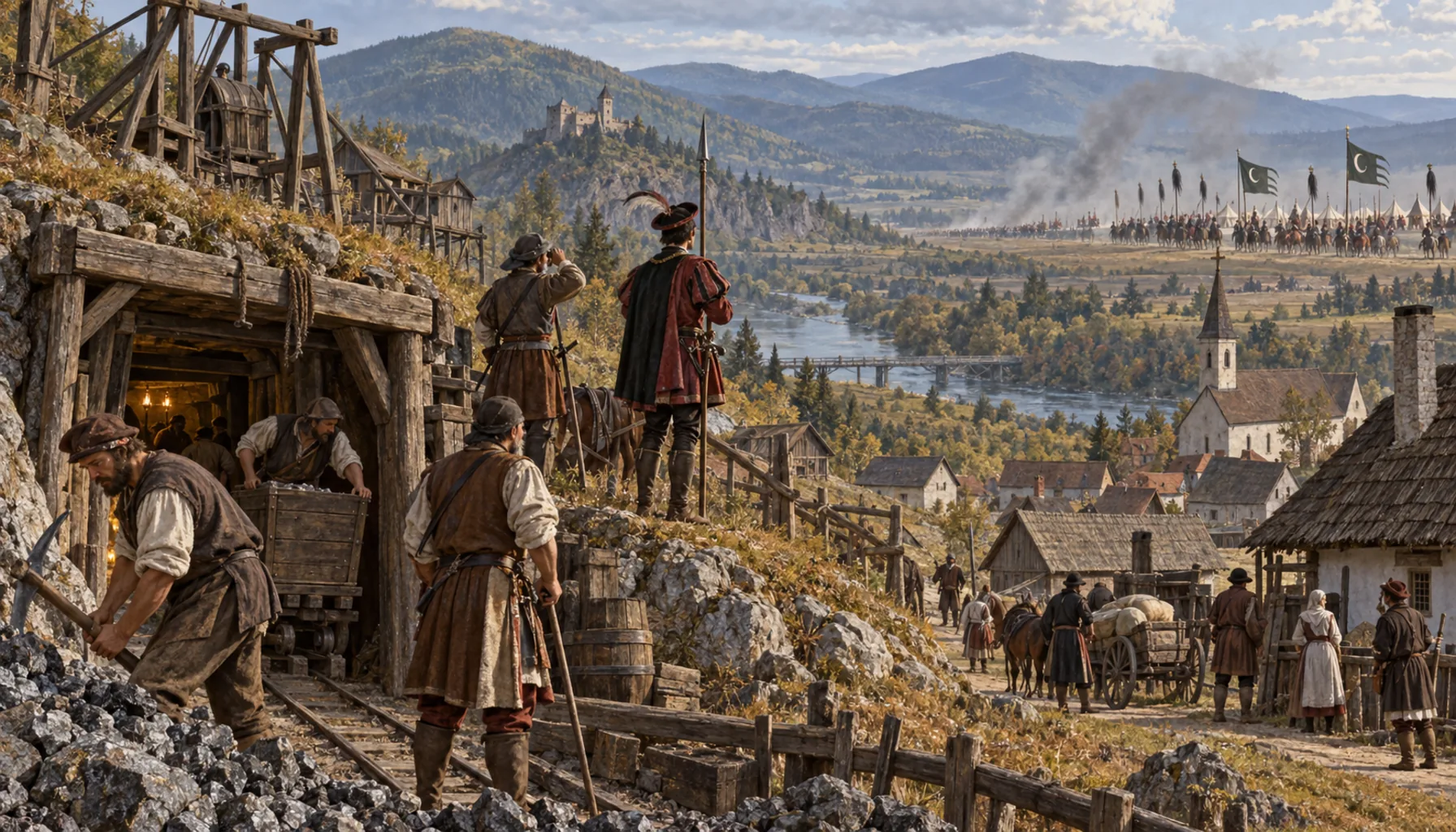
After Mohács in 1526 the kingdom split, and within a generation the Ottoman frontier lay a day's ride south of the Štiavnica hills. That mattered here because of what passed through: Kremnica's gold and Banská Štiavnica's silver were the Habsburg treasury's single most valuable asset, and Svätý Kríž sat on the road between the two. The seventeenth century here was raids, requisitions and plague, and the town's own tradition remembers a long siege. Written detail is thin — which is itself normal for a small town in a war zone.Po Moháči v roku 1526 sa krajina rozpadla a v priebehu jednej generácie ležala osmanská hranica deň jazdy južne od Štiavnických vrchov. Tu to bolo dôležité pre to, čo tadiaľto prechádzalo: kremnické zlato a štiavnické striebro boli najcennejším majetkom habsburskej pokladnice a Svätý Kríž ležal na ceste medzi nimi. Sedemnáste storočie tu znamenalo vpády, rekvirovanie a mor a mestská tradícia si pamätá dlhé obliehanie. Písomných podrobností je málo — čo je pri malom meste vo vojnovom pásme celkom bežné.