Banská Bystrica region · TownsBanskobystrický kraj · Mestá
Žiar nad HronomŽiar nad Hronom
A bishops' summer seat that became an aluminium town in the 1950s and was renamed for it — the smelter's primary line is cold now, the casthouse still runs, and the manor house and its park survive in the middle of a post-war town.Letné sídlo biskupov, z ktorého sa v päťdesiatych rokoch stalo hliníkové mesto a podľa toho ho aj premenovali — primárna výroba v hlinikárni je dnes odstavená, zlieváreň beží ďalej a kaštieľ s parkom prežil uprostred povojnového mesta.
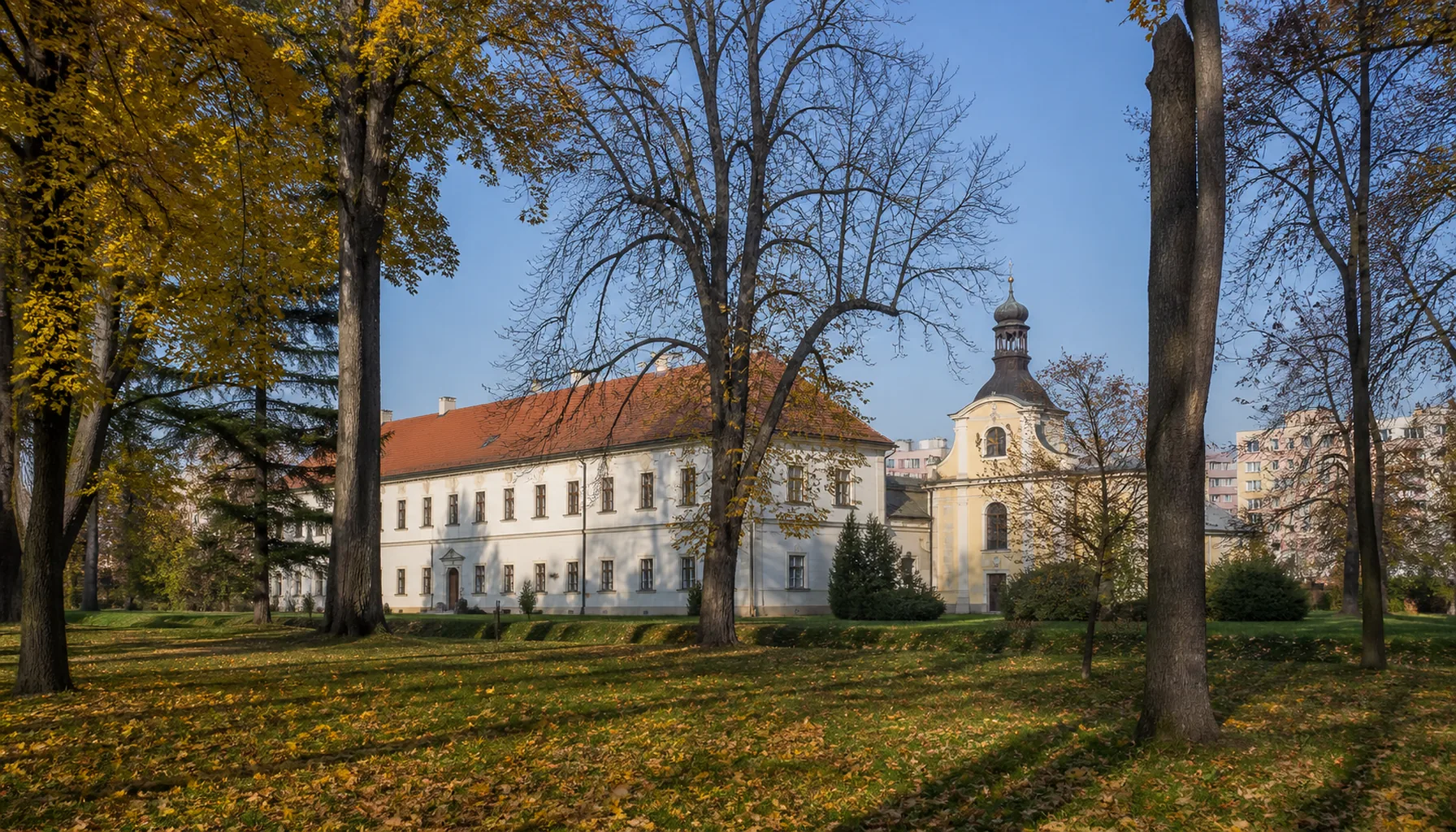
The former bishops' manor house at Žiar nad Hronom, in its park at the centre of the modern townBývalý biskupský kaštieľ v Žiari nad Hronom, v parku uprostred moderného mesta
Where it standsKde leží
Žiar nad Hronom sits in a wide basin on the Hron between the Kremnica Mountains to the north and the Štiavnica Hills to the south, roughly forty kilometres west of Zvolen. The basin is open and flat by the standards of central Slovakia, which is why an industrial plant of this size could be put here at all.Žiar nad Hronom leží v širokej kotline na Hrone medzi Kremnickými vrchmi na severe a Štiavnickými vrchmi na juhu, zhruba štyridsať kilometrov západne od Zvolena. Kotlina je na stredoslovenské pomery otvorená a rovinatá — práve preto sa sem vôbec dal umiestniť závod takej veľkosti.
The town is the natural road junction for Kremnica to the north and Banská Štiavnica to the south, and both are within half an hour.Mesto je prirodzenou cestnou križovatkou pre Kremnicu na severe a Banskú Štiavnicu na juhu — do oboch je to pol hodiny.
The storyHistória
Until 1955 the town was called Svätý Kríž nad Hronom, Holy Cross on the Hron. It was a small market place on the river whose one distinction was the manor house that the bishops of Banská Bystrica used as their summer residence, with a park around it.Do roku 1955 sa mesto volalo Svätý Kríž nad Hronom. Bolo to malé trhové miesto pri rieke, ktorého jedinou zvláštnosťou bol kaštieľ, ktorý banskobystrickí biskupi používali ako letné sídlo, a park okolo neho.
In the early 1950s the state built an aluminium smelter on the edge of it. Housing, schools and a whole new street plan followed the plant, the population multiplied, and in 1955 the town took the name it has now. Almost everything visible today was built after that decision.Začiatkom päťdesiatych rokov postavil štát na jeho okraji hlinikáreň. Za závodom prišli sídliská, školy a celý nový uličný plán, počet obyvateľov sa znásobil a v roku 1955 dostalo mesto dnešný názov. Takmer všetko, čo tu dnes vidno, vzniklo po tomto rozhodnutí.
The smelter also left the town an environmental record it spent decades repairing: the original technology damaged the forests and the farmland of the basin, it was replaced in the 1990s, and the air and soil here have been recovering since.Hlinikáreň zanechala mestu aj environmentálnu záťaž, ktorú desaťročia naprávalo: pôvodná technológia poškodzovala lesy a poľnohospodársku pôdu v kotline, v deväťdesiatych rokoch ju nahradili a vzduch aj pôda sa odvtedy zotavujú.
What to seeČo vidieť
The manor house and its park are the town's historic core — a Baroque residence, later remodelled, with a chapel and mature grounds that the modern town grew around rather than over. It is used for cultural events and exhibitions.Kaštieľ a jeho park sú historickým jadrom mesta — baroková, neskôr prestavaná rezidencia s kaplnkou a starým parkom, okolo ktorého moderné mesto vyrástlo, no neprerástlo ho. Slúži na kultúrne podujatia a výstavy.
Otherwise the interest is just outside the town. Šášov Castle, a substantial ruin on a rock above the Hron a few kilometres to the south-east, is a short climb up from the village below it and is being consolidated by volunteers. Kremnica is twenty minutes north, Banská Štiavnica about the same to the south, and the marked cycle route along the Hron passes through.Inak je zaujímavé okolie. Šášovský hrad, výrazná zrúcanina na skale nad Hronom pár kilometrov na juhovýchod, je z obce pod ním na krátky výstup a dobrovoľníci ho postupne konzervujú. Kremnica je dvadsať minút na sever, Banská Štiavnica približne rovnako na juh a mestom prechádza značená cyklotrasa popri Hrone.
Work and industryPráca a priemysel
Aluminium is still the town's business, but not in the way it was. The smelter's primary electrolysis was shut down over electricity prices, the last cells going cold in January 2023; the casthouse continues as a recycling and remelting operation, and a memorandum agreed with the government in 2025 sets out a plan — no more than a plan — to restart primary production in 2027.Hliník je stále biznisom mesta, no nie tak ako kedysi. Primárnu elektrolýzu v hlinikárni pre ceny elektriny odstavili, posledné pece dohasli v januári 2023; zlieváreň pokračuje ako recyklačná a pretavovacia prevádzka a memorandum s vládou z roku 2025 načrtáva plán — nič viac než plán — na reštart primárnej výroby v roku 2027.
An industrial park has grown up around the works over the last quarter-century, with aluminium foundries and automotive component plants that use the metal and the skills the smelter created. Between them they keep Žiar one of the more industrial towns of central Slovakia.Okolo závodu vyrástol za posledné štvrťstoročie priemyselný park so zlievarňami hliníka a výrobcami komponentov pre automobilový priemysel, ktoré využívajú kov aj zručnosti, čo hlinikáreň vytvorila. Spolu udržiavajú Žiar medzi priemyselnejšími mestami stredného Slovenska.
Getting thereAko sa tam dostať
The railway along the Hron between Zvolen and the lowland runs through the town, and the R1 expressway from Bratislava and Nitra to Banská Bystrica passes it — the fastest approach by car. Buses run north to Kremnica and south to Banská Štiavnica.Mestom prechádza železnica popri Hrone medzi Zvolenom a nížinou a míňa ho rýchlostná cesta R1 z Bratislavy a Nitry do Banskej Bystrice — autom najrýchlejší príchod. Autobusy premávajú na sever do Kremnice a na juh do Banskej Štiavnice.
Explore Žiar nad HronomObjavujte Žiar nad Hronom
Every part of this place with a page of its own.Každá časť tohto miesta, ktorá má vlastnú stránku.