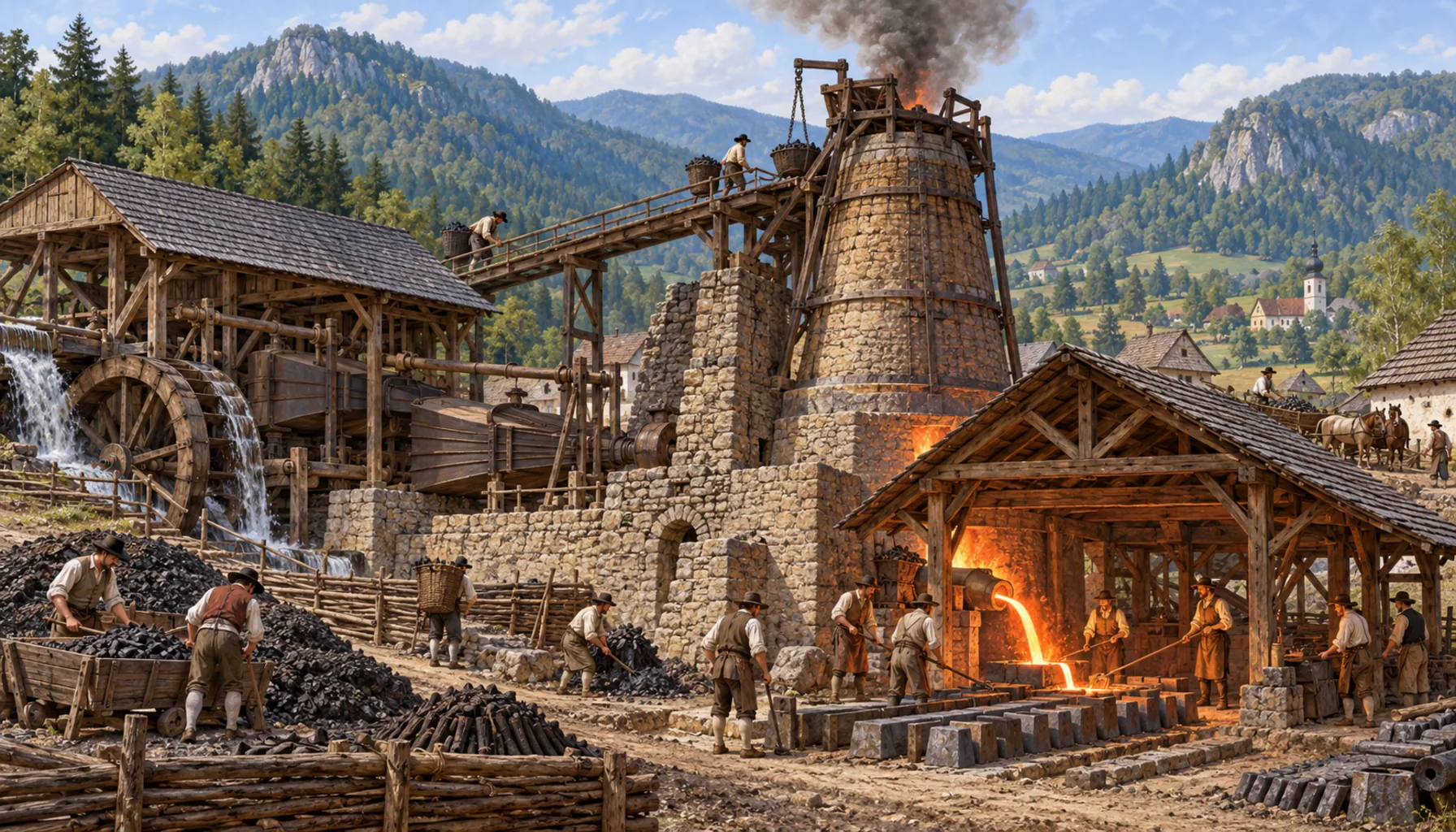
A blast furnace was built at Tisovec in 1783, and within about fifty years it was being described as the largest producer of pig iron in the Kingdom of Hungary. That is what the phrase 'iron town' actually means here: ore hauled down from the Ore Mountains, whole forests turned into charcoal, and a settlement whose working population existed to keep one fire alight. The forests were also the limit, because a charcoal furnace eats woodland faster than woodland grows, and the nineteenth-century switch to coke is what eventually moved the industry down the valley. Tisovec's own furnaces nevertheless ran on into the twentieth century.Roku 1783 postavili v Tisovci vysokú pec a asi po päťdesiatich rokoch ju opisovali ako najväčšieho producenta surového železa v Uhorsku. Presne to tu znamená označenie železiarske mesto: ruda zvážaná z Rudohoria, celé lesy premenené na drevené uhlie a osada, ktorej práceschopní obyvatelia boli od toho, aby jeden oheň nezhasol. Lesy boli zároveň limitom, lebo drevouhoľná pec zožerie les rýchlejšie, než les dorastie, a prechod na koks v devätnástom storočí napokon presunul priemysel nižšie do doliny. Tisovské pece však bežali ešte v dvadsiatom storočí.