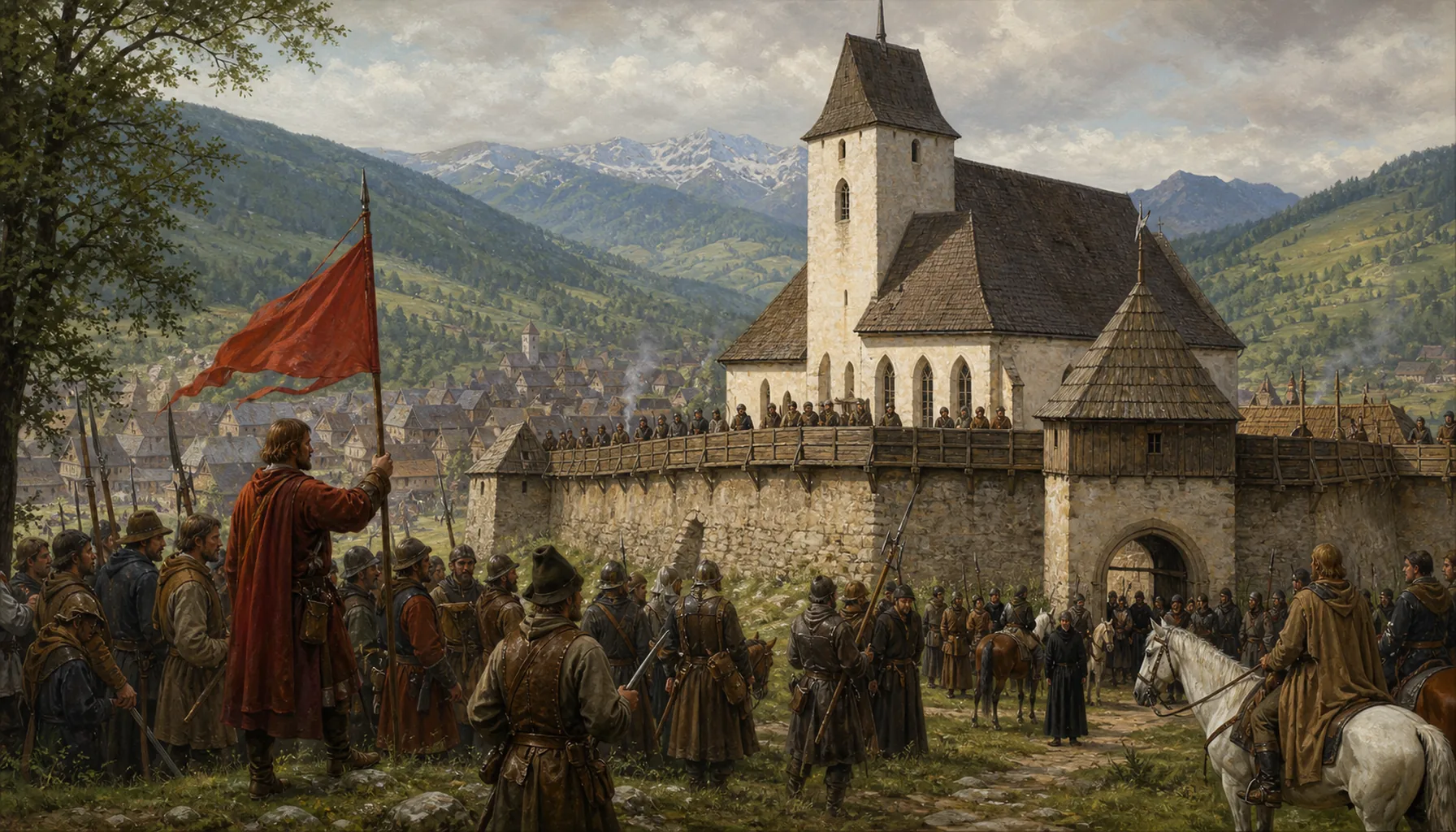
The fifteenth century is when the town changed language. Under the pressure of the Hussite wars a number of the wealthy German families left after 1431, and over the century Ružomberok became a Slovak-speaking town. The danger did not end with the Hussites: bands known as the bratríci, the brethren — unpaid soldiers left over from the wars of Ján Jiskra — moved through the north, and around 1445 the townspeople fortified their own parish church, which is what people did when there was no room for them in a castle. Likava itself was held by Peter Komorovský, a magnate whose men treated Liptov and Orava as their own to plunder, until King Matthias Corvinus took the castle back into royal hands.V pätnástom storočí zmenilo mesto jazyk. Pod tlakom husitských vojen po roku 1431 odišlo viacero bohatých nemeckých rodín a Ružomberok sa v priebehu storočia stal slovenským mestom. Nebezpečenstvo sa husitmi neskončilo: severom sa pohybovali skupiny bratríkov — nevyplatených vojakov, čo zostali po vojnách Jána Jiskru — a okolo roku 1445 si mešťania opevnili vlastný farský kostol. Presne tak sa zachovali ľudia, pre ktorých sa na hrade nenašlo miesto. Samotnú Likavu držal Peter Komorovský, veľmož, ktorého ľudia sa k Liptovu a Orave správali ako k vlastnej koristi, kým hrad kráľ Matej Korvín nevrátil do kráľovských rúk.