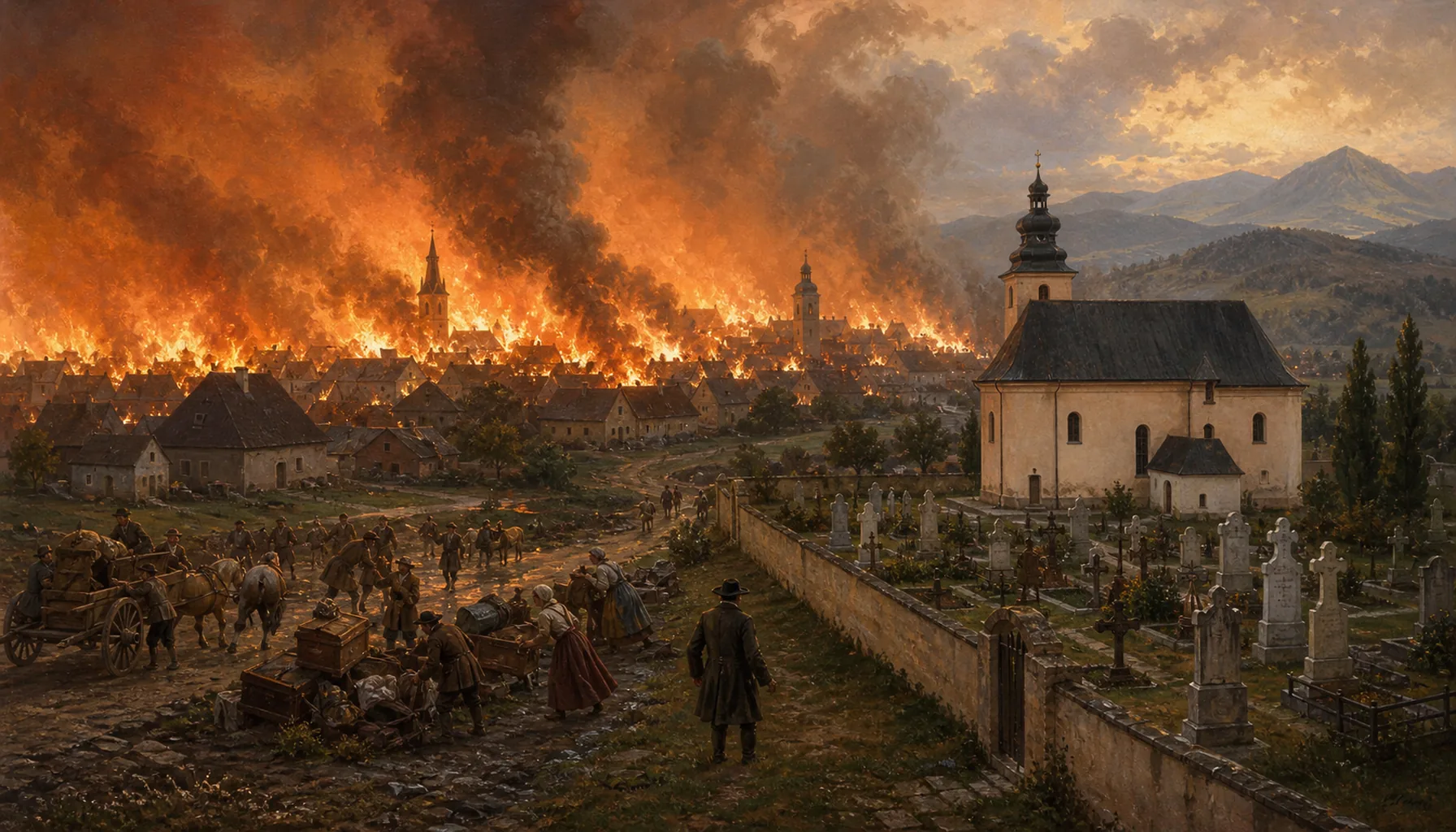
Fire is the real event of the eighteenth century here: on 1 September 1778 almost the whole of Martin burned down, after an earlier disaster in 1666, and the worst of all was still to come on 22 April 1843. When the counter-reformation ended the town's Lutherans had lost the old parish church for good, and they could not build one of their own until Emperor Joseph II's Patent of Toleration allowed it; theirs went up in 1784 and still stands. The same wave of Enlightenment reform moved burials out of churchyards, and Martin laid out a new town cemetery around 1780 — a survey of 1785 records it as five years old. That ordinary municipal graveyard is the plot that later became the National Cemetery.Skutočnou udalosťou 18. storočia je tu oheň: 1. septembra 1778 zhorel takmer celý Martin, predtým mesto ťažko poškodil požiar v roku 1666 a ten najničivejší ho ešte len čakal 22. apríla 1843. Po rekatolizácii prišli martinskí evanjelici o starý farský kostol nadobro a vlastný si mohli postaviť až vtedy, keď to dovolil tolerančný patent Jozefa II.; ich chrám z roku 1784 stojí dodnes. Tá istá vlna osvietenských reforiem presunula pochovávanie preč od kostolov a Martin si okolo roku 1780 založil nový mestský cintorín — súpis z roku 1785 ho uvádza ako päť rokov starý. Práve z tohto celkom obyčajného mestského cintorína sa neskôr stal Národný cintorín.