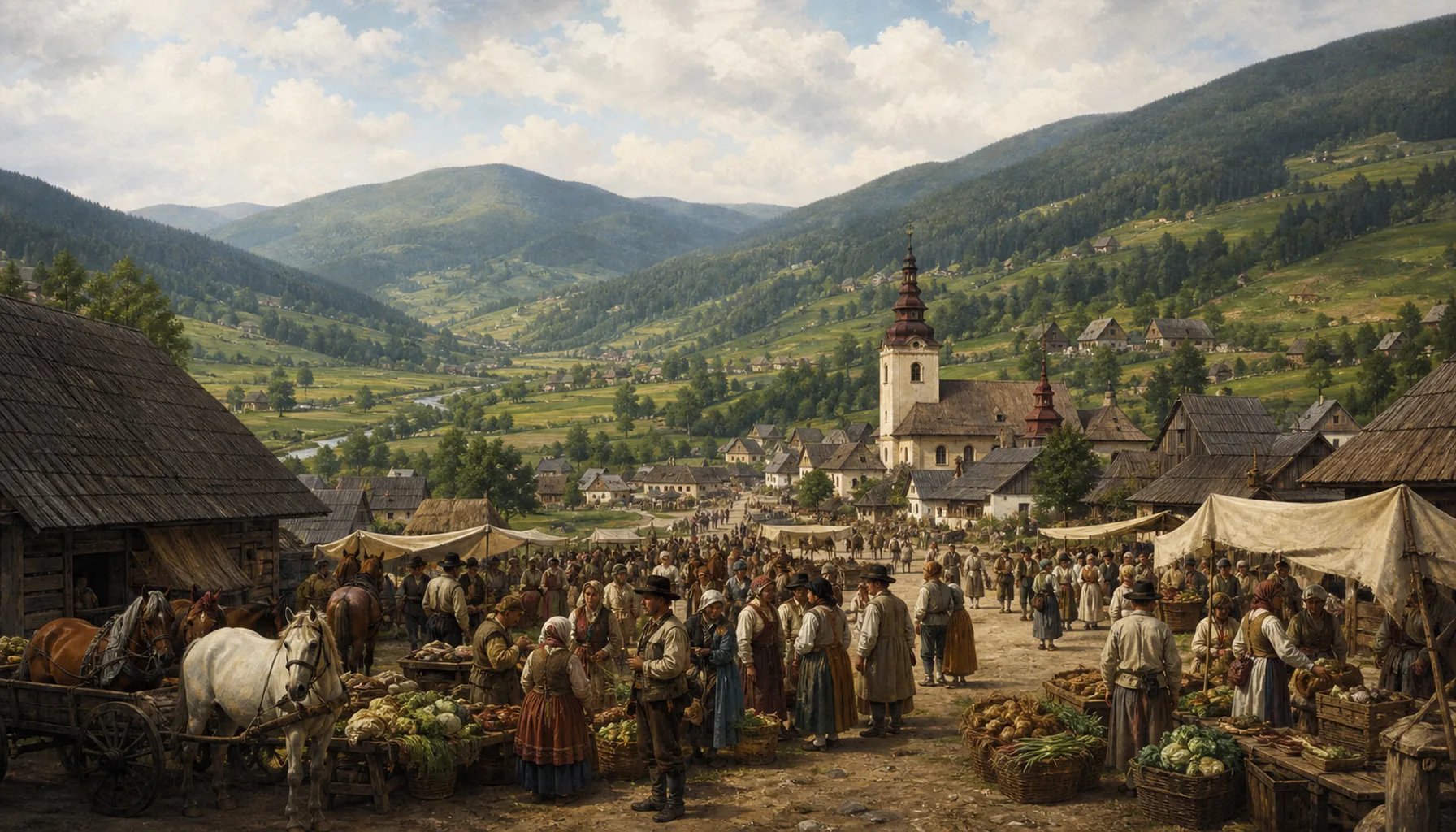
While the Ottoman wars ground away across southern Hungary, the Kysuce was busy with something completely different: it was being settled. Shepherds moving west along the Carpathian ridges cleared the side valleys under Wallachian law from the 1530s onwards, and new hamlets appeared upstream year after year. Kysucké Nové Mesto was the market at the bottom of all of it — the place where people from those clearings came to sell wool, cheese and timber and to buy iron, salt and cloth. That is a modest role, and it is what kept the town alive, but it never made it rich; the estate registers show a Slavic town of small farmers and craftsmen, not a wealthy borough. This is worth remembering when people say Slovak towns were 'destroyed by the Turks': the Ottoman century here is a story about sheep, not sieges.Kým sa na juhu Uhorska mlela osmanská vojna, Kysuce riešili niečo úplne iné — osídľovali sa. Pastieri postupujúci karpatskými hrebeňmi na západ klčovali od tridsiatych rokov 16. storočia bočné doliny podľa valaského práva a hore prúdom pribúdali rok čo rok nové osady. Kysucké Nové Mesto bolo trhom na dne toho všetkého: miestom, kam ľudia z klčovísk chodili predať vlnu, syr a drevo a kúpiť železo, soľ a súkno. Je to skromná úloha, mesto pri nej prežilo, ale nezbohatlo; urbáre ukazujú slovanské mesto drobných gazdov a remeselníkov, nie bohaté kráľovské mesto. Oplatí sa to pamätať vždy, keď niekto povie, že slovenské mestá „zničili Turci“: osmanské storočie je tu príbehom o ovciach, nie o obliehaniach.