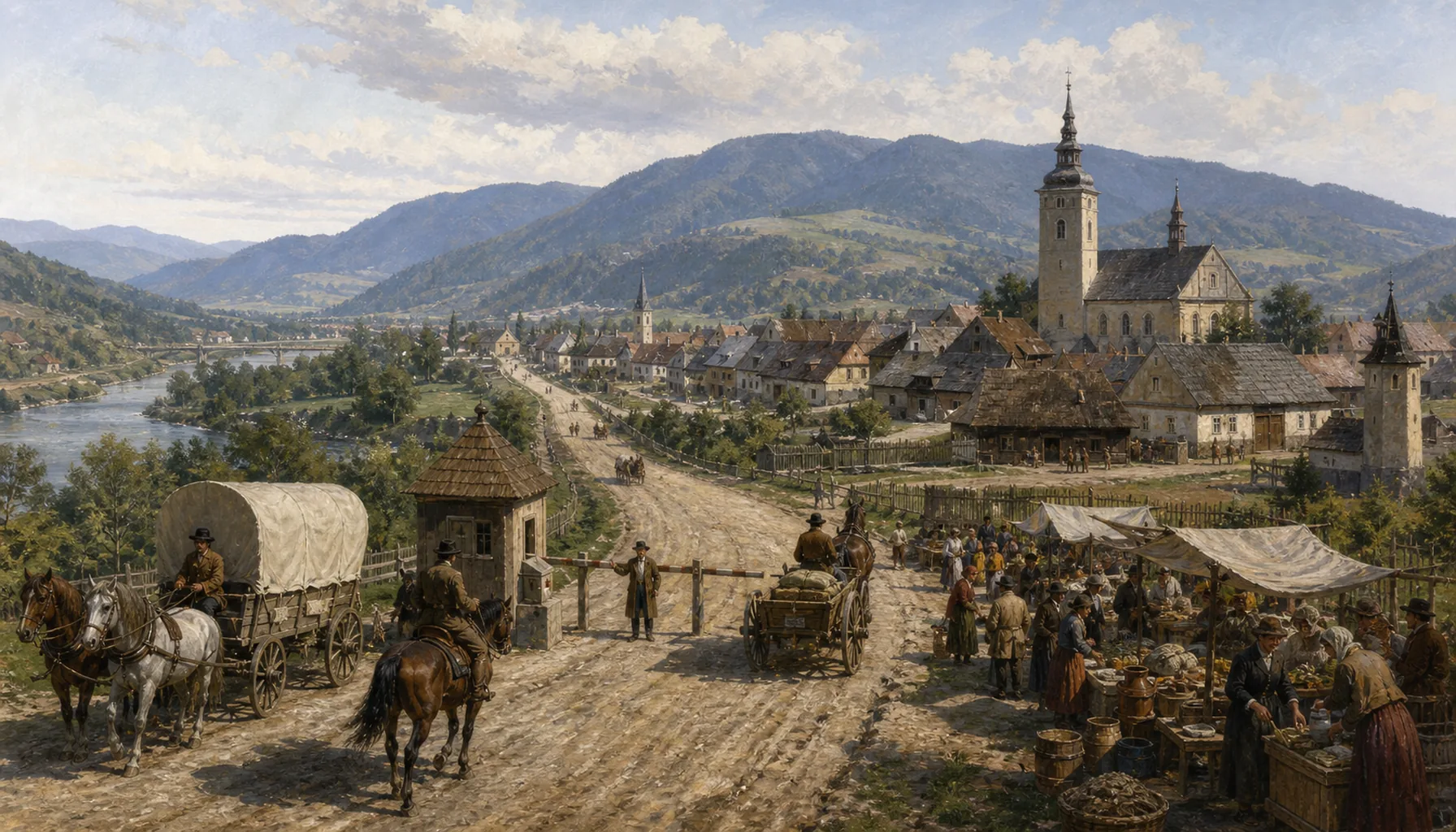
The town sat on the road north out of the Váh valley, and roads meant money. In 1321 it appears as Lachasin, a place where toll was collected, and in 1325 it was granted the privileges of a market town under the name Congesbergh — Königsberg, a German name, from the years when the kings of Hungary were inviting German settlers into their towns. Whatever Germans came were absorbed: the estate register of 1658 contains no German names at all. By 1358 the documents call it Nova Civitas, 'New Town', which is the name it still carries in Slovak, and in 1384 its town rights were widened again. The parish church of St James the Elder, built at the end of the thirteenth century, is the one building that has watched all of it.Mesto ležalo na ceste, ktorá viedla z Považia na sever, a cesty znamenali peniaze. V roku 1321 sa objavuje ako Lachasin, miesto výberu mýta, a v roku 1325 dostalo výsady mestečka pod menom Congesbergh — Königsberg, teda nemecké meno, z čias, keď uhorskí králi pozývali do svojich miest nemeckých osadníkov. Ak sem nejakí Nemci prišli, splynuli s ostatnými: urbár z roku 1658 neobsahuje ani jedno nemecké meno. Od roku 1358 ho listiny volajú Nova Civitas, Nové Mesto — a toto meno nesie dodnes; v roku 1384 sa mestské práva ešte rozšírili. Farský Kostol svätého Jakuba staršieho z konca trinásteho storočia je jedinou stavbou, ktorá to všetko videla.