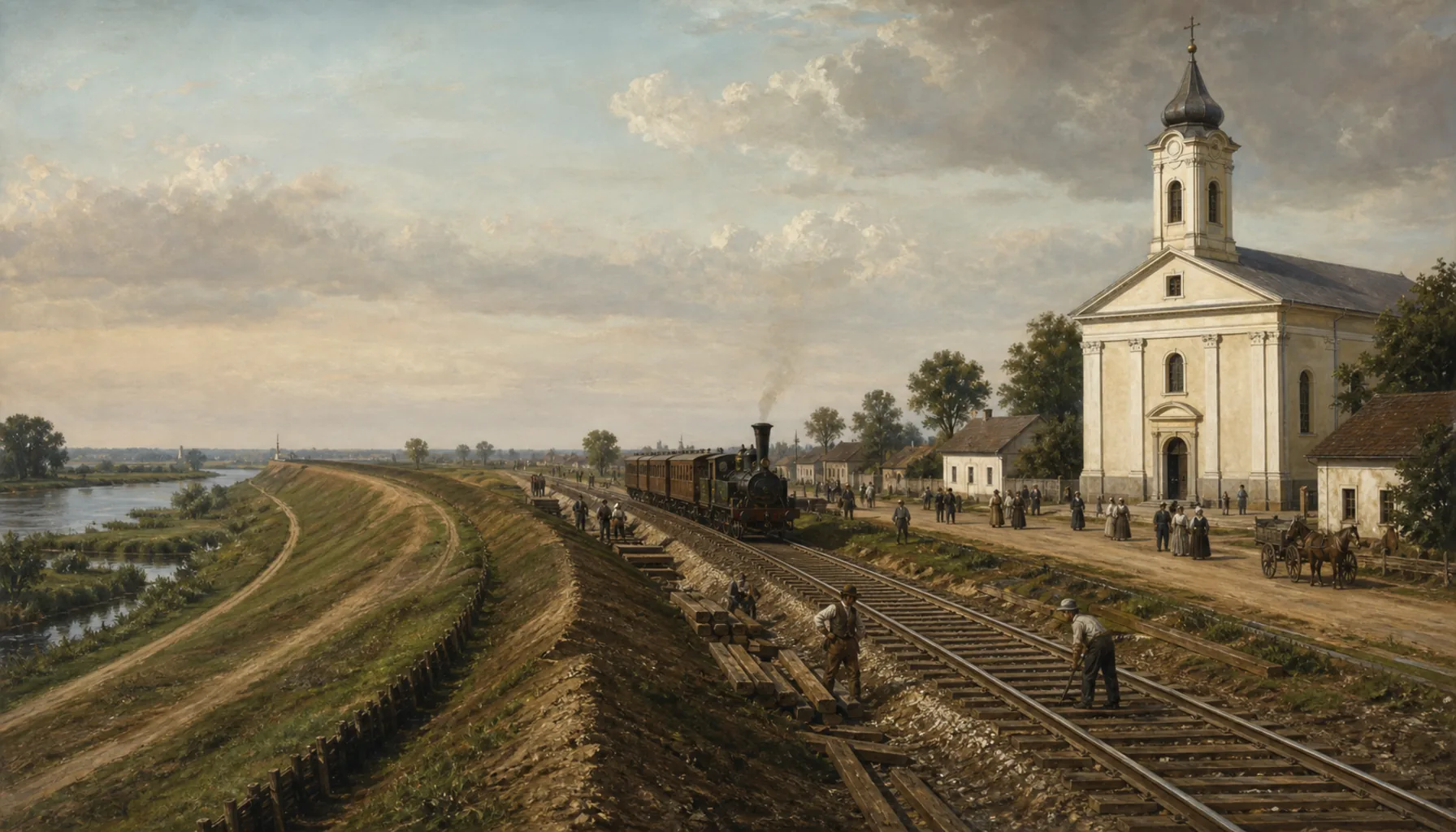
Austria-Hungary was the age in which the island was finally tamed. The Danube was diked and the marshes drained, which ended the floods that had moved whole villages around for centuries and turned the Žitný ostrov into the best farmland in the kingdom. At the end of the century the railway from Bratislava to Komárno was pushed along the island and gave the town a station. The old church was rebuilt once more in the eclectic style then in fashion and consecrated on 28 October 1900.Rakúsko-Uhorsko bolo časom, keď ostrov konečne skrotili. Dunaj ohrádzali a močiare odvodnili, čím sa skončili povodne, ktoré po stáročia presúvali celé dediny z miesta na miesto, a zo Žitného ostrova sa stala najlepšia pôda v kráľovstve. Na konci storočia pretiahli po ostrove železnicu z Bratislavy do Komárna a mesto dostalo stanicu. Starý kostol znova prestavali v eklektickom slohu, ktorý bol vtedy v móde, a 28. októbra 1900 ho vysvätili.