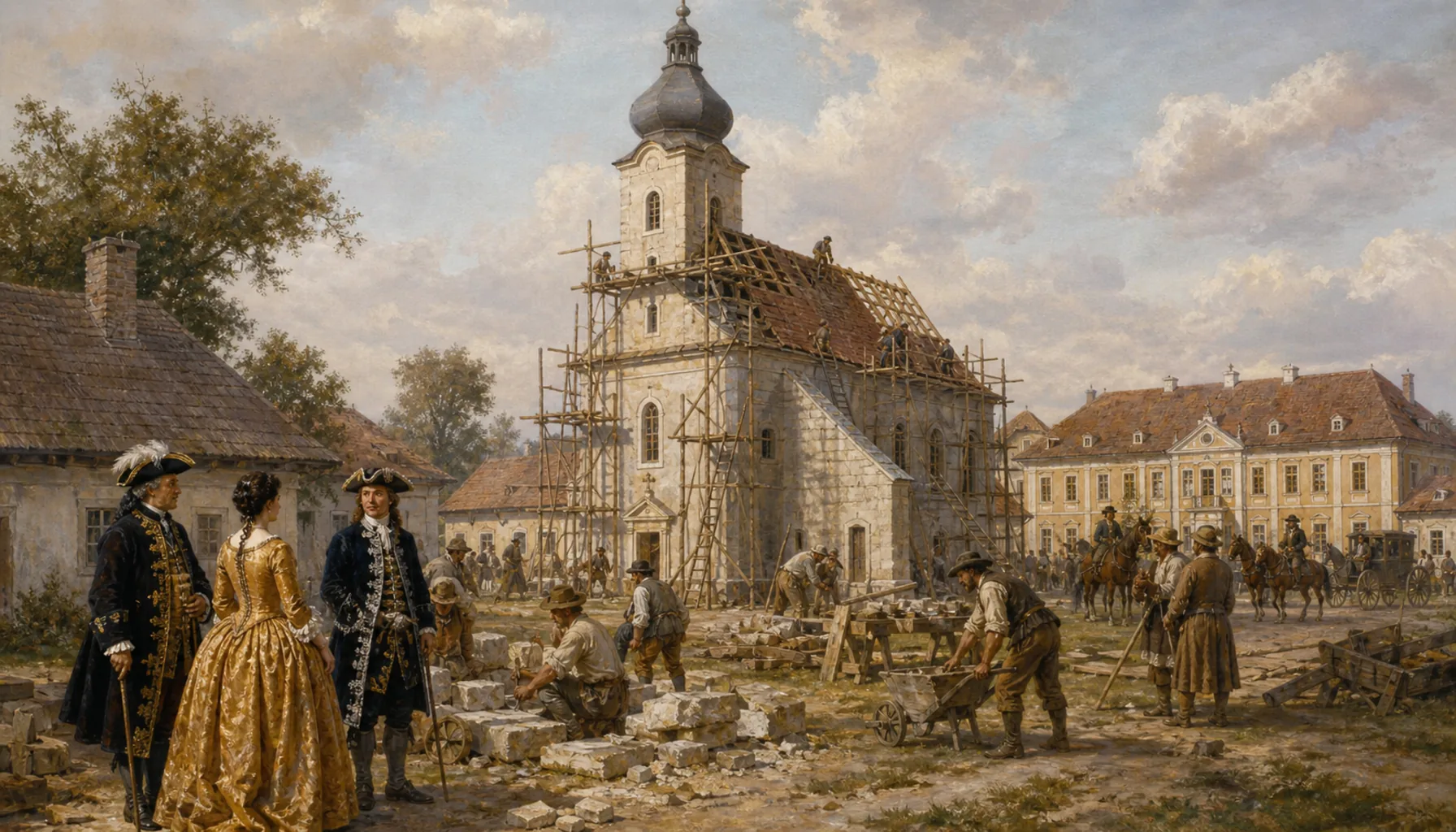
Through the seventeenth and eighteenth centuries the town belonged to the Zichy family, one of the great landholding houses of the Hungarian lowland. The church that had stood since about 1460 was badly damaged and was rebuilt between 1740 and 1755. The town went on doing what market towns do: fairs, crafts, grain, cattle and a slow accumulation of houses along one long street, which is still the shape of the centre. It is worth being clear about who was free here and who was not: the burghers of a market town had rights, but the villagers who grew the grain they traded were serfs.V 17. a 18. storočí patrilo mesto rodu Zichyovcov, jednému z veľkých pozemkových rodov uhorskej nížiny. Kostol, ktorý stál od roku okolo 1460, bol ťažko poškodený a v rokoch 1740 až 1755 ho postavili nanovo. Mesto robilo to, čo trhové mestá robia: jarmoky, remeslá, obilie, dobytok a pomalé pribúdanie domov pozdĺž jednej dlhej ulice, ktorá je dodnes pôdorysom centra. Stojí za to povedať jasne, kto tu bol slobodný a kto nie: mešťania mestečka mali práva, ale dedinčania, ktorí dopestovali obilie, s ktorým sa obchodovalo, boli poddaní.