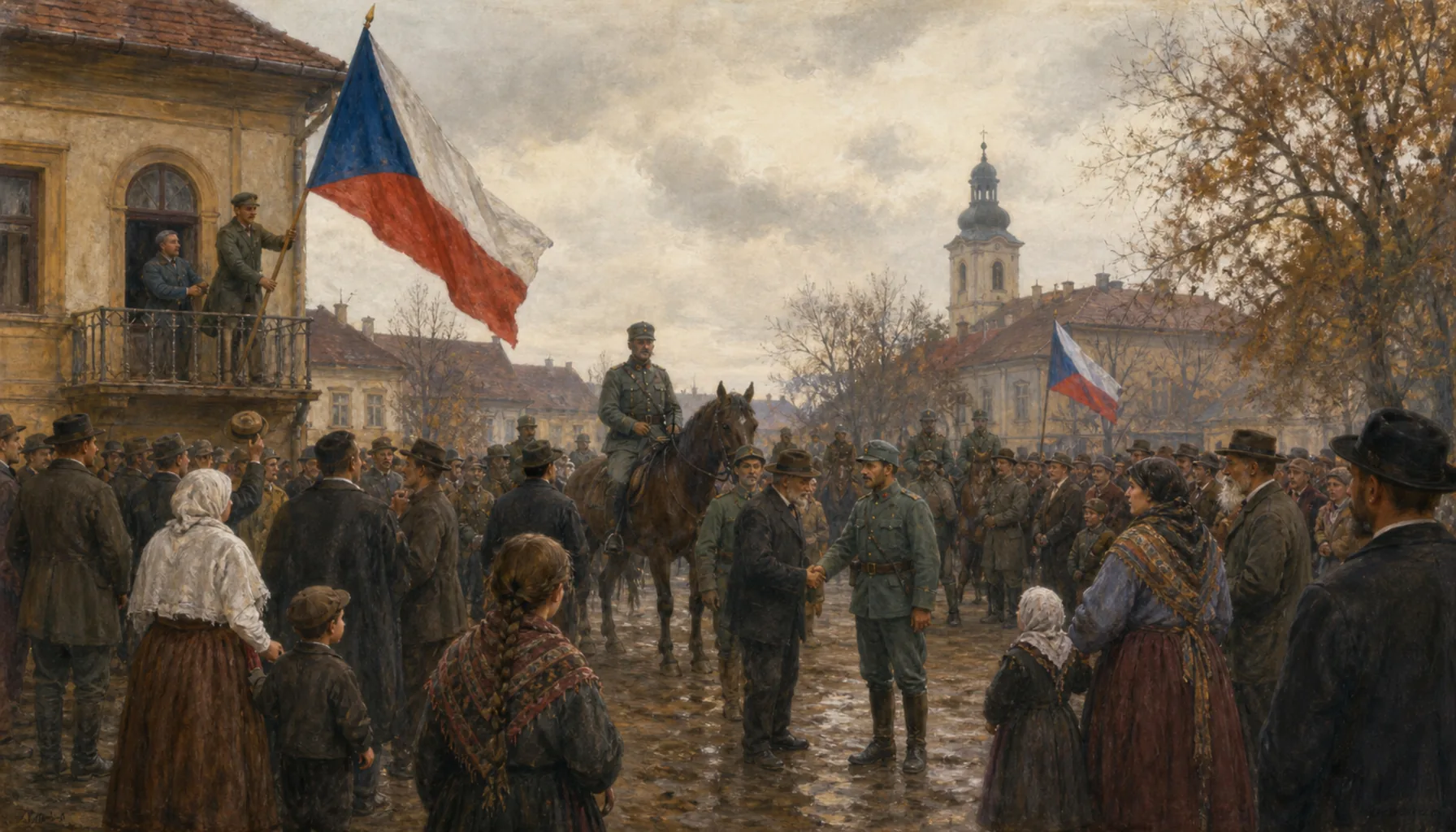
In 1918 Austria-Hungary collapsed and Galanta found itself in Czechoslovakia, a state whose official languages were Czech and Slovak. Nobody in the town had moved; the border had. The Treaty of Trianon confirmed it in 1920. A land reform broke up the great estates and settled Czech and Slovak farmers on the lowland, which the Hungarian-speaking majority experienced as loss rather than reform. Twenty years of that resentment is the reason the events of 1938 were greeted here the way they were.V roku 1918 sa Rakúsko-Uhorsko rozpadlo a Galanta sa ocitla v Československu, v štáte, ktorého úradnými jazykmi boli čeština a slovenčina. Nikto v meste sa nepohol; pohla sa hranica. Trianonská zmluva to v roku 1920 potvrdila. Pozemková reforma rozdelila veľké panstvá a usadila na nížine českých a slovenských roľníkov, čo maďarsky hovoriaca väčšina neprežívala ako reformu, ale ako stratu. Dvadsať rokov tejto krivdy je dôvod, prečo tu rok 1938 privítali tak, ako ho privítali.