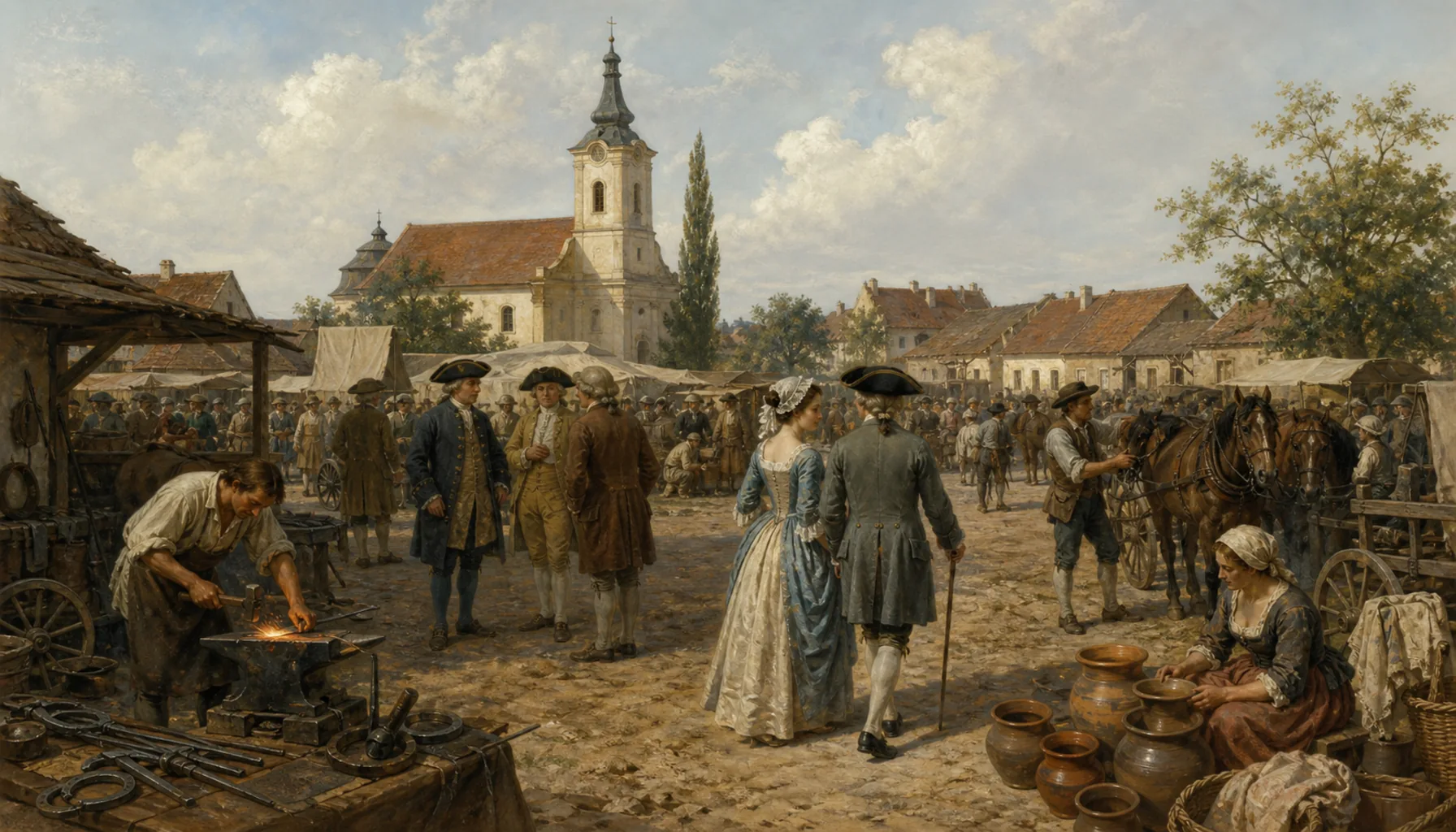
The eighteenth century was quiet, and quiet is exactly what a market town needs. Crafts organised themselves into guilds — associations that set prices, trained apprentices and kept outsiders out — and the fairs grew. In 1736 the Esterházys rebuilt their house of 1633 in the baroque taste of the day. Underneath all of it the serf system was still in force: almost everyone in the surrounding villages worked land they did not own and owed unpaid labour to a lord. It would take another hundred years to end that.Osemnáste storočie bolo pokojné a pokoj je presne to, čo trhové mesto potrebuje. Remeslá sa zorganizovali do cechov — združení, ktoré určovali ceny, vychovávali učňov a nepúšťali dnu cudzích — a jarmoky rástli. V roku 1736 dali Esterházyovci svojmu domu z roku 1633 barokovú podobu podľa vtedajšej módy. Popod to všetko však stále platilo poddanstvo: takmer každý v okolitých dedinách obrábal pôdu, ktorá mu nepatrila, a odrábal panštinu. Skončiť s tým trvalo ešte celé storočie.