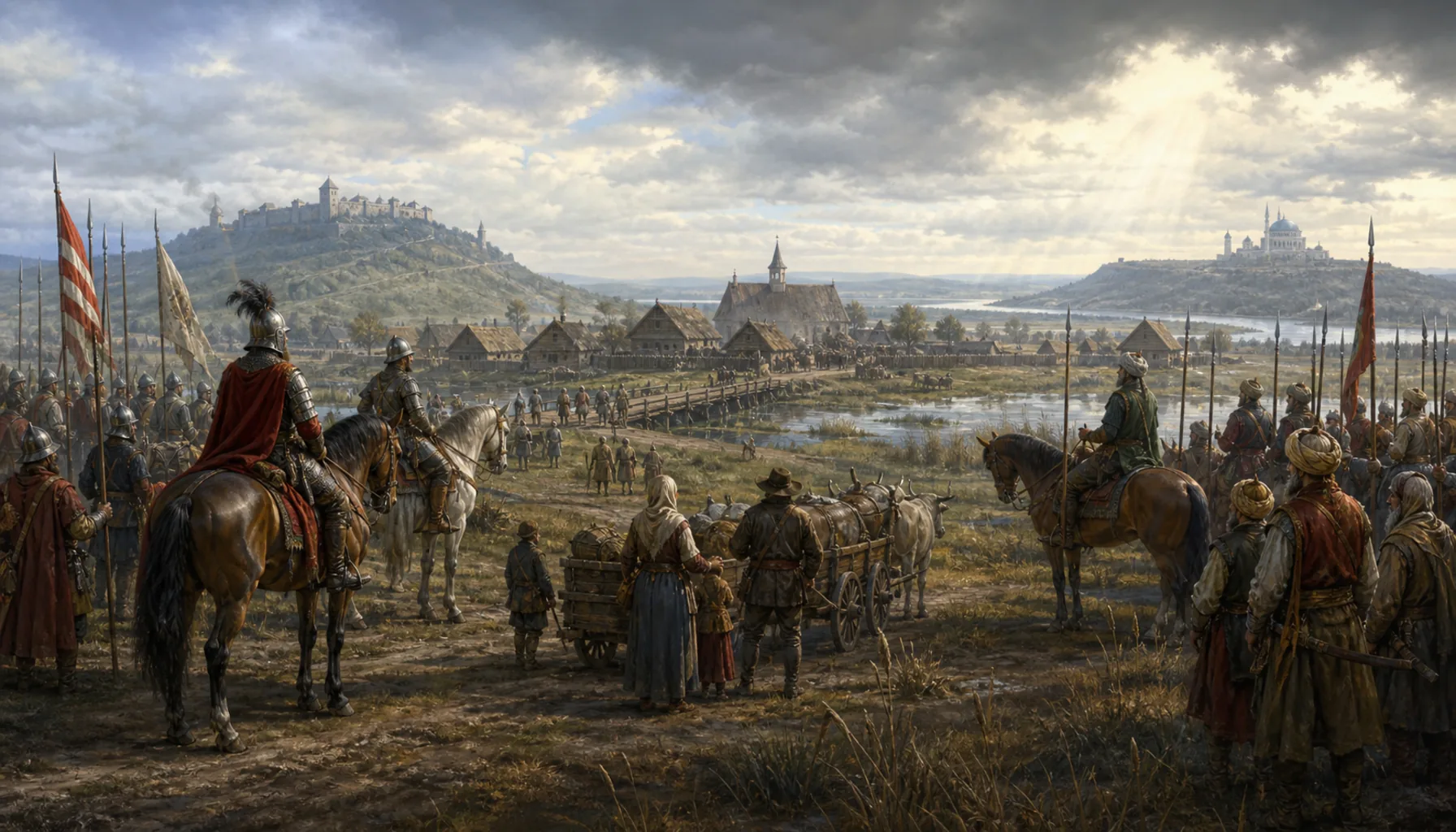
After the Ottoman victory at Mohács in 1526 the kingdom broke into three, and in 1536 what was left of royal Hungary moved its capital to Pressburg, today's Bratislava. Galanta suddenly sat on the road between Turkish-held Buda and the new capital, which is the worst possible address in a long war; local accounts say Turkish raiding stopped the town's growth for a century. The Esterházys built anyway. A Renaissance manor house went up around 1600 under Ferenc Esterházy, and a second house in 1633 under his sons Dániel and Pál. The town was granted the standing of a free market town in 1613 or 1614, and in 1635 Ferdinand II confirmed four annual fairs and a weekly market — in effect, a licence to make money from the road.Po osmanskom víťazstve pri Moháči v roku 1526 sa kráľovstvo rozpadlo na tri časti a v roku 1536 presťahovalo to, čo z kráľovského Uhorska zostalo, svoje hlavné mesto do Prešporka, teda dnešnej Bratislavy. Galanta sa zrazu ocitla na ceste medzi tureckým Budínom a novým hlavným mestom, čo je v dlhej vojne tá najhoršia možná adresa; domáce dejiny hovoria, že turecké nájazdy zastavili rast mestečka na celé storočie. Esterházyovci stavali aj tak. Okolo roku 1600 vyrástol za Ferenca Esterházyho renesančný kaštieľ a v roku 1633 druhý dom za jeho synov Dániela a Pála. Mestečko získalo postavenie slobodného trhového mesta v roku 1613 alebo 1614 a v roku 1635 mu Ferdinand II. potvrdil štyri výročné jarmoky a týždenný trh — v skutočnosti povolenie zarábať na ceste.