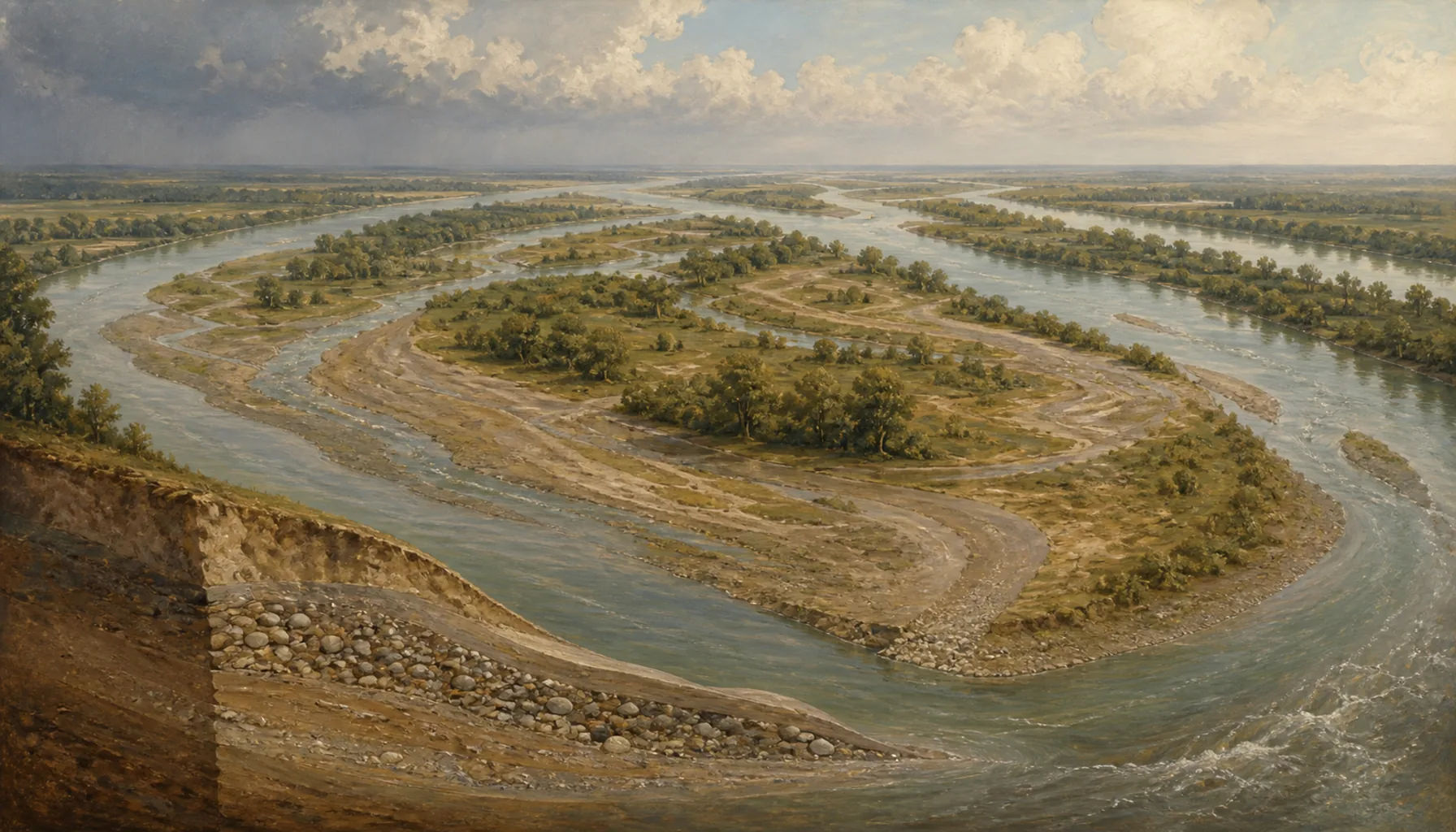
The Žitný ostrov is not old rock but young river: for thousands of years the Danube slowed here, split into branches and dropped its gravel and mud, and the result is the largest river island in Europe. People farmed it early — settlement is documented from around 1300 BC, in the Bronze Age — and the ancestors of today's Slavs arrived in the sixth century AD. The Roman Empire never ruled here; its frontier ran along the Danube itself, so the island lay on the barbarian bank, just out of reach. Nothing that happens later makes sense without the water: it fed the fields, turned the mills, decided where a village could stand, and it is still the drinking supply of a whole country.Žitný ostrov nie je stará skala, ale mladá rieka: Dunaj tu tisícročia spomaľoval, delil sa na ramená a ukladal štrk a bahno — a tak vznikol najväčší riečny ostrov v Európe. Ľudia ho obrábali odpradávna, osídlenie je doložené už okolo roku 1300 pred n. l., v dobe bronzovej, a v 6. storočí sem prišli predkovia dnešných Slovanov. Rímska ríša sem nikdy nesiahla — jej hranica viedla práve po Dunaji, takže ostrov ležal na barbarskom brehu, tesne za dosahom. Bez vody sa tu nedá pochopiť nič neskoršie: živila polia, krútila mlynmi, rozhodovala o tom, kde môže stáť dedina, a dodnes je zásobárňou pitnej vody pre celú krajinu.