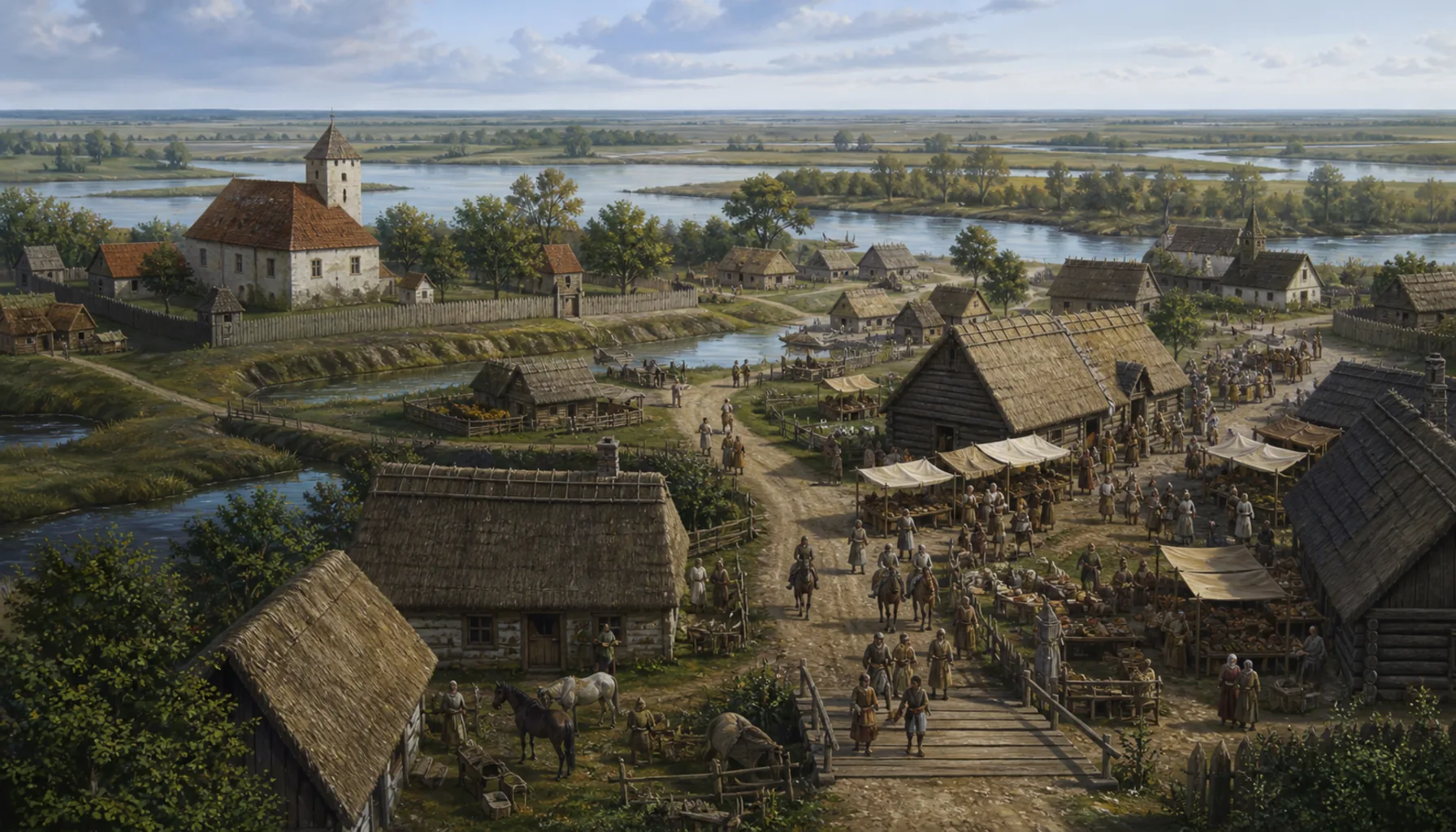
The island was carved into noble estates like everywhere else: in 1297 the place belonged to Jakab, son of Hernard, of the Héder clan, and afterwards it passed from one family to the next. What made it different from its neighbours was the market. A report by the ispán — the king's officer in charge of Pozsony county — already speaks in 1324 of the markets of Szerdahely, and in 1429 an order of King Sigismund calls the place an oppidum, a market town: a step above a village, with the right to hold fairs and a say in running itself. Around it lay a scatter of tiny hamlets with names like Nemesszeg, Előtejed and Újfalu, a few dozen houses each; five centuries later the town in the middle would swallow them all.Ostrov si rozdelili šľachtické panstvá ako všade inde: roku 1297 patrilo toto miesto Jakubovi, synovi Hernarda z rodu Héder, a potom prechádzalo z rúk do rúk. Od susedných dedín ho odlišoval trh. Správa župana — kráľovho úradníka pre celú Bratislavskú stolicu — z roku 1324 už hovorí o stredských trhoch a listina kráľa Žigmunda z roku 1429 nazýva Stredu mestečkom (oppidum): to bol stupeň nad dedinou, s právom výročných jarmokov a s kusom vlastnej samosprávy. Navôkol ležali drobné osady s menami ako Nemešseg, Előtejed či Újfalu, každá o niekoľkých desiatkach domov; o päť storočí ich mesto v strede pohltí všetky.