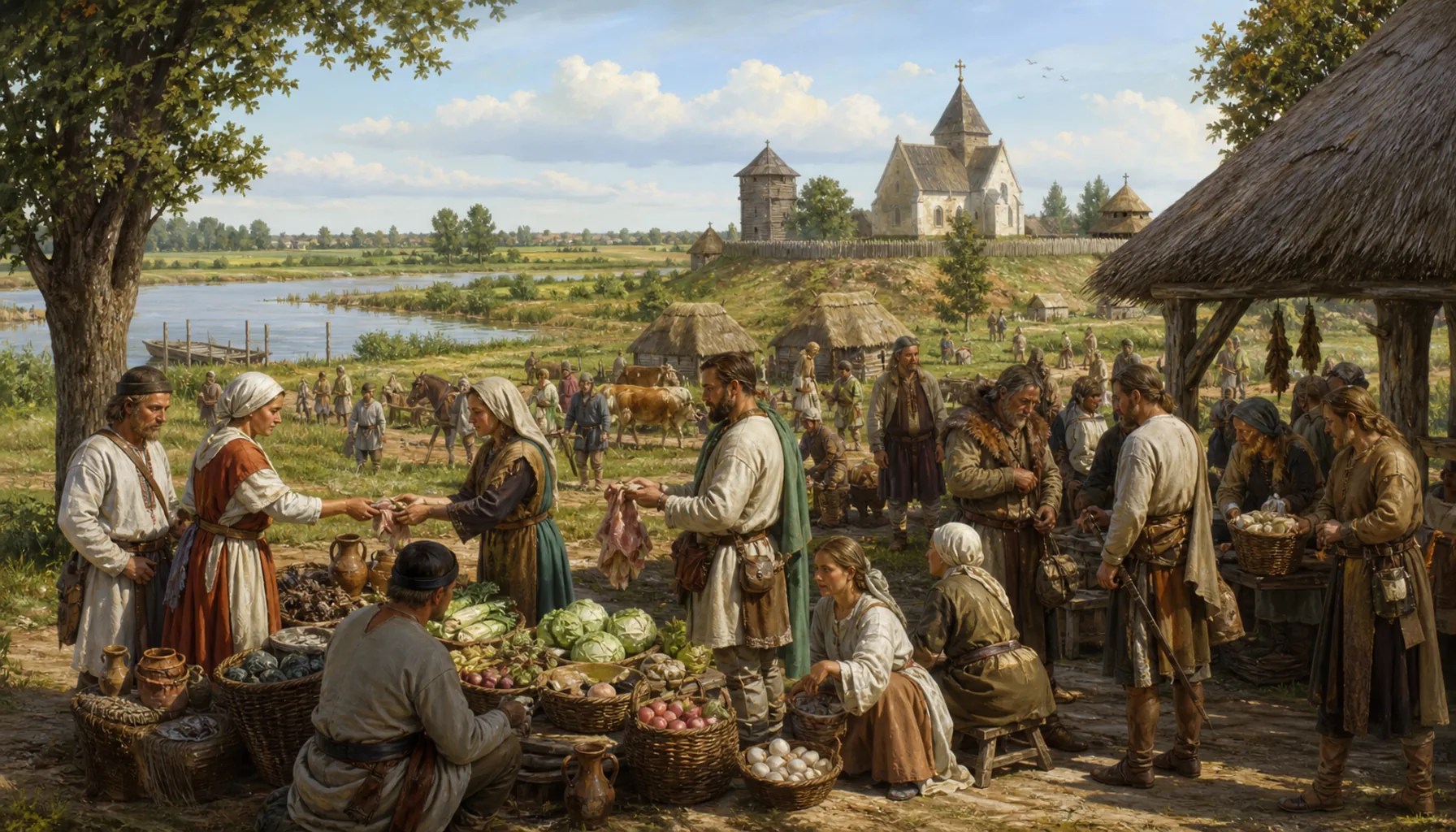
From the tenth century the island lay inside the Kingdom of Hungary, in the county of Pozsony — Bratislava — and it was good land in a kingdom that had just become Christian and needed feeding. The town's name is the clearest surviving evidence of how people lived here: the market was held on Wednesday, and the Hungarian name Szerdahely means exactly what the Slovak name Streda does, the Wednesday place. The word szerda, Hungarian for Wednesday, is itself borrowed from Slavic, where it means the middle of the week. A Hungarian town name built out of a Slavic word, on an island where both languages have been spoken side by side for a thousand years, tells you more about this place than any charter does.Od 10. storočia ležal ostrov v Uhorskom kráľovstve, v Bratislavskej stolici, a bola to dobrá pôda v kráľovstve, ktoré práve prijalo kresťanstvo a potrebovalo sa uživiť. Meno mesta je najlepším zachovaným dôkazom, ako sa tu žilo: trh sa konal v stredu a maďarské Szerdahely znamená presne to isté čo slovenská Streda — miesto stredajšieho trhu. Samo slovo szerda, po maďarsky streda, je pritom prevzaté zo slovančiny, kde znamená stred týždňa. Maďarské meno mesta postavené zo slovanského slova, na ostrove, kde sa oboma jazykmi hovorí vedľa seba tisíc rokov — to povie o tomto mieste viac než ktorákoľvek listina.