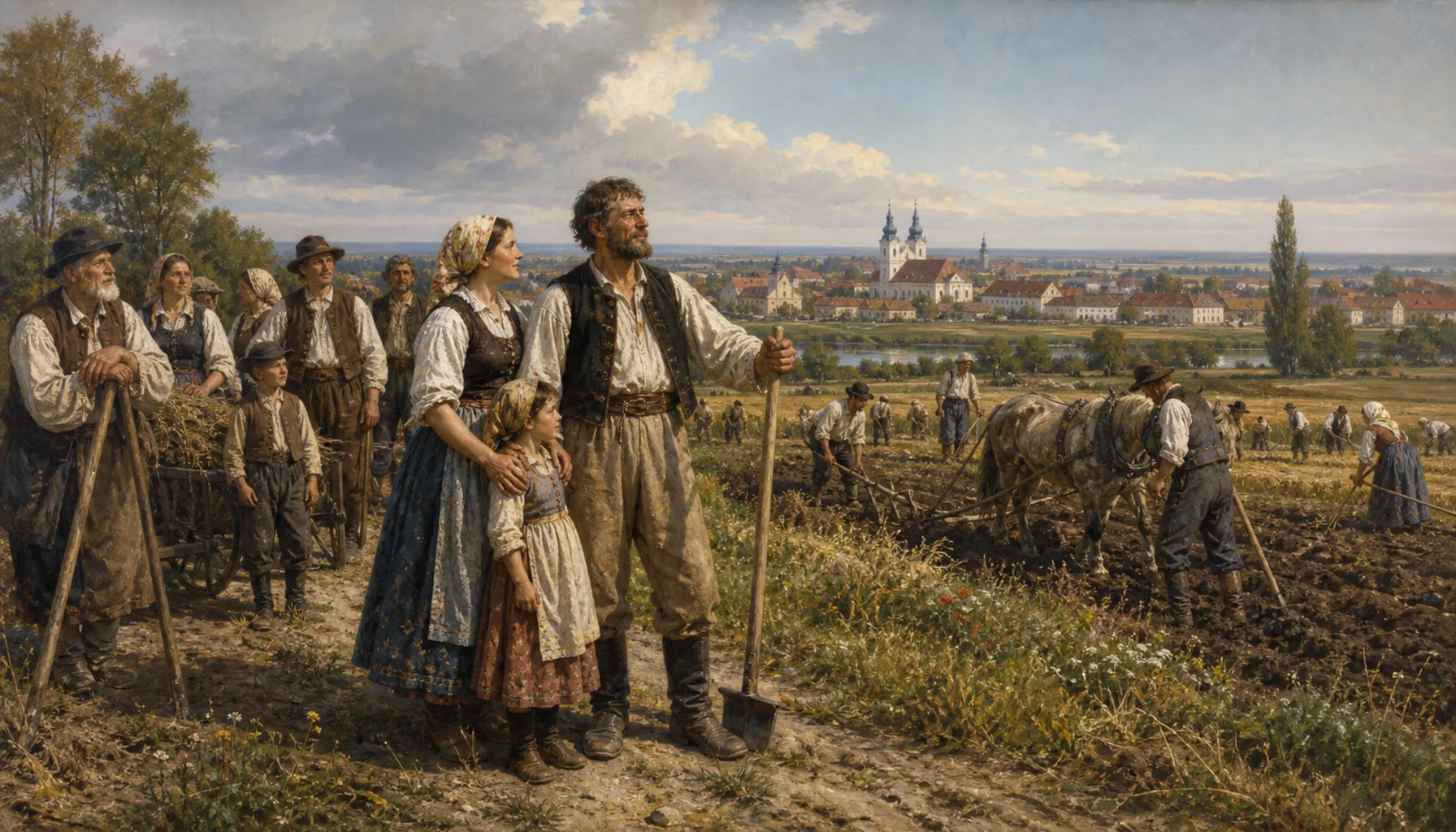
The revolution of 1848 abolished serfdom: the farmers of the island stopped owing labour days and dues to a lord, and the land they worked began to become their own property. On this soil — the most productive in the country — that mattered more than almost anywhere else. Then on 16 January 1861 the town did something quietly decisive: Szerdahely, Nemesszeg, Újfalu and Előtejed resolved to merge into a single municipality. The scatter of hamlets stopped being a scatter, and modern Dunajská Streda dates from that meeting rather than from any medieval charter.Revolúcia roku 1848 zrušila poddanstvo: roľníci na ostrove prestali zemepánovi dlhovať robotu a dávky a pôda, ktorú obrábali, sa začala stávať ich vlastnou. Na tejto pôde — najúrodnejšej v krajine — to znamenalo viac než skoro kdekoľvek inde. A 16. januára 1861 urobilo mesto krok, ktorý o ňom rozhodol potichu, ale natrvalo: Streda, Nemešseg, Újfalu a Előtejed sa uzniesli, že sa spoja do jednej obce. Zo zhluku osád sa stal jeden celok a dnešná Dunajská Streda sa datuje od tejto schôdze, nie od stredovekej listiny.