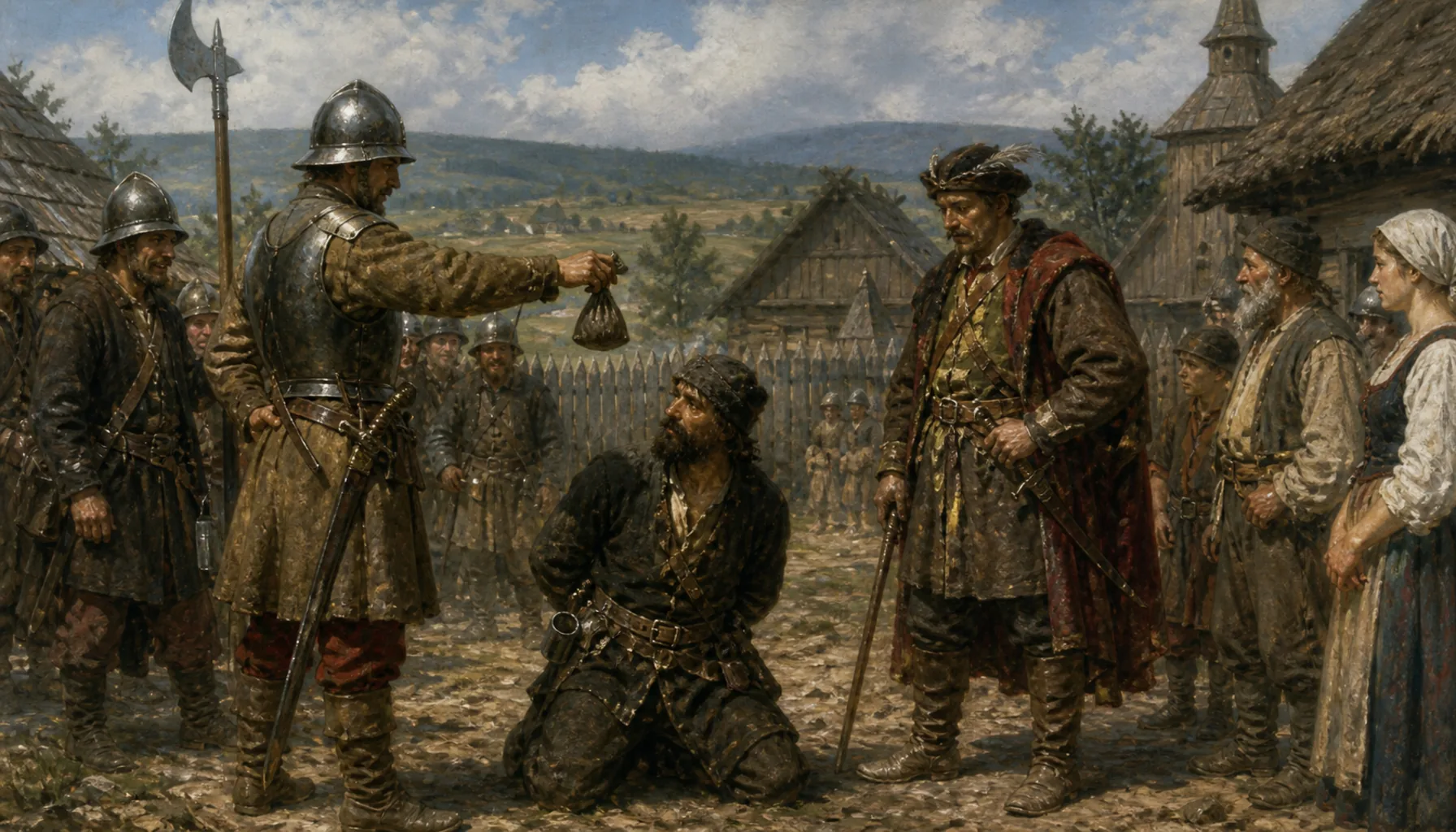
After the Hussite wars, bands of unemployed soldiers called the bratríci — the "brethren" — held much of what is now Slovakia and lived off it. In 1467 King Matthias Corvinus raised Stará Turá to an oppidum, a subject market town, for its part in the capture of the bratrík captain Ján Švehla. The privilege that came with it freed the townspeople from the tridsiatok — the "thirtieth", a customs duty of one part in thirty — and from other tolls throughout the lands of the Hungarian crown, and later kings confirmed it several times. For a village with poor soil, an exemption from tolls was worth more than land: it let Stará Turá trade, and trading is how it lived for the next three hundred years.Po husitských vojnách držali veľkú časť dnešného Slovenska tlupy vojakov bez zamestnania, ktorým sa hovorilo bratríci, a žili z krajiny. V roku 1467 povýšil kráľ Matej Korvín Starú Turú na poddanské mestečko (oppidum) za zásluhy pri chytení bratríckeho hajtmana Jána Švehlu. Privilégium oslobodilo Staroturancov od tridsiatku — cla vo výške jednej tridsatiny — a od ďalších mýt vo všetkých krajinách uhorskej koruny a ďalší panovníci ho niekoľkokrát potvrdili. Pre obec s chudobnou pôdou znamenalo oslobodenie od mýt viac ako pole: umožnilo Starej Turej obchodovať, a z obchodu žila nasledujúcich tristo rokov.