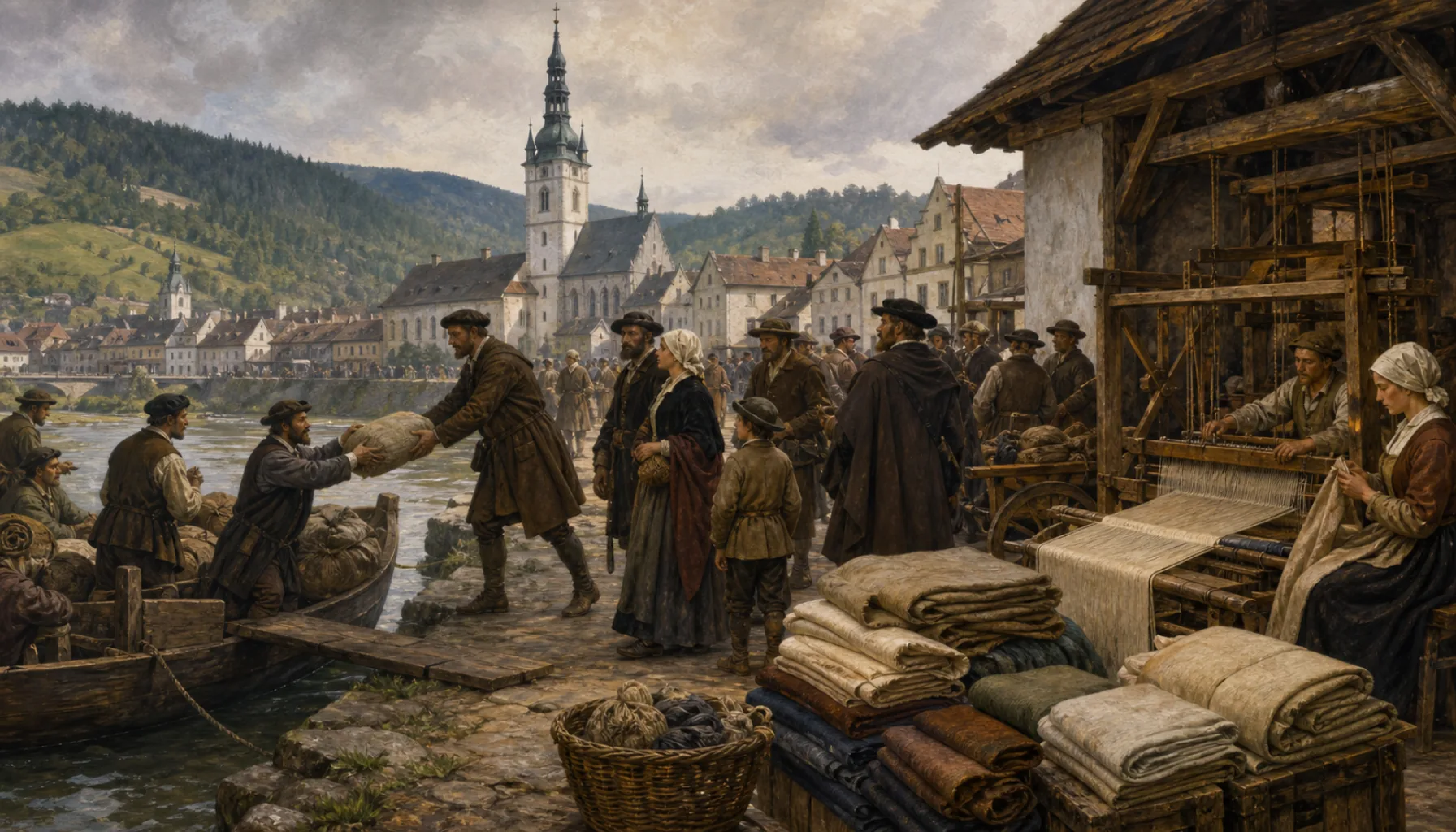
The Reformation made Púchov a Protestant town and it stayed one. In the first half of the seventeenth century Moravian Brethren crossed the mountains and settled here — Protestant exiles driven out of Moravia after the Habsburg victory at the White Mountain in 1620 forced that country back to Catholicism. They brought a trade with them: cloth-making. In 1649 King Ferdinand granted the town the right to hold fairs, so the cloth had somewhere to be sold. A Renaissance altar of 1643 that once served the Protestant congregation survives as a reminder of how strong that community was.Reformácia urobila z Púchova protestantské mesto a tým aj zostalo. V prvej polovici 17. storočia sem cez hory prišli moravskí bratia — protestantskí exulanti, ktorých z Moravy vyhnalo, keď ju habsburské víťazstvo na Bielej hore v roku 1620 prinútilo vrátiť sa ku katolicizmu. Priniesli si so sebou remeslo: súkenníctvo. V roku 1649 udelil kráľ Ferdinand mestu právo konať jarmoky, aby malo súkno kde predávať. Renesančný oltár z roku 1643, ktorý kedysi slúžil evanjelickému zboru, pripomína, aká silná tá obec bola.