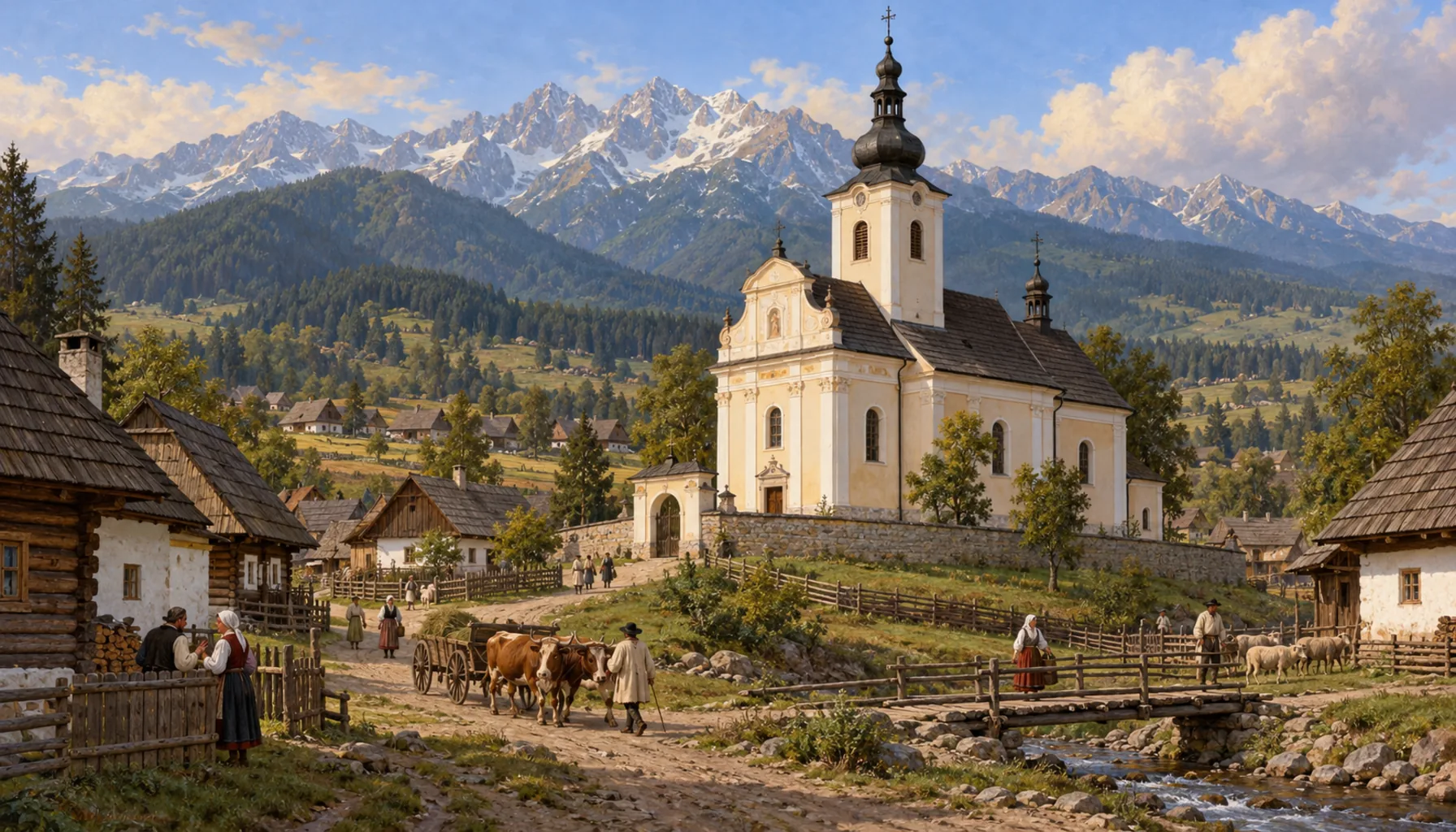
The church of St Michael the Archangel was built in 1796 in a late Baroque manner and altered in the first half of the nineteenth century; a wooden chapel of the Holy Cross followed in 1898. Being Greek Catholic is what most sharply separates Osturňa from its neighbours: the liturgy is Byzantine, sung in Church Slavonic, the parish priests may marry, and the pope is nevertheless recognised — an arrangement that reached the Rusyn parishes of this part of Hungary through the Union of Uzhhorod in 1646. One valley away, in Ždiar, the church is Roman Catholic and the people are Goral. Two villages founded by the same estate office within three years of each other, and they have been different ever since.Chrám svätého Michala archanjela postavili roku 1796 v neskorobarokovom slohu a v prvej polovici 19. storočia ho upravili; roku 1898 pribudla drevená kaplnka svätého Kríža. Byť gréckokatolíkom je to, čo Osturňu najostrejšie odlišuje od susedov: liturgia je byzantská, spieva sa po cirkevnoslovansky, farári sa môžu ženiť a pápež je pritom uznávaný — usporiadanie, ktoré sa k rusínskym farnostiam tejto časti Uhorska dostalo Užhorodskou úniou roku 1646. O dolinu ďalej, v Ždiari, je kostol rímskokatolícky a ľudia sú gorali. Dve obce, ktoré tá istá panská kancelária založila v rozpätí troch rokov — a odvtedy sú iné.