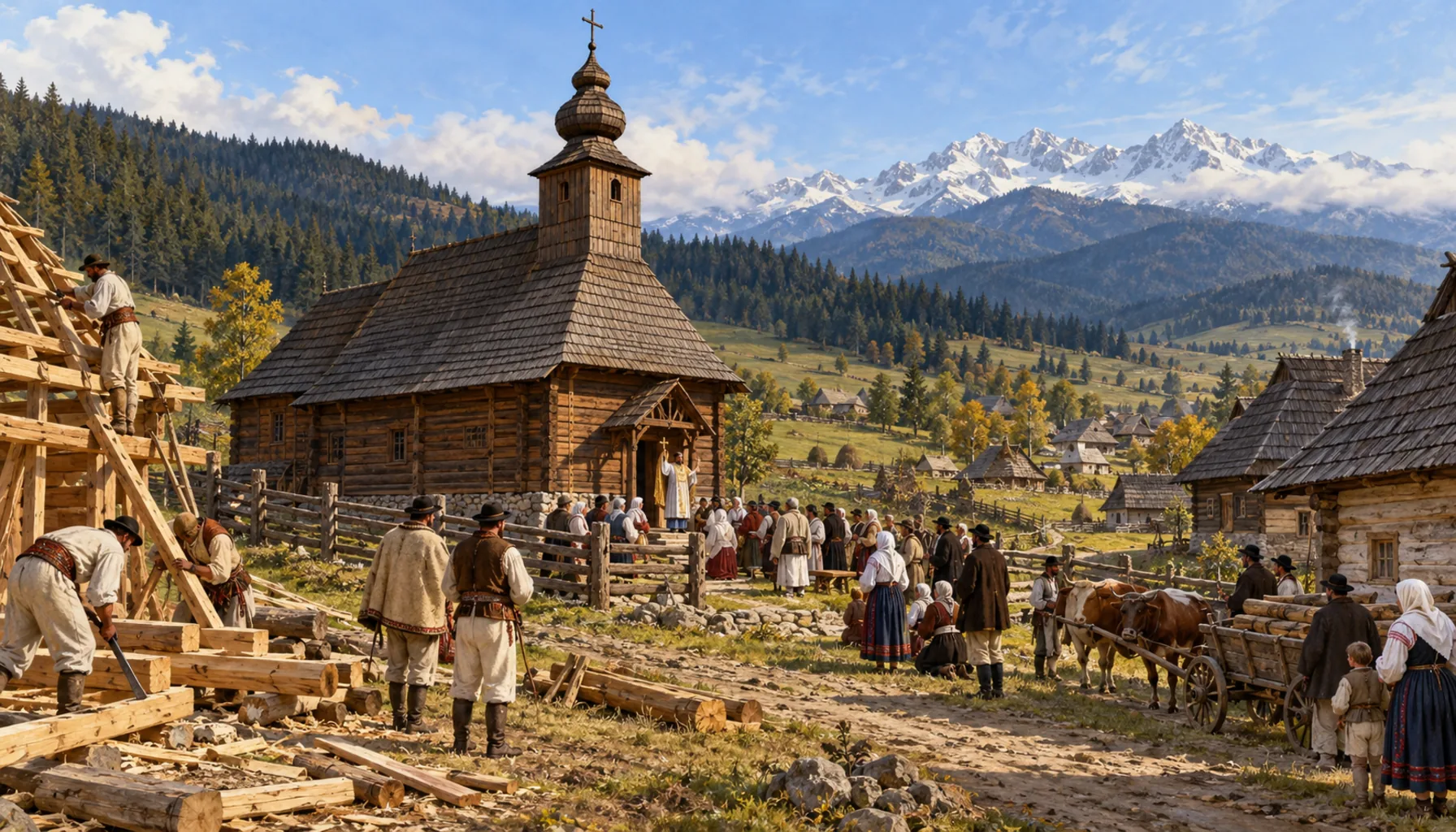
The village built itself a wooden church in 1706, which is usually the sign that a settlement has decided it is permanent. In 1759 that was replaced by the Baroque church of St John the Baptist, single-naved, which still stands. The other thing that made permanence possible at nine hundred metres was a plant. The potato spread through the Slovak uplands in the later eighteenth century and became the mainstay of the nineteenth, and it will ripen where rye and wheat will not. Almost everything characteristic about this village — the terraces, the cellars in the ground, the shape of the working year — follows from the potato.Roku 1706 si obec postavila drevený kostol, čo býva znamenie, že sídlo sa rozhodlo byť trvalé. Roku 1759 ho nahradil barokový jednoloďový Kostol svätého Jána Krstiteľa, ktorý stojí dodnes. Druhá vec, ktorá vo výške deväťsto metrov umožnila trvalý život, bola rastlina. Zemiak sa po slovenských horách rozšíril v druhej polovici 18. storočia a v 19. storočí sa stal základom stravy — a dozrieva tam, kde raž ani pšenica nedozrejú. Takmer všetko, čím je táto dedina zvláštna — terasy, pivnice v zemi, tvar hospodárskeho roka — vyplýva zo zemiaka.