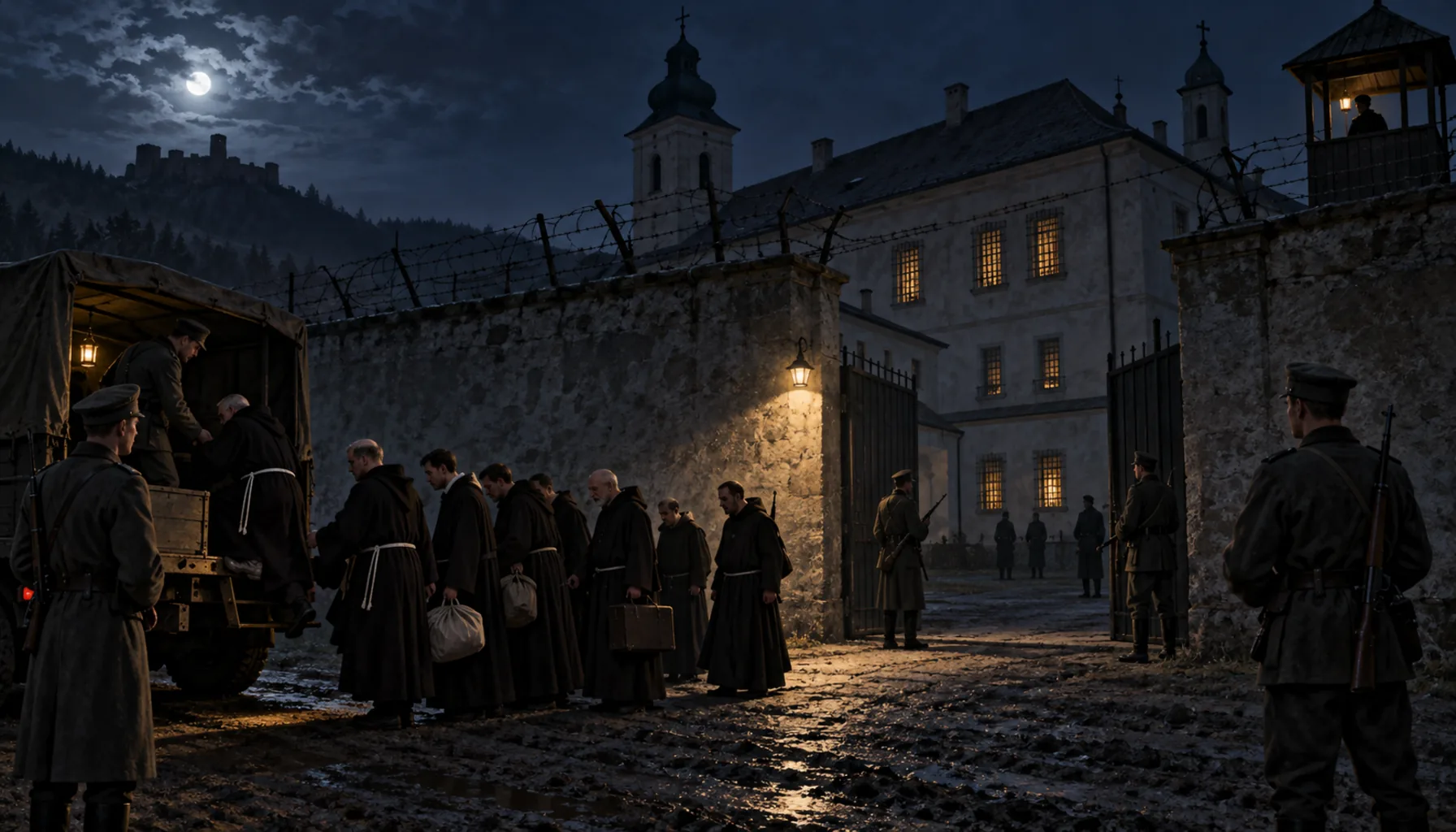
At midnight on 13 April 1950 the state moved against the male religious orders in Akcia K: 1,180 monks from 76 houses across Slovakia were rounded up and interned, and one of the internment monasteries was Podolínec, ten kilometres up the valley — the harshest of them, with bars fitted to the windows and barbed wire round the walls. Two weeks later, on 28 April 1950, a staged assembly in Prešov abolished the Greek Catholic Church in Czechoslovakia and forced its parishes into the Orthodox Church; in a district full of Rusyn Greek Catholic villages, that reached into almost every family, and the church was allowed to exist again only in 1968. Meanwhile the town itself grew: new housing, light industry, district offices — and in the meadow under the castle an open-air museum assembled from the log houses the villages were losing.Presne o polnoci z 13. na 14. apríla 1950 zasiahol štát proti mužským reholiam v akcii K: 1 180 rehoľníkov zo 76 kláštorov na Slovensku pozatýkali a internovali a jedným zo sústreďovacích kláštorov bol Podolínec, desať kilometrov proti prúdu — s najprísnejším režimom zo všetkých, s mrežami na oknách a ostnatým drôtom okolo múrov. O dva týždne neskôr, 28. apríla 1950, zinscenovaný snem v Prešove zrušil gréckokatolícku cirkev v Československu a jej farnosti nasilu pripojil k pravosláviu; v okrese plnom rusínskych gréckokatolíckych dedín to zasiahlo takmer každú rodinu a cirkev smela znova existovať až od roku 1968. Mesto medzitým rástlo: nové sídliská, ľahký priemysel, okresné úrady — a na lúke pod hradom múzeum ľudovej architektúry, poskladané z domov, o ktoré dediny prichádzali.