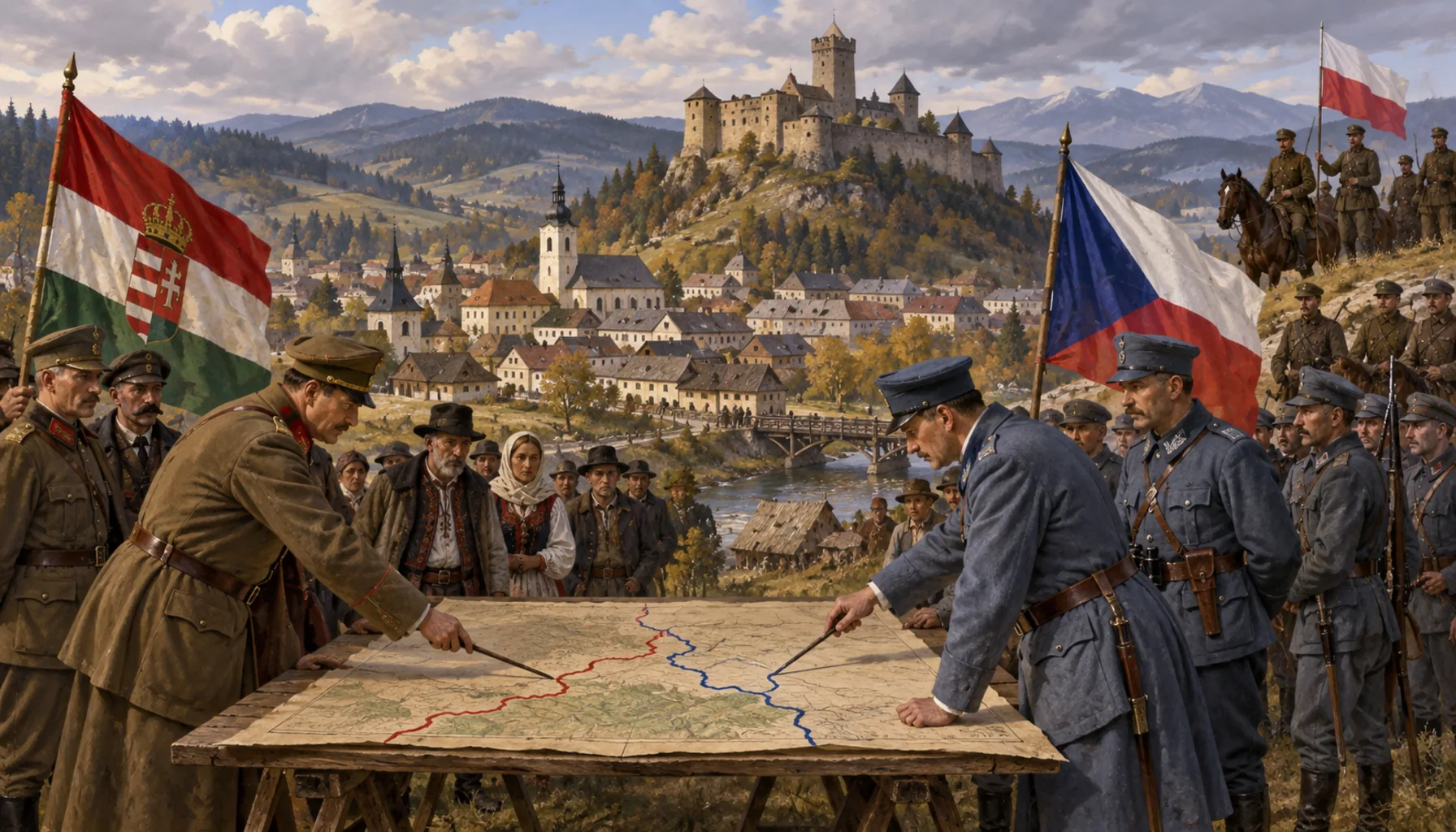
In 1918 the Kingdom of Hungary ended and Stará Ľubovňa became part of Czechoslovakia — but not without a quarrel, because Poland claimed the northern Spiš as well. Troops of both states moved in the region in 1918 and 1919, a plebiscite was proposed and then dropped, and in July 1920 the Allied Conference of Ambassadors drew the line: Poland received a small group of villages in the far north of the Spiš, and the rest, including this town, stayed Czechoslovak. For the first time in six centuries the frontier here was a real state border, with customs posts and papers. The castle above the town, still owned by a Polish family, sat on the Czechoslovak side of it.V roku 1918 zaniklo Uhorsko a Stará Ľubovňa sa stala súčasťou Československa — nie však bez sporu, lebo severný Spiš si nárokovalo aj Poľsko. V rokoch 1918 a 1919 sa v kraji pohybovali vojská oboch štátov, uvažovalo sa o plebiscite a napokon z neho zišlo; v júli 1920 nakreslila hranicu Konferencia veľvyslancov: Poľsko dostalo malú skupinu dedín na samom severe Spiša a zvyšok vrátane tohto mesta zostal Československu. Prvý raz po šiestich storočiach bola hranica tu naozajstnou štátnou hranicou s colnicami a dokladmi. Hrad nad mestom, stále v rukách poľskej rodiny, zostal na československej strane.