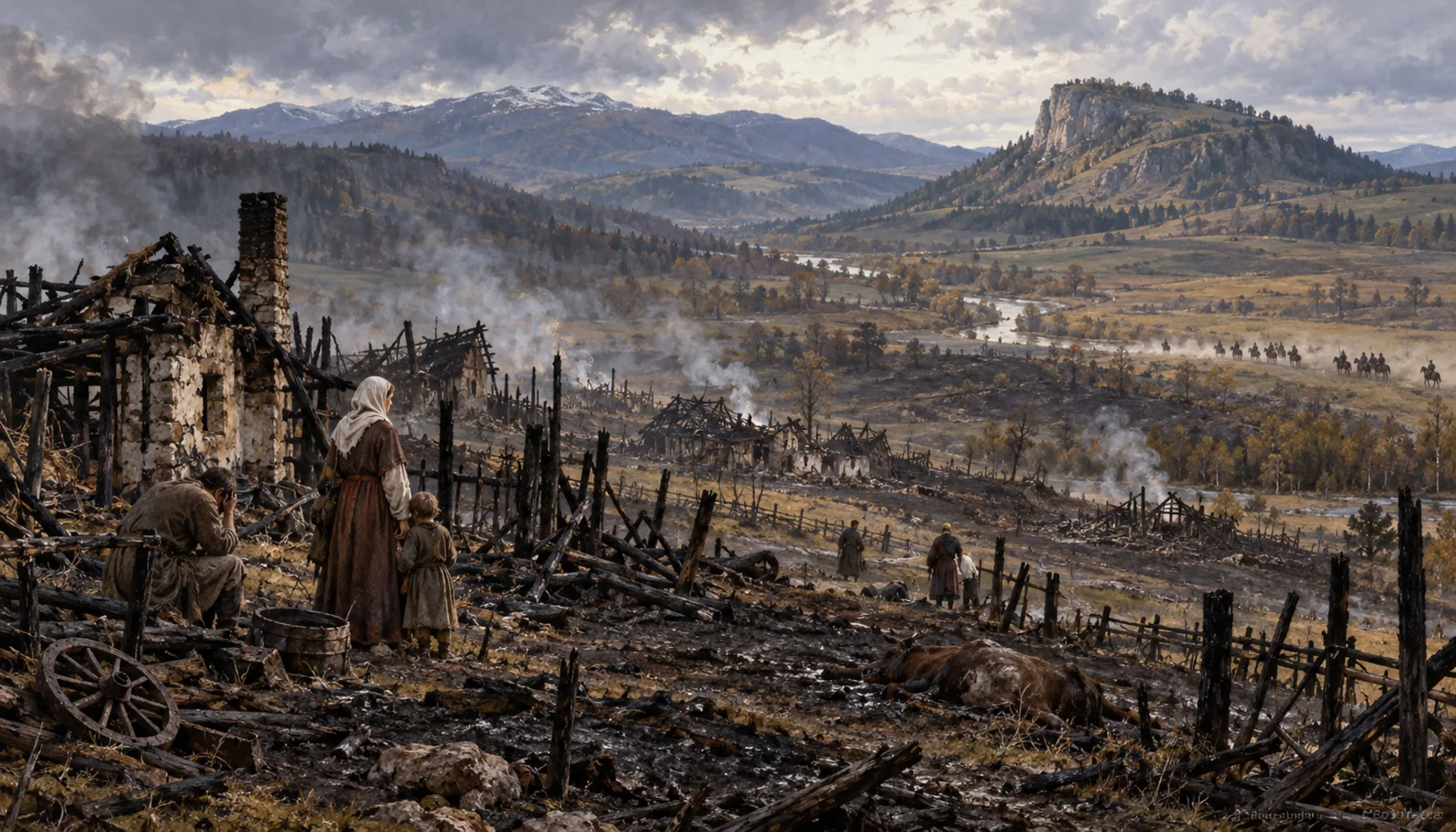
In 1241 a Mongol army rode through the Kingdom of Hungary and left the Spiš burned and thinly peopled. King Béla IV's answer was to build in stone: castles on rock that a raiding army could not take in a rush, at the places that mattered. This valley mattered, because the Poprad is the easy road north into Poland — and a road that carries merchants will also carry armies. Ľubovňa Castle belongs to the generation of castles that came out of 1241, and the town grew up at the foot of it.V roku 1241 sa Uhorskom prehnalo mongolské vojsko a Spiš zostal vypálený a takmer bez ľudí. Odpoveďou kráľa Bela IV. bolo stavať z kameňa: hrady na skalách, ktoré nájazdné vojsko nedobyje z pochodu, a to na miestach, na ktorých záležalo. Na tomto údolí záležalo, lebo Poprad je pohodlná cesta na sever do Poľska — a cesta, po ktorej chodia kupci, unesie aj vojská. Ľubovniansky hrad patrí do generácie hradov, ktoré vzišli z roku 1241, a mesto vyrástlo pod ním.