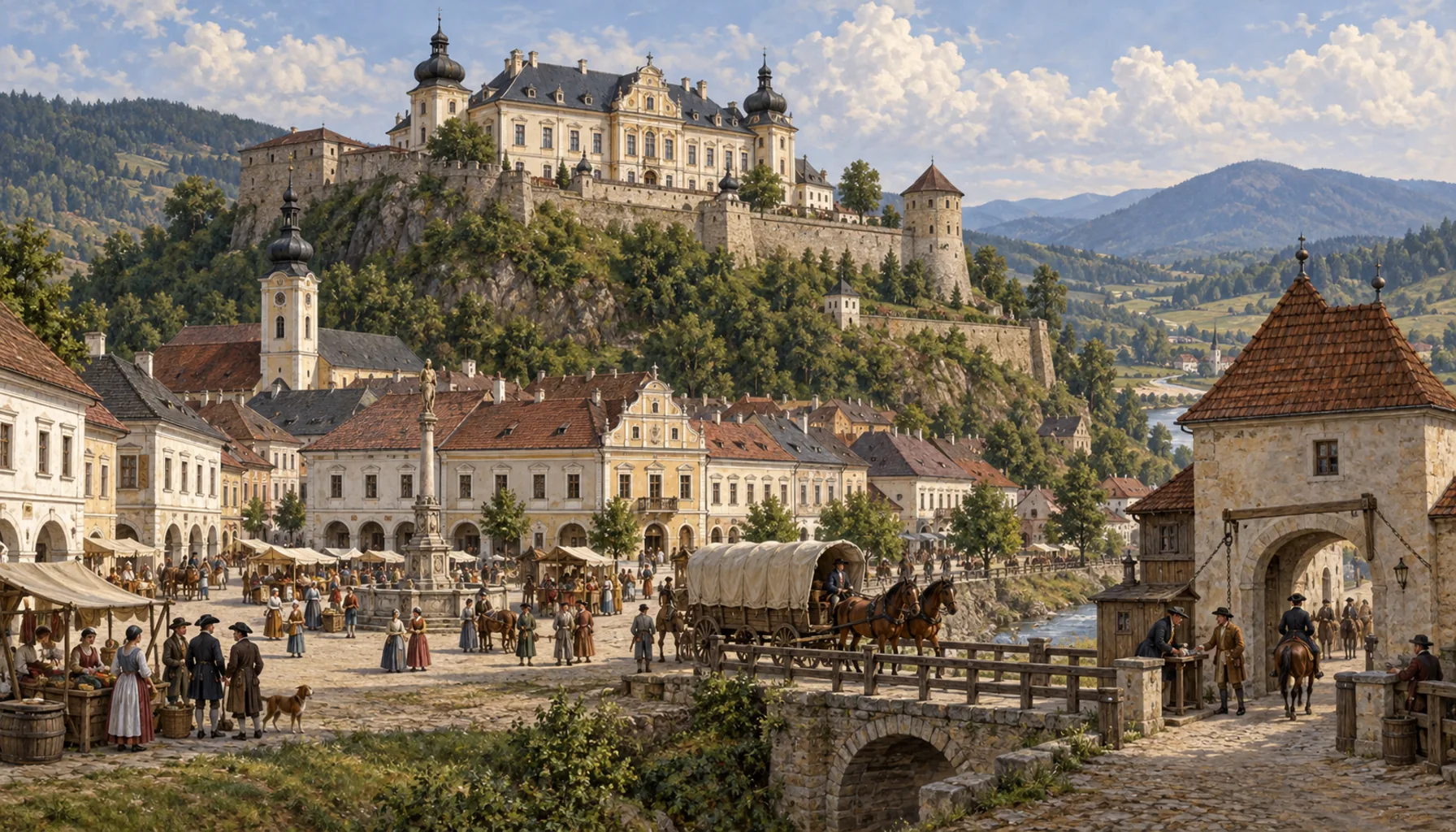
The eighteenth century was the pledged province's comfortable stretch: the castle was rebuilt as a Baroque residence between 1746 and 1760, and the towns below kept their own courts and their own tolls. In 1768 the castle held a famous prisoner, Móric Beňovský, the Slovak-born adventurer whose later life took him across Siberia to Madagascar. Then Poland weakened: Austrian troops moved into the sixteen towns in 1769, and the First Partition of Poland in 1772 made it permanent — after three hundred and sixty years the Spiš towns were Hungarian again, under Maria Theresa. They were not simply dissolved into the county: they were kept together as the Province of Sixteen Spiš Towns until Hungary's county reform of 1876 swept it away.Osemnáste storočie bolo pre zálohovanú provinciu tým najpohodlnejším obdobím: hrad v rokoch 1746 – 1760 prestavali na barokové sídlo a mestá pod ním si podržali vlastné súdy aj vlastné mýta. V roku 1768 väznili na hrade slávneho väzňa — Mórica Beňovského, dobrodruha slovenského pôvodu, ktorého ďalší život zaviedol cez Sibír až na Madagaskar. Potom Poľsko zoslablo: rakúske vojská obsadili šestnásť miest už v roku 1769 a prvé delenie Poľska v roku 1772 to spečatilo — po tristošesťdesiatich rokoch boli spišské mestá zase uhorské, za vlády Márie Terézie. Nerozpustili ich jednoducho do stolice: zostali spolu ako Provincia šestnástich spišských miest, kým ju uhorská reforma stolíc v roku 1876 nezrušila.