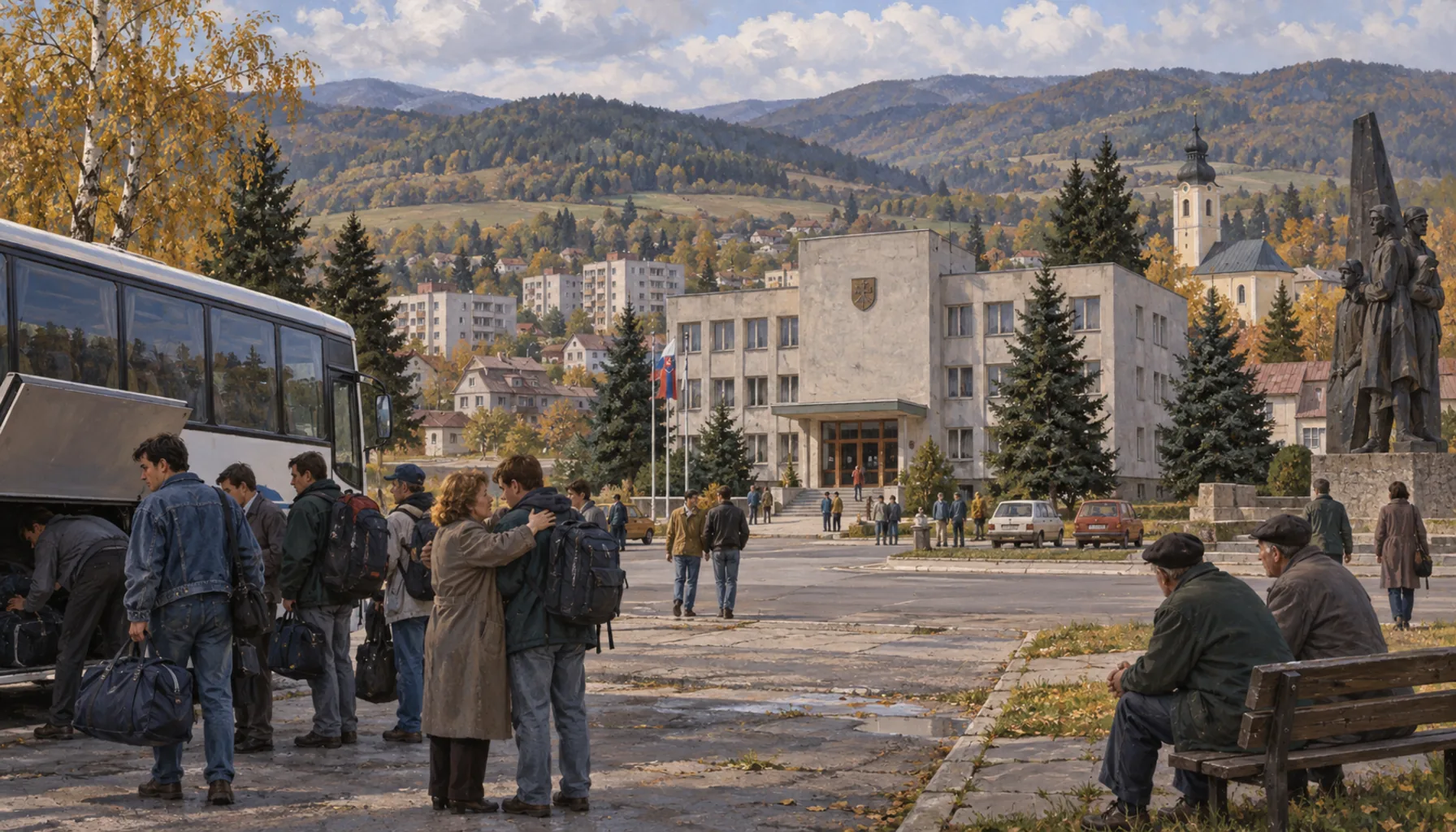
In independent Slovakia the district office came back in 1996, but the deeper trend did not change: the Medzilaborce district is one of the smallest and least populated in the country, steady work is scarce, and many households live on wages earned in Czechia, Britain or Germany. The museum — around 160 works and objects, with a small open-air section holding a replica of the Warhola family house from Miková — is the town's one national institution and its main reason for visitors. Rusyn identity, suppressed for forty years, was recognised again after 1989 and a written standard for the language followed in the 1990s. A few thousand people keep a museum of pop art alive at the top of a Carpathian valley, and everyone here knows how odd that is.V samostatnom Slovensku sa okresný úrad vrátil roku 1996, hlbší trend to však nezmenilo: okres Medzilaborce patrí k najmenším a najredšie osídleným v krajine, stálej práce je málo a mnohé domácnosti žijú zo mzdy zarobenej v Česku, Británii či Nemecku. Múzeum — asi 160 diel a predmetov a malý skanzen s replikou rodného domu Warholovcov z Mikovej — je jedinou celoštátnou inštitúciou mesta a hlavným dôvodom, prečo sem ľudia chodia. Rusínska identita, štyridsať rokov potláčaná, bola po roku 1989 znovu uznaná a v deväťdesiatych rokoch dostal jazyk aj spisovnú podobu. Zopár tisíc ľudí udržiava na konci karpatskej doliny múzeum pop-artu — a každý tu vie, aké je to zvláštne.