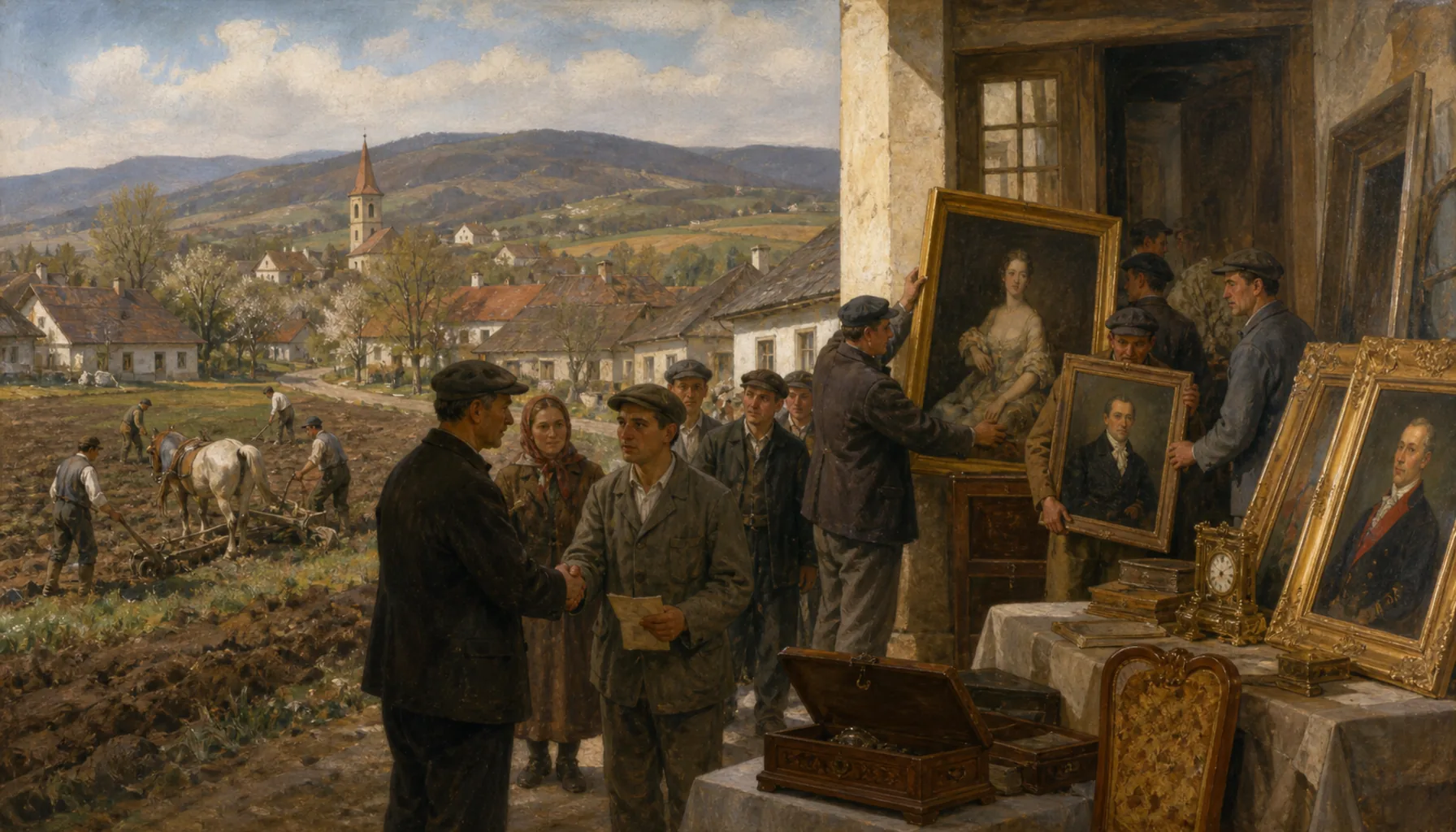
In 1945 the Forgách property here came to an end after nearly six centuries, confiscated along with the other great estates; the fields were later merged into a collective farm, and electricity reached the houses in 1948. The strangest thing ever to happen to the village happened under that same government. In 1960 art historians looking at the little church realised it was not the Baroque building everyone had assumed; research in 1964 and 1965 confirmed it, and in 1965 restorers took the plaster off the nave walls and found painting underneath. Those fragments — Adam and Eve, Cain and Abel, the sacrifice of Isaac, the Annunciation, the Nativity, the Magi — are the oldest wall paintings known to survive in Slovakia, usually dated to the turn of the eleventh and twelfth centuries. The village's population peaked at 723 in 1975.Rokom 1945 sa po takmer šiestich storočiach skončil forgáčovský majetok v obci – panstvá skonfiškovali; polia neskôr splynuli v jednotnom roľníckom družstve a v roku 1948 sa do domov dostala elektrina. To najzvláštnejšie sa však odohralo za tej istej vlády. V roku 1960 si historici umenia pri obhliadke kostolíka uvedomili, že to nie je baroková stavba, za akú ho všetci pokladali; výskum v rokoch 1964 a 1965 to potvrdil a v roku 1965 reštaurátori zhodili z lode omietku a pod ňou sa objavila maľba. Tie fragmenty – Adam a Eva, Kain a Ábel, obetovanie Izáka, Zvestovanie, Narodenie, Klaňanie troch kráľov – sú najstaršie zachované nástenné maľby na Slovensku a najčastejšie sa kladú na prelom 11. a 12. storočia. Najviac obyvateľov, 723, mala obec v roku 1975.