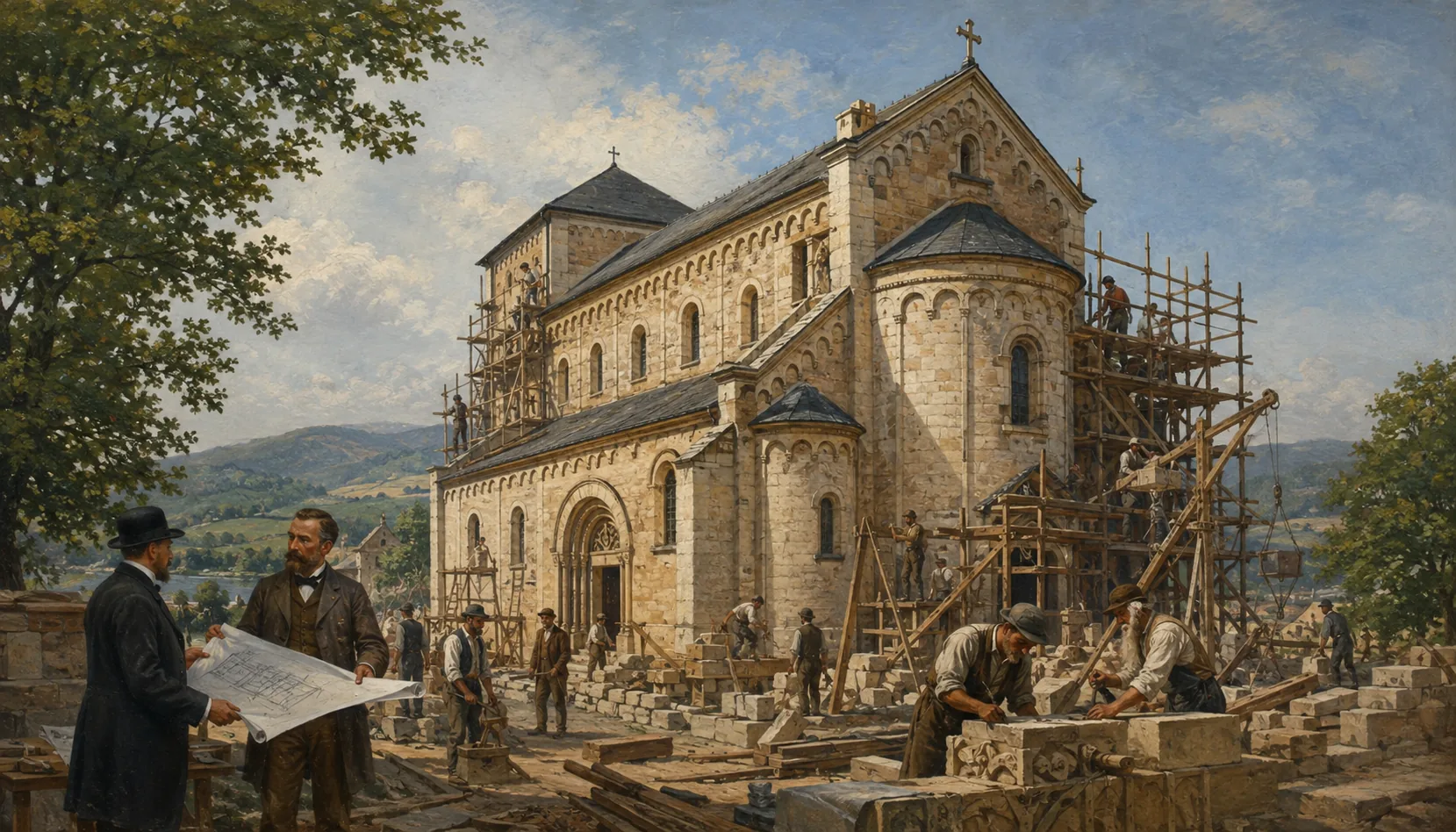
In 1861 the church was given a neo-Romanesque going-over by the Pest architect József Hild, who also worked on the basilica at Esztergom; a further restoration followed under Győző Czigler in 1896–98. The nineteenth century adored the Middle Ages and rebuilt a great deal of them in its own image, which is why not everything that looks Romanesque at Bíňa is Romanesque. Telling the old stonework of the west front from the confident additions made around it is half of what a visit here can teach you.V roku 1861 dostal kostol novorománsku úpravu od peštianskeho architekta Józsefa Hilda, ktorý pracoval aj na ostrihomskej bazilike; ďalšia obnova nasledovala v rokoch 1896 – 1898 pod vedením Győzőa Cziglera. Devätnáste storočie stredovek zbožňovalo a poriadny kus z neho prestavalo na svoj obraz – preto nie všetko, čo v Bíni vyzerá románsky, aj románske je. Rozoznať staré murivo západného priečelia od sebavedomých prístavieb okolo neho je polovica toho, čo sa tu dá naučiť.