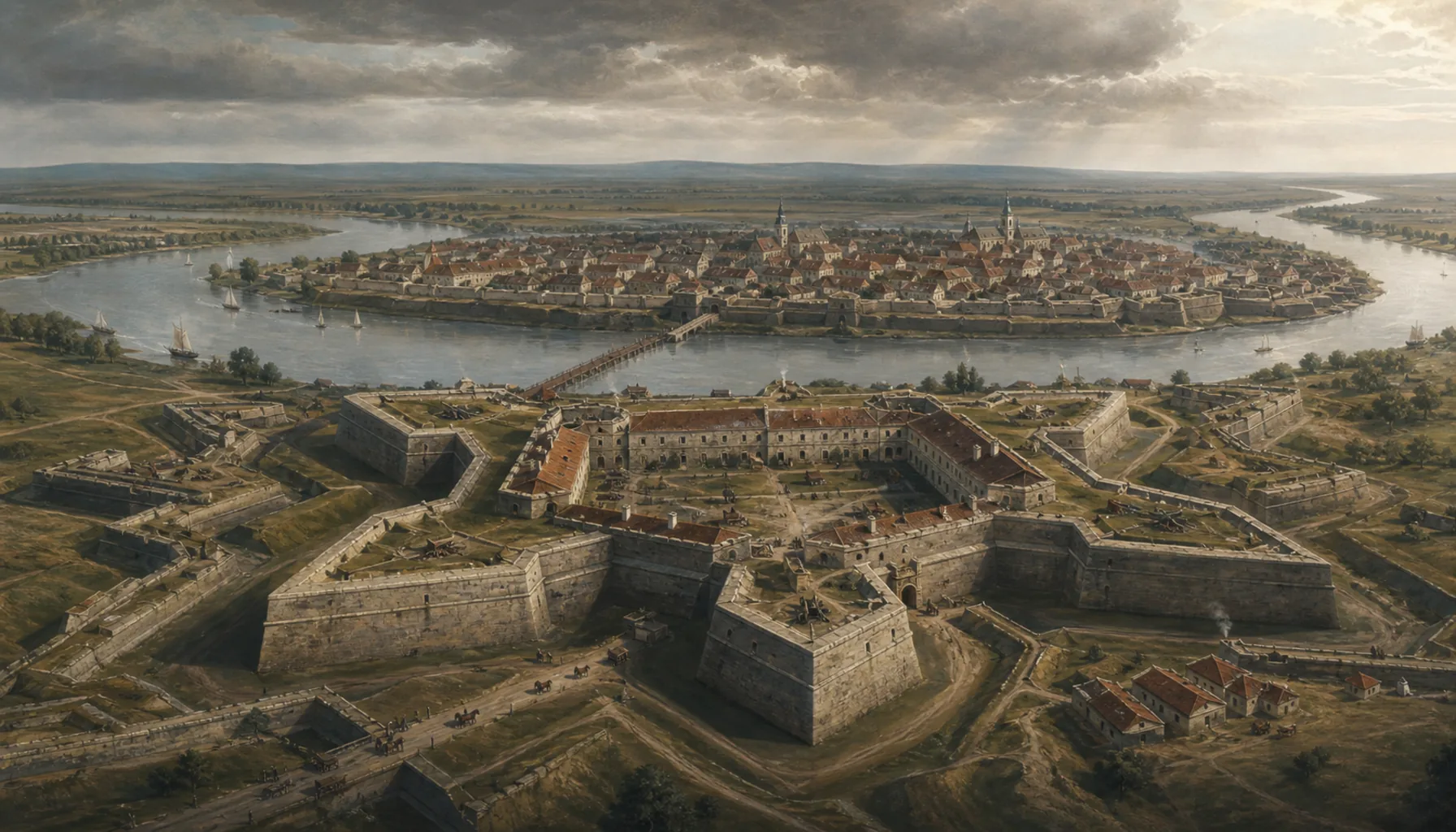
The same empire that had just bombarded the fortress now decided to make it the strongpoint of the whole monarchy. Over the middle decades of the century enormous new outworks went up on both banks — the Palatine Line north of the Danube, the Monostor and Igmánd forts to the south — until Komárno was the largest fortress complex in Central Europe. The town below filled with soldiers and their families: Franz Lehár, who would go on to write The Merry Widow, was born here in 1870, the son of a military bandmaster in the garrison. In 1898 a shipyard opened on the bank, and it went on building river vessels for the whole Danube basin for the next hundred years.Tá istá monarchia, ktorá pevnosť práve ostreľovala, sa rozhodla urobiť z nej svoj hlavný oporný bod. V druhej tretine 19. storočia vyrástli na oboch brehoch obrovské nové opevnenia — Palatínska línia severne od Dunaja, pevnosti Monostor a Igmánd na juhu — až sa Komárno stalo najväčším pevnostným komplexom v strednej Európe. Mesto pod nimi sa zaplnilo vojakmi a ich rodinami: roku 1870 sa tu ako syn vojenského kapelníka narodil Franz Lehár, budúci autor Veselej vdovy. Roku 1898 na brehu otvorili lodenice, ktoré potom celé storočie stavali riečne lode pre celé povodie Dunaja.