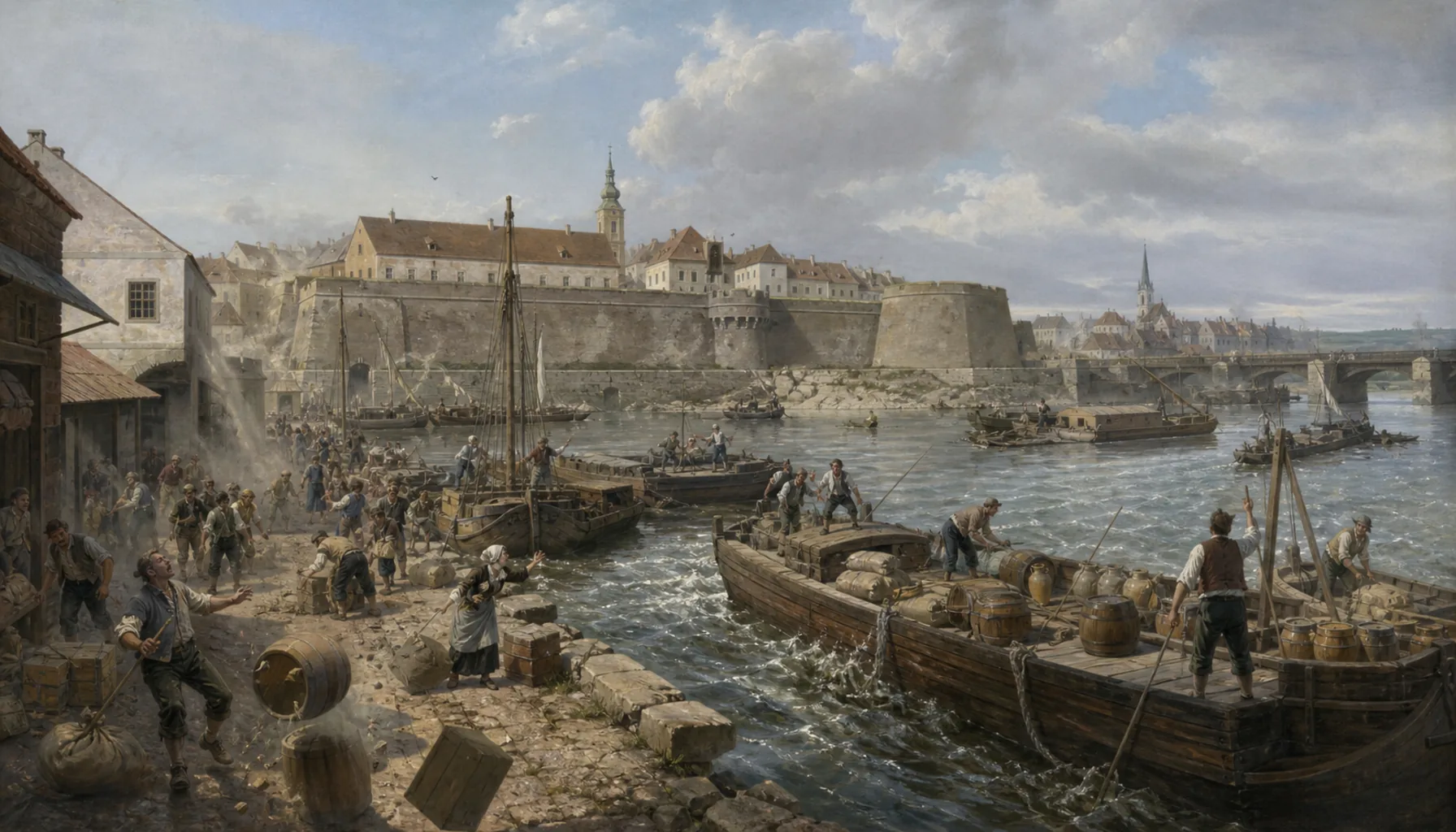
Once the Ottomans were pushed out, Komárno stopped being a front line and became a river port. Its shipping guild moved grain, timber, salt and wine up and down the Danube, and the town grew rich enough to build stone houses and palaces. Then the ground moved. An earthquake on 28 June 1763 destroyed much of the town, and a second on 22 April 1783 struck the streets that had only just been rebuilt; the fortress cracked as well. You can fortify against an army but not against geology — and it was these two earthquakes, not the Turks, that wrecked old Komárno.Keď Osmanov vytlačili, Komárno prestalo byť frontom a stalo sa riečnym prístavom. Jeho lodnícky cech vozil po Dunaji obilie, drevo, soľ i víno a mesto zbohatlo natoľko, že si postavilo kamenné domy a paláce. Potom sa pohla zem. Zemetrasenie 28. júna 1763 zničilo veľkú časť mesta a druhé, 22. apríla 1783, zasiahlo práve obnovené ulice; popraskala aj pevnosť. Proti vojsku sa opevniť dá, proti geológii nie — a staré Komárno zrovnali so zemou tieto dve zemetrasenia, nie Turci.