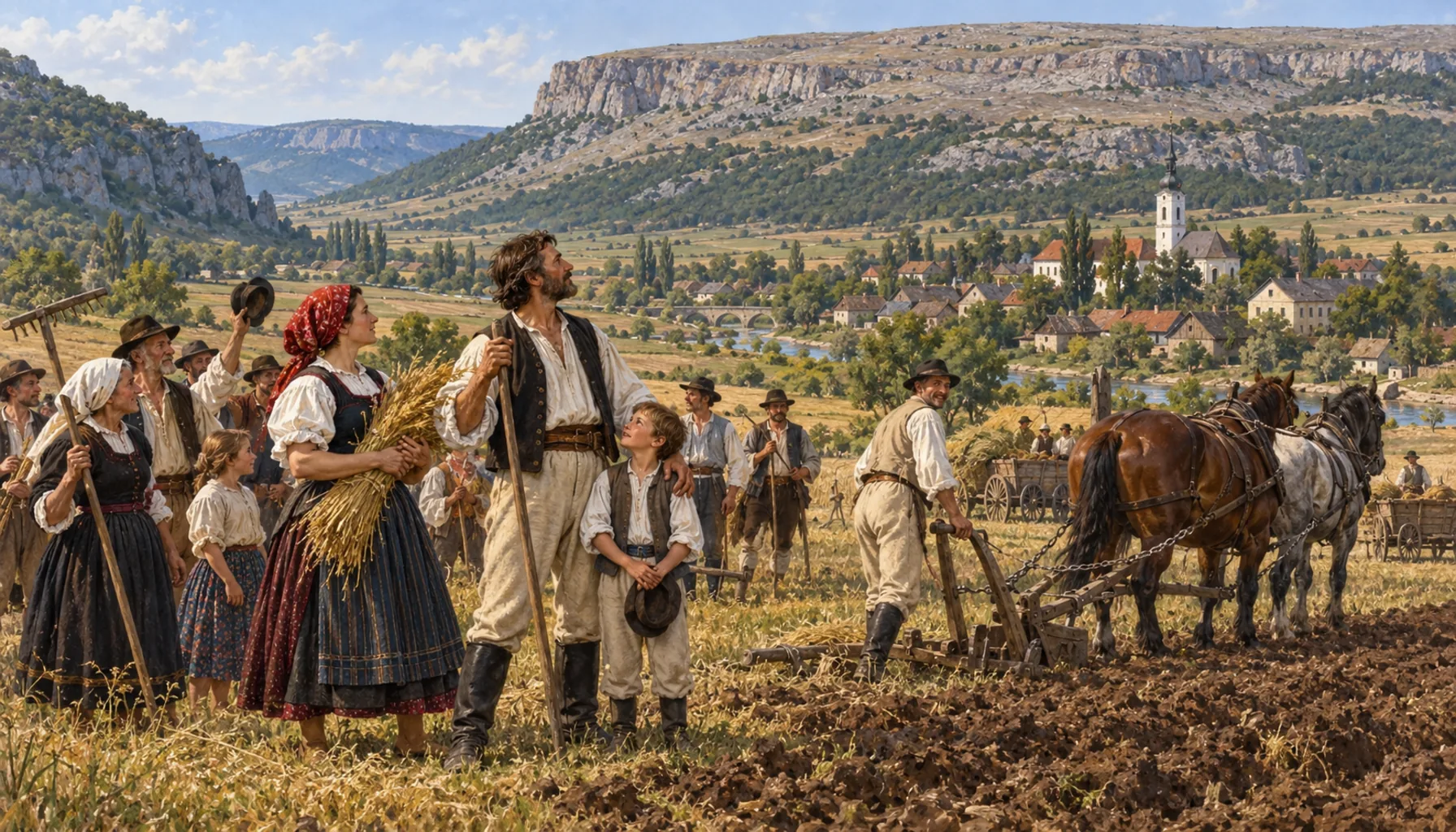
The Hungarian revolution of 1848 abolished serfdom, and the peasants of the Slaná valley became owners of the land they worked — small owners, on thin soil, under a plateau that grows nothing. The same revolution made language political. Plešivec sits in the belt along the southern border where the everyday language of the village is Hungarian while villages a few kilometres north speak Slovak, and from 1848 onwards that ordinary fact became something states argued over. Nothing about the geography changed. What changed is that from then on it mattered which side of a line you were counted on.Uhorská revolúcia roku 1848 zrušila poddanstvo a roľníci v doline Slanej sa stali vlastníkmi pôdy, ktorú obrábali — drobnými vlastníkmi na chudobnej pôde pod planinou, na ktorej nerastie nič. Tá istá revolúcia spolitizovala jazyk. Plešivec leží v páse pri južnej hranici, kde sa v dedine hovorí po maďarsky, kým dediny pár kilometrov na sever hovoria po slovensky, a od roku 1848 sa z tejto všednej skutočnosti stalo niečo, o čom sa hádali štáty. Na geografii sa nezmenilo nič. Zmenilo sa to, že odvtedy záležalo na tom, na ktorej strane čiary vás spočítajú.