Košice region · VillagesKošický kraj · Obce
A junction village where the Štítnik river meets the Slaná under the karst plateaus, with a Gothic church built by the Bebek family and medieval painting recovered from under Calvinist limewash.Križovatková obec tam, kde sa Štítnik vlieva do Slanej pod krasovými planinami, s gotickým kostolom Bebekovcov a so stredovekou maľbou odkrytou spod kalvínskeho vápna.
Plešivec stands where the Štítnik river runs into the Slaná, about twelve kilometres west of Rožňava on the road towards Tornaľa. The Plešivec plateau rises straight above the last houses — one of the big limestone tables of the Slovak Karst, bare, waterless and pocked with sinkholes.Plešivec stojí tam, kde sa riečka Štítnik vlieva do Slanej, asi dvanásť kilometrov západne od Rožňavy na ceste do Tornale. Nad poslednými domami sa priamo dvíha Plešivecká planina — jedna z veľkých vápencových planín Slovenského krasu, holá, bezvodá a posiata závrtmi.
It is a junction in the plain sense: the main road and the railway west from Rožňava pass through, and the valley road to Štítnik and Slavošovce turns off here, as does the climb south onto the karst towards Silica. Everyday conversation in the village is largely Hungarian, as throughout this belt.Je to križovatka v doslovnom zmysle: prechádza tadiaľto hlavná cesta aj železnica z Rožňavy na západ a odbočuje odtiaľto dolinová cesta do Štítnika a Slavošoviec i výjazd na juh do krasu smerom na Silicu. Bežne sa v obci hovorí po maďarsky, ako v celom tomto páse.
The Bebeks are the reason anything of importance is here. The family that dominated Gemer from the fourteenth century took its name from this village and held the river crossing and the mouth of the valley from it, and only later turned the rock at Krásna Hôrka into an artillery castle. Plešivec was the seat before the rock was.Dôvodom, prečo tu vôbec niečo dôležité stojí, sú Bebekovci. Rod, ktorý od 14. storočia ovládal Gemer, sa písal podľa tejto obce, držal odtiaľto brod aj ústie doliny a až neskôr urobil zo skaly na Krásnej Hôrke delový hrad. Plešivec bol ich sídlom skôr než tá skala.
They built the church in the fourteenth century, endowed it and were buried in it. Its wall paintings belong to the same fourteenth- and fifteenth-century campaign that covered parish-church interiors all across Gemer — part of the reason this small region is one of the densest concentrations of medieval painting in central Europe.Kostol postavili v 14. storočí ako katolícky farský, obdarovali ho a pochovávali sa v ňom. Jeho nástenné maľby patria do tej istej vlny 14. a 15. storočia, ktorá vymaľovala vnútro farských kostolov po celom Gemeri, a sú súčasťou toho, prečo je tento malý región jedným z najhustejších sústredení stredovekej maľby v strednej Európe.
In the sixteenth century the parish went over to the Reformed church and the images went under lime. Calvinist practice is stricter about painted saints than Lutheran practice, so what survives here owes as much to luck as to poverty, and the uncovered painting is fragmentary rather than continuous.V 16. storočí prešla fara k reformovanej cirkvi a obrazy zmizli pod vápnom. Kalvínska prax je voči maľovaným svätcom prísnejšia než evanjelická, takže to, čo sa tu zachovalo, vďačí šťastiu rovnako ako chudobe, a odkryté maľby sú skôr fragmentárne než súvislé.
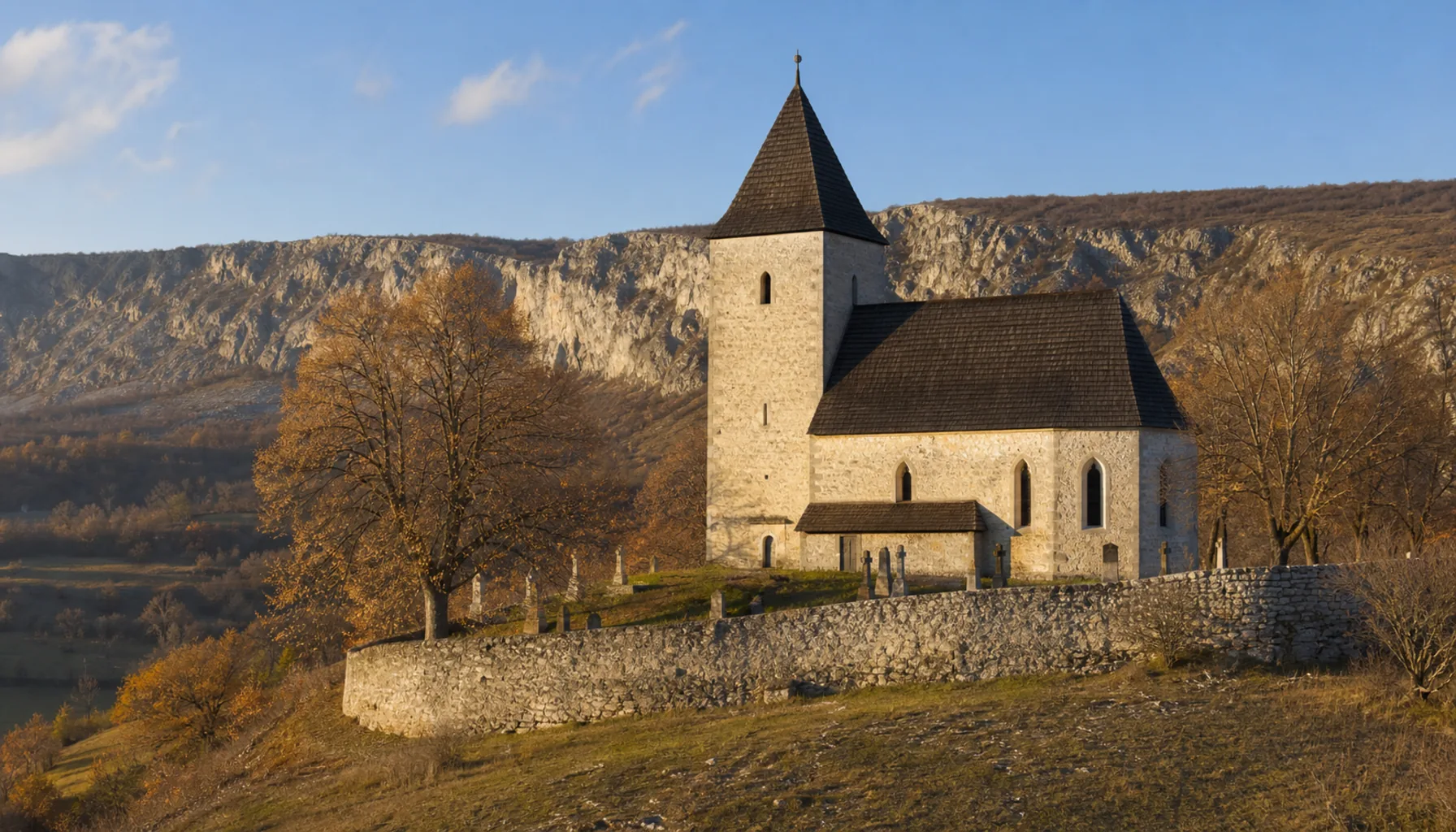
The church is a solid Gothic building with a west tower, standing inside a walled churchyard on rising ground. The interior is Reformed and almost empty by design: whitewash, a pulpit, a communion table, benches turned inwards, no altar and no statues.Kostol je pevná gotická stavba so západnou vežou, stojí v ohradenom cintoríne na vyvýšenine. Interiér je reformovaný, a teda zámerne takmer prázdny: biele steny, kazateľnica, stôl Pánov, lavice otočené dovnútra, žiaden oltár a žiadne sochy.
Set into that emptiness are the recovered patches of medieval painting — figures, drapery, the edge of a scene, ochre and red on grey plaster. Seeing them in a Calvinist room is the point of coming: two theologies of what a church wall is for, one on top of the other, and both left visible.Do tejto prázdnoty sú zasadené odkryté kusy stredovekej maľby — postavy, záhyby rúcha, okraj výjavu, okrová a červená na sivej omietke. Práve pre ten pohľad sa sem chodí: dve teológie toho, načo je stena kostola, jedna na druhej, a obe ponechané viditeľné.
Above the village, marked paths climb onto the plateau. On top there is dry grass, juniper, dolines and long views down the Slaná valley, and no water at all — the rain goes straight through the limestone. The shafts and caves up there are for cavers, and several are unfenced.Nad obcou stúpajú značené chodníky na planinu. Hore je suchá tráva, borievky, závrty a ďaleké výhľady dolu dolinou Slanej — a nijaká voda, dážď prepadne rovno cez vápenec. Priepasti a jaskyne tam patria jaskyniarom a viaceré nie sú ohradené.
The church holds services and is locked between them; it is opened by arrangement with the parish, and arriving on spec usually means the churchyard and the outside. Nothing here is ticketed, staffed or signposted the way a castle is.V kostole sa konajú bohoslužby a medzi nimi je zamknutý; otvára sa po dohode s farským úradom a príchod bez ohlásenia zvyčajne znamená cintorín a pohľad zvonka. Nič tu nie je spoplatnené, obsluhované ani značené pre návštevníkov tak, ako to býva pri hradoch.
Plešivec is a poor village in a poor district: the closing of the mines and the ironworks took the work out of this valley and it has not come back. It is also an ordinary inhabited place going about its business, and the plateau above it is grazing and forest rather than a park.Plešivec je chudobná obec v chudobnom okrese: zatvorenie baní a železiarní zobralo tejto doline prácu a tá sa nevrátila. Zároveň je to bežné obývané miesto, ktoré si žije svoje, a planina nad ním je pasienok a les, nie park.
Plešivec has its own station on the Zvolen–Košice railway and sits on the main road between Rožňava and Tornaľa, which makes it the easiest of the Gemer villages to reach without a car. Buses turn off here for Štítnik, Slavošovce and the karst villages to the south.Plešivec má vlastnú stanicu na trati Zvolen – Košice a leží na hlavnej ceste medzi Rožňavou a Tornaľou, takže je z gemerských obcí najdostupnejší bez auta. Odtiaľto odbočujú autobusy do Štítnika, do Slavošoviec aj do krasových obcí na juhu.
Sixteen videos for Plešivec.Šestnásť videí — Plešivec.