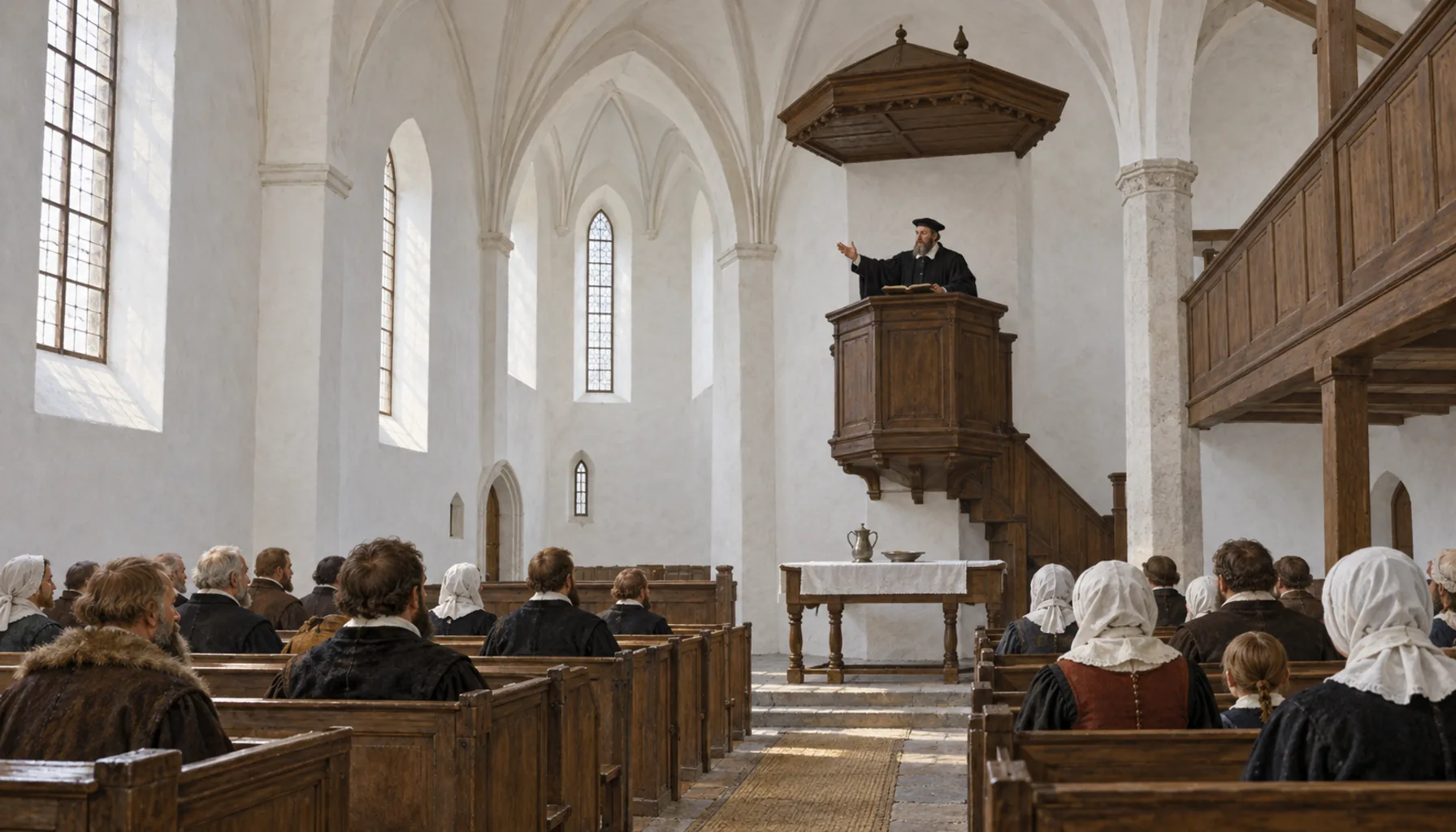
By the early seventeenth century the parish had gone over to the Reformed church — Calvinist, not Lutheran, and that distinction decides what you see inside today. Reformed practice is stricter than Lutheran about images in a church: no altar, no statues, no painted saints, and the medieval walls were limewashed. The building was remodelled in Renaissance taste in 1617, and a late-Gothic burial chapel for the Bebeks was added at the end of the sixteenth century. What survived of the painting survived by accident under the lime, which is why the recovered patches here are fragments rather than the continuous cycles you see at Štítnik.Začiatkom 17. storočia už bola fara reformovaná — kalvínska, nie evanjelická augsburského vyznania, a práve tento rozdiel rozhoduje o tom, čo v kostole dnes uvidíte. Reformovaná prax je voči obrazom prísnejšia než luteránska: žiaden oltár, žiadne sochy, žiadni maľovaní svätci — a stredoveké steny zabielili. V roku 1617 stavbu prestavali v renesančnom vkuse a koncom 16. storočia k nej pribudla neskorogotická pohrebná kaplnka Bebekovcov. Čo sa z maľby zachovalo, zachovalo sa náhodou pod vápnom, a preto sú tu len odkryté útržky, nie súvislé cykly ako v Štítniku.