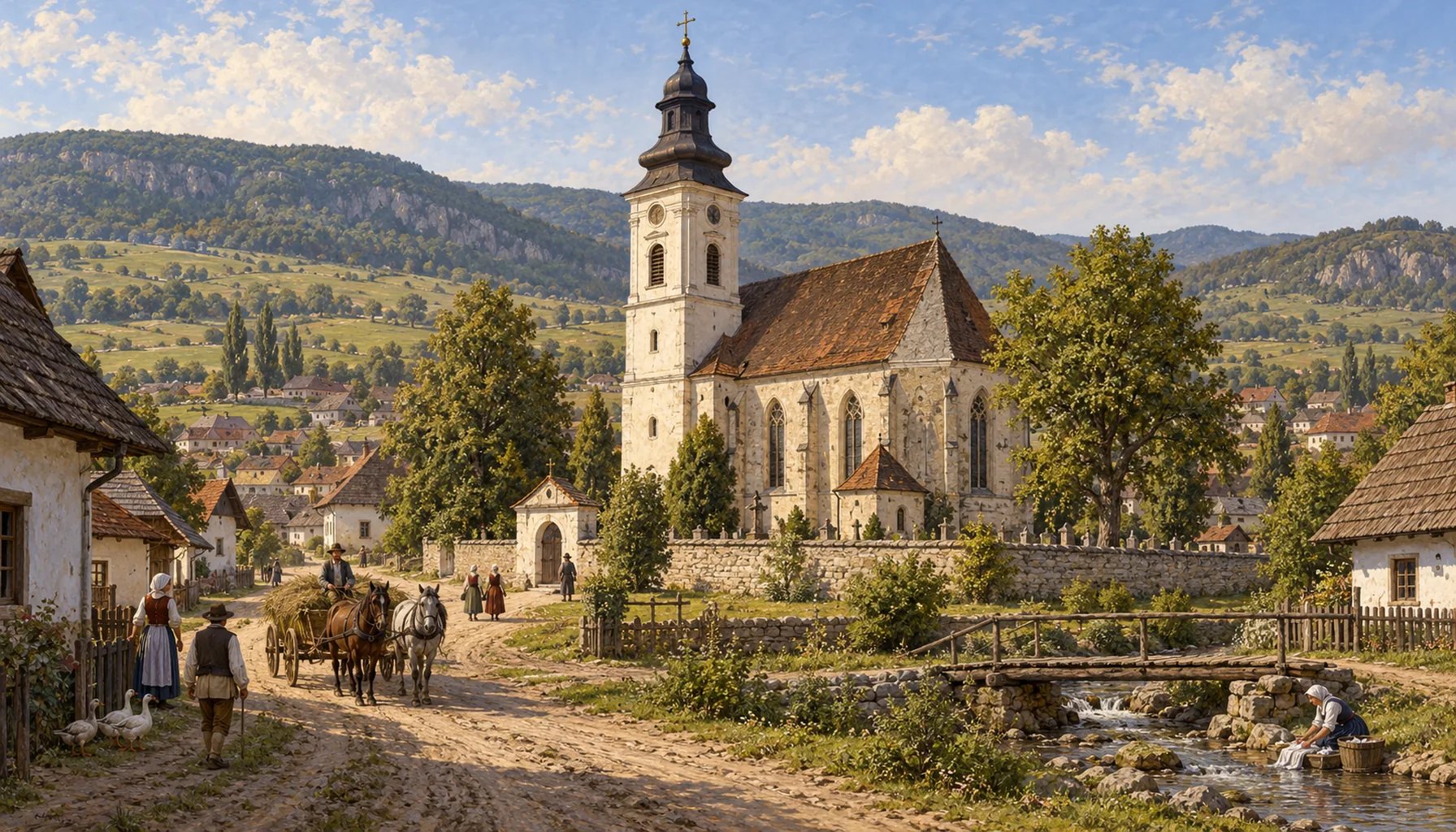
Nothing dramatic happened here in the eighteenth century, which for a village on the old Ottoman frontier counts as good news. The Habsburgs had pushed the Turks out of Hungary by 1699, the frontier moved hundreds of kilometres south, and Gemer stopped being a war zone and went back to iron, timber and grazing. The visible result at Plešivec is a tower: the present one was built in 1807 in the classical style of its day and set on a medieval church, which is why the building looks like two centuries stacked on top of each other. Most Slovak village churches are exactly this — a Gothic body with later work added on, and the joins are usually easy to see.V 18. storočí sa tu nestalo nič dramatické, čo pre dedinu na niekdajšej osmanskej hranici znamená dobrú správu. Habsburgovci vytlačili Turkov z Uhorska do roku 1699, hranica sa posunula o stovky kilometrov na juh a Gemer prestal byť vojnovým pásmom a vrátil sa k železu, drevu a pastve. Viditeľným výsledkom je v Plešivci veža: dnešnú postavili v roku 1807 v klasicistickom slohu svojej doby na stredoveký kostol, a preto stavba vyzerá ako dve storočia položené na seba. Väčšina slovenských dedinských kostolov je presne taká — gotické jadro s neskoršími prístavbami, a spoje bývajú dobre viditeľné.