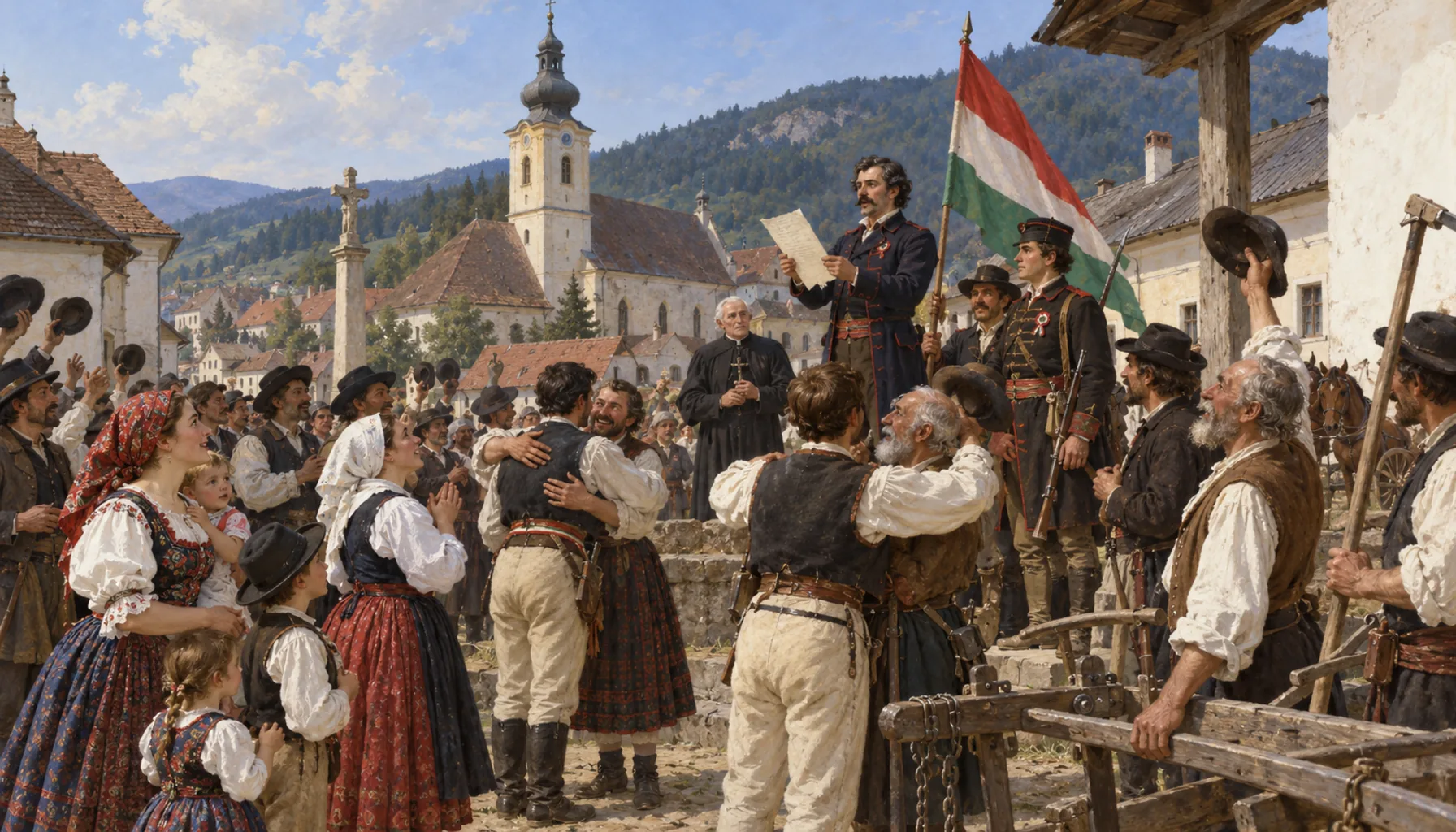
In 1848 the Hungarian revolution abolished serfdom throughout the kingdom, and the obligations that tied a village to its landlord — labour days, dues in kind, payments for the right to work a site — were swept away, church landlords included. For a valley whose whole trade had begun with a lease from the provost of Jasov, that mattered. Exactly how the change worked out forge by forge along the Bodva is not something the ordinary sources record, and it would be wrong to pretend otherwise. What is clear is the timing: the freest and busiest decades of the Medzev hammer trade come immediately after it.Roku 1848 zrušila uhorská revolúcia v celom kráľovstve poddanstvo a povinnosti, ktoré viazali dedinu na zemepána — robota, naturálne dávky, platby za právo pracovať na určitom mieste —, padli, aj u cirkevných zemepánov. Pre dolinu, ktorej celé remeslo sa začalo nájmom od jasovského prepošta, to nebola maličkosť. Ako presne sa tá zmena prejavila pri jednotlivých hámroch na Bodve, bežné pramene nezaznamenávajú a bolo by nesprávne tváriť sa inak. Isté je načasovanie: najslobodnejšie a najrušnejšie desaťročia medzevského hámorníctva prichádzajú hneď po ňom.