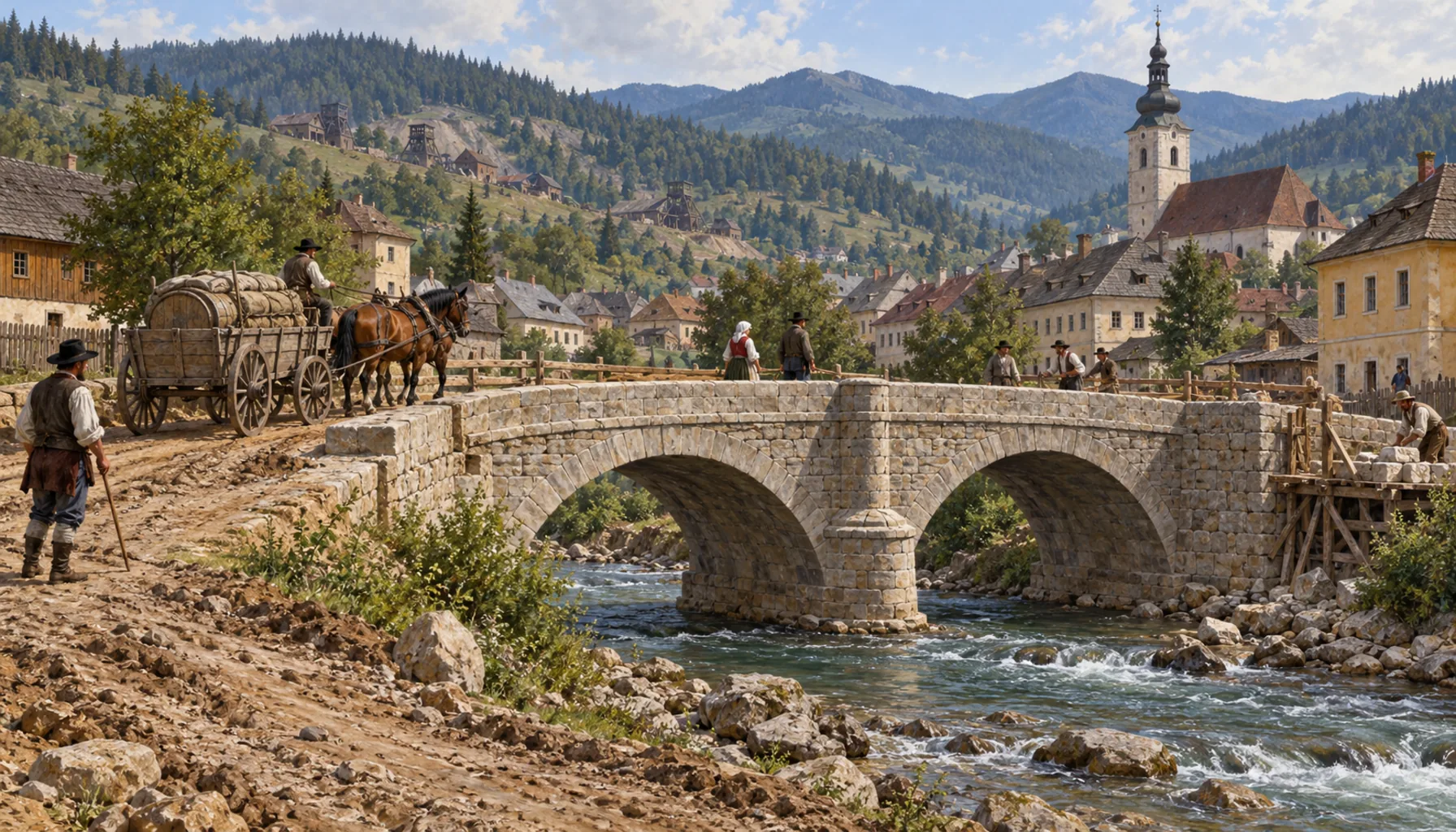
Between 1837 and 1845 the town threw a two-arched stone bridge across the Hnilec — the sort of thing a valley town builds when the carts are getting heavier and the road matters more than it used to. Then came 1848, the revolution that abolished serfdom across the Kingdom of Hungary. Gelnica's own burghers had been free for four hundred years; that is exactly what a free royal town meant. The change fell instead on the villages up and down the valley, whose people had owed labour and dues to a landlord and now owed none — and within a generation those freed villagers were the labour force of the valley's mines and forests, with many of them leaving for America before the century was out.V rokoch 1837 – 1845 postavilo mesto cez Hnilec kamenný most s dvoma oblúkmi — presne to, čo dolinové mesto urobí, keď sú vozy ťažšie a cesta dôležitejšia než kedysi. Potom prišiel rok 1848 a revolúcia, ktorá v celom Uhorsku zrušila poddanstvo. Gelnickí mešťania boli slobodní už štyristo rokov; presne to znamenalo slobodné kráľovské mesto. Zmena dopadla na dediny hore i dole dolinou, ktorých ľudia dovtedy odrábali panské a platili dávky a odrazu už nič — a o generáciu neskôr boli práve títo oslobodení dedinčania pracovnou silou baní a lesov celej doliny, pričom mnohí z nich ešte pred koncom storočia odišli do Ameriky.