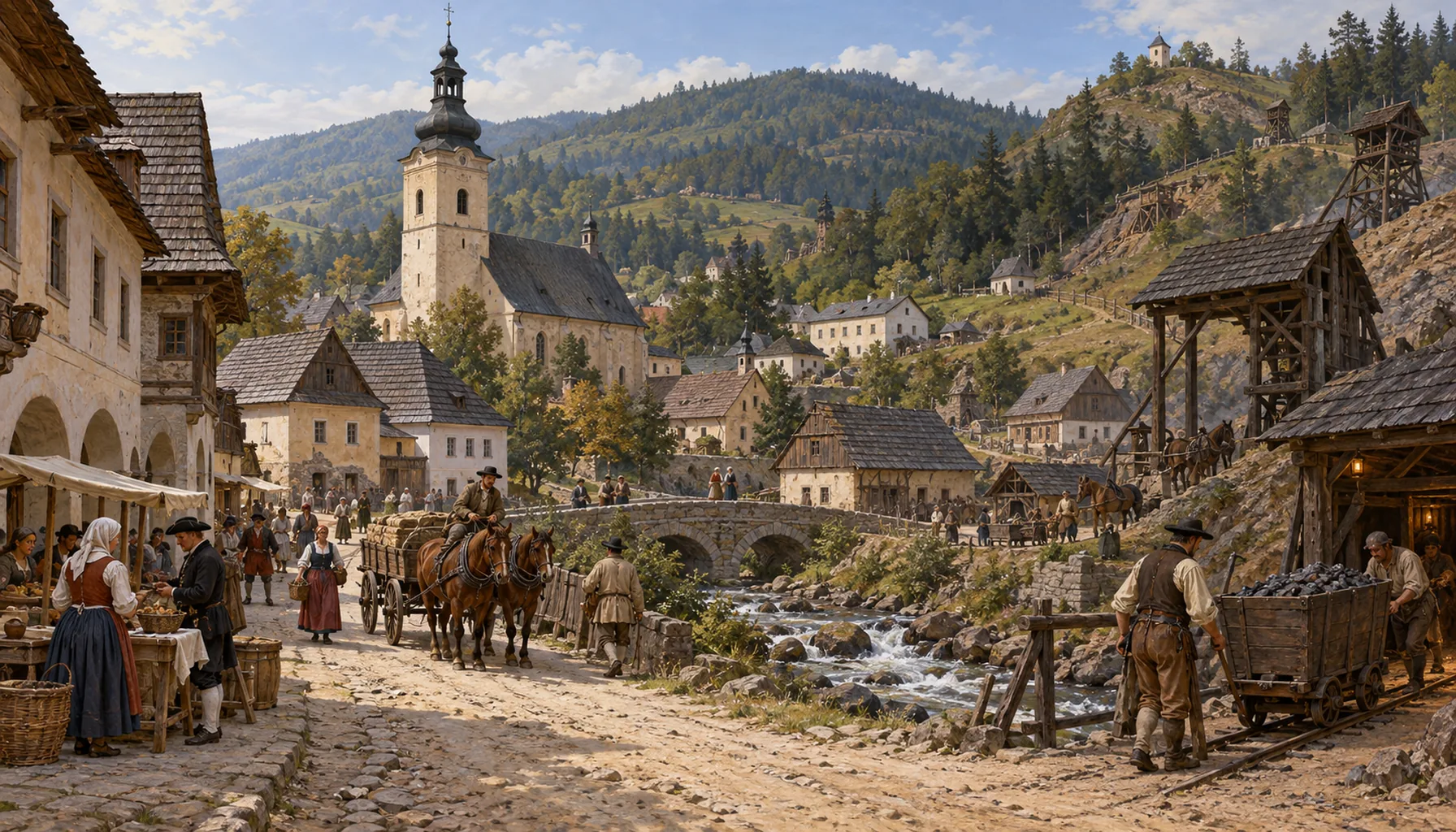
Gelnica was no longer a name in European metal, but it never stopped being a mining town, and the eighteenth century left its mark in stone rather than in silver. The Gothic parish church was rebuilt in Baroque taste between 1743 and 1746, and in 1802 a plain two-storey late-Baroque town hall went up for a council whose main business was still the mines. Mining under the Habsburgs was a state affair — surveyed, taxed and regulated from Vienna and from the chamber towns — so a small town like this now worked inside somebody else's system instead of running its own. Both buildings are still standing, and the town hall has the last word in this story.Gelnica už nebola menom v európskom obchode s kovom, no banským mestom byť neprestala — a 18. storočie po sebe zanechalo skôr kameň než striebro. Gotický farský kostol prestavali barokovo v rokoch 1743 – 1746 a roku 1802 postavili striedmu dvojpodlažnú neskorobarokovú radnicu pre radu, ktorej hlavnou agendou boli stále bane. Baníctvo za Habsburgovcov bolo štátnou vecou — merané, zdaňované a riadené z Viedne a z komorských miest —, takže také malé mesto ako toto už pracovalo vnútri cudzieho systému namiesto vlastného. Obe stavby stoja dodnes a radnica má v tomto príbehu ešte posledné slovo.