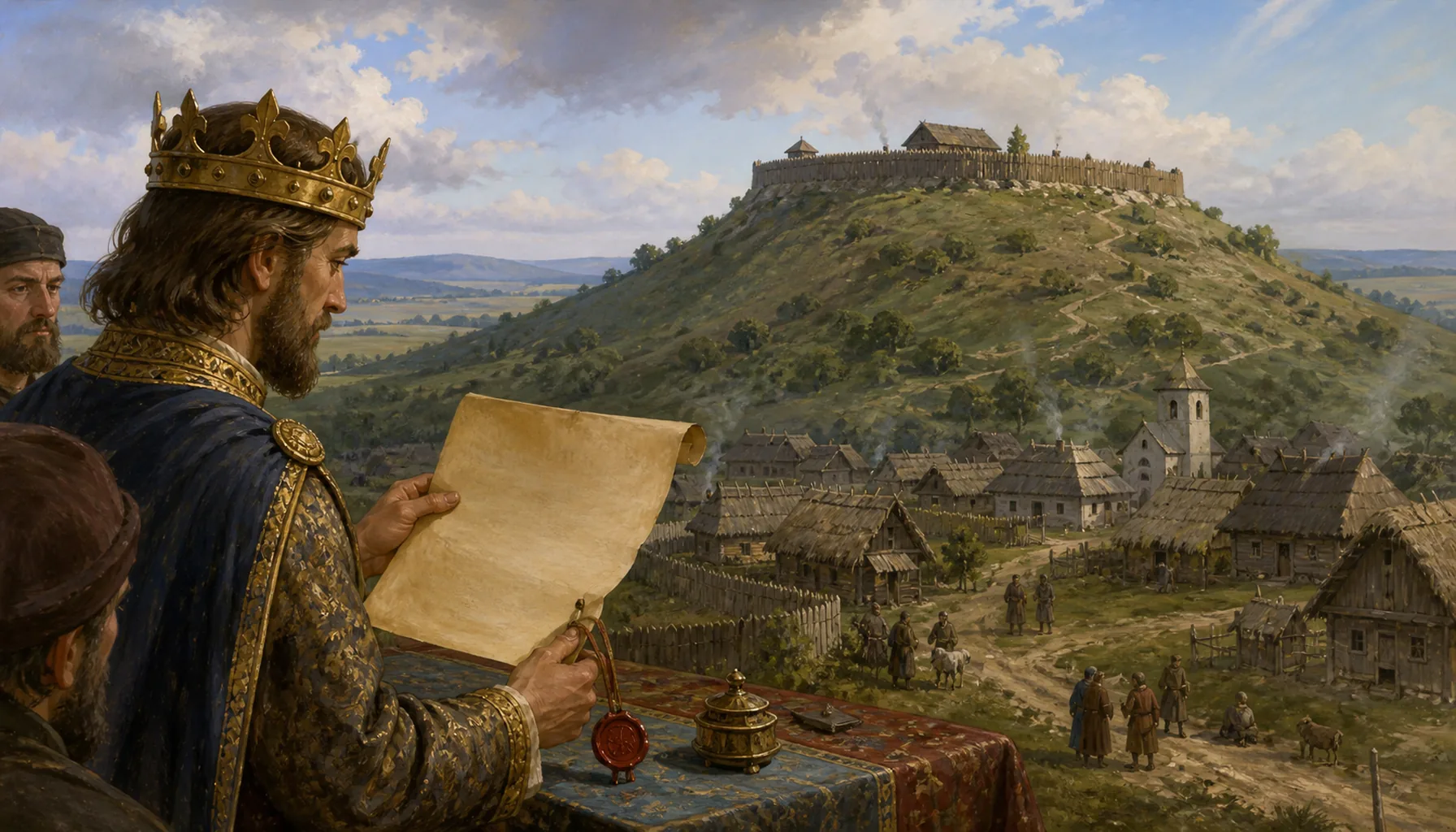
The name of the place was first written down in 1209, in a charter of King Andrew II — which is a fact about a document, not about when people arrived, since the hillfort above had been in use for three hundred years by then. The date that shaped the town, though, is 1241. After the Mongol armies rode through the kingdom, King Béla IV concluded that wooden forts were worthless and pushed his lords to build in stone, and the castle of Biely Kameň — White Stone — went up on the ridge above Svätý Jur in the middle of the thirteenth century, in the decades after the invasion. It is first mentioned in 1271, when it was caught up in the raids of the Bohemian king Přemysl Otakar II, and again in 1295. So the ruin in the woods is not a victim of the Mongols; it is one of their consequences.Meno tohto miesta sa prvý raz objavuje v listine kráľa Ondreja II. z roku 1209 — čo je údaj o listine, nie o tom, odkedy tu ľudia žijú, veď hradisko nad mestom vtedy fungovalo už tristo rokov. Pre podobu mesta je však rozhodujúci rok 1241. Keď sa cez kráľovstvo prehnali mongolské vojská, kráľ Belo IV. pochopil, že drevené hradiská nič nezmôžu, a tlačil na šľachtu, aby stavala z kameňa; hrad Biely Kameň vyrástol na hrebeni nad Svätým Jurom v polovici 13. storočia, teda v desaťročiach po vpáde. Prvý raz sa spomína v roku 1271 v súvislosti s vpádmi českého kráľa Přemysla Otakara II. a znova v roku 1295. Zrúcanina v lese teda nie je obeťou Mongolov, ale jedným z ich následkov.