Bratislava region · TownsBratislavský kraj · Mestá
Svätý JurSvätý Jur
The smallest of the three wine towns and the one that has changed least — a single street of burgher houses under stone-walled vineyard terraces, a castle ruin in the woods above, and a rare alder swamp forest on the plain below.Najmenšie z trojice vinohradníckych miest a to, ktoré sa zmenilo najmenej — jedna ulica meštianskych domov pod vinohradníckymi terasami s kamennými múrikmi, zrúcanina hradu v lese nad mestom a vzácny jelšový mokraďový les na rovine pod ním.
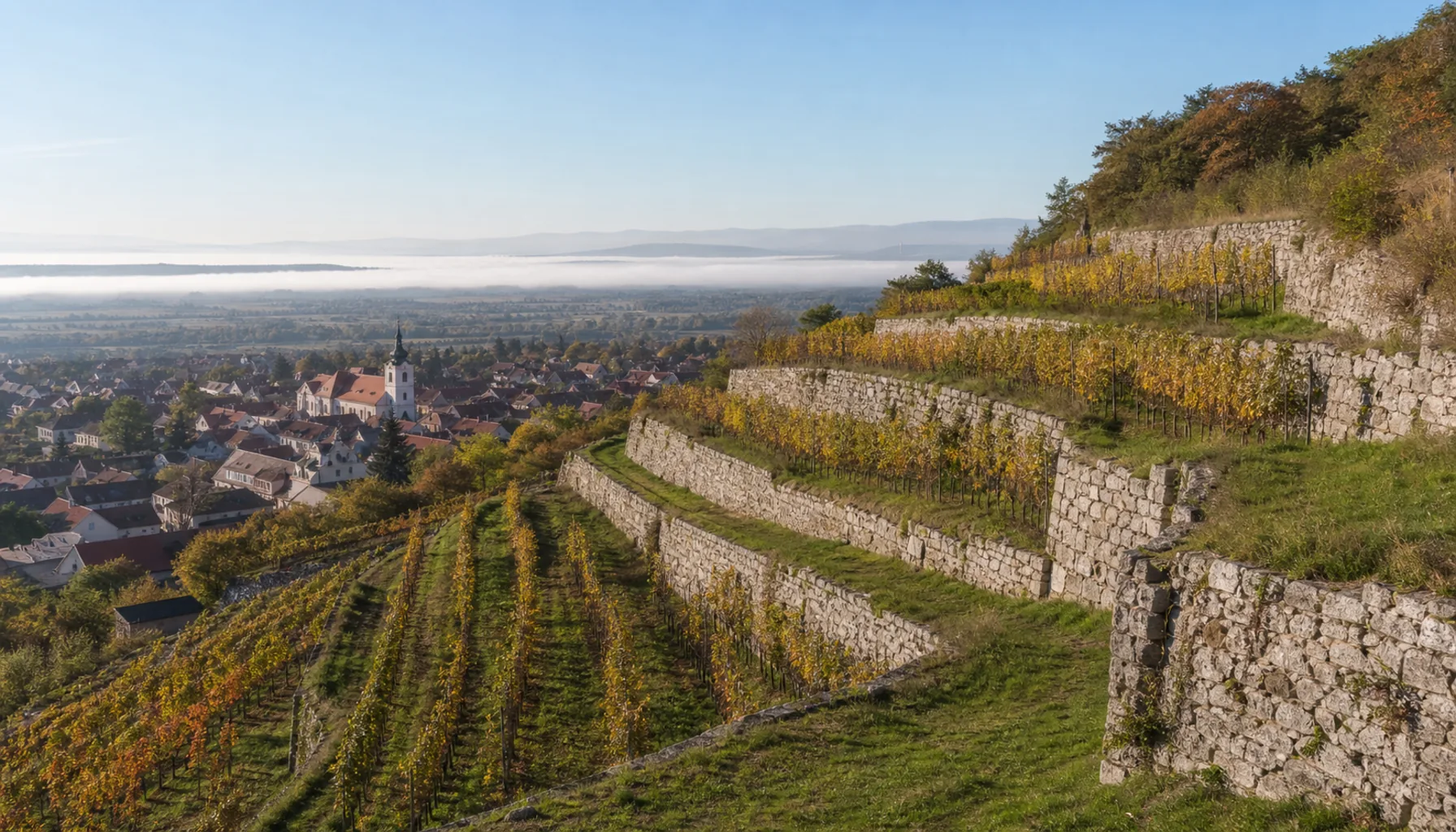
Dry-stone vineyard terraces on the slope above Svätý JurVinohradnícke terasy s kamennými múrikmi na svahu nad Svätým Jurom
Where it standsKde leží
Svätý Jur sits between Bratislava and Pezinok at the very foot of the Little Carpathians, a dozen or so kilometres from the capital's centre and close enough that the city's outskirts almost reach it. The town is pressed into the strip between the wooded slope and the wet flat ground of the Šúr basin below.Svätý Jur leží medzi Bratislavou a Pezinkom priamo na úpätí Malých Karpát, asi dvanásť kilometrov od centra hlavného mesta a dosť blízko na to, aby k nemu predmestia veľkomesta takmer dosahovali. Mesto je vtlačené do pásu medzi zalesneným svahom a mokrou rovinou Šúru pod ním.
Its historic core is a protected urban conservation area — the whole street, not a single monument — which is why it reads as an older place than either of its larger neighbours.Jeho historické jadro je mestskou pamiatkovou rezerváciou — celá ulica, nie jediná pamiatka — a práve preto pôsobí staršie než ktorýkoľvek z jeho väčších susedov.
The storyHistória
The wooded spur above the town carries the earthworks of a large early-medieval hillfort, one of the more important fortified settlements of its time in this corner of the country. Beside it the counts of Svätý Jur and Pezinok later built a stone castle, Biely Kameň — White Stone — which fell out of use after the family died out and is a ruin today.Zalesnená ostroha nad mestom nesie valy veľkého včasnostredovekého hradiska, jedného z významnejších opevnených sídlisk svojej doby v tomto kúte krajiny. Vedľa neho si grófi zo Svätého Jura a Pezinka neskôr postavili kamenný hrad Biely Kameň, ktorý po vymretí rodu stratil využitie a dnes je zrúcaninou.
The town's wealth came from the terraces. Generations of growers cut the slope above the houses into steps held by dry-stone walls — among the oldest and most extensive vineyard terracing in Slovakia — and sold the wine north and west, as far as Vienna and Silesia. The charter of a free royal town followed in 1647.Bohatstvo mesta prišlo z terás. Generácie vinohradníkov rozrezali svah nad domami na stupne držané kamennými múrikmi — patria k najstarším a najrozsiahlejším vinohradníckym terasám na Slovensku — a víno predávali na sever a západ, až do Viedne a Sliezska. Výsady slobodného kráľovského mesta prišli v roku 1647.
The German-speaking population that had built and worked those terraces left or was expelled at the end of the Second World War. Many terraces went out of cultivation afterwards and scrub took the higher ones; some have been cleared and replanted in the last two decades.Nemecky hovoriace obyvateľstvo, ktoré tieto terasy vybudovalo a obrábalo, na konci druhej svetovej vojny odišlo alebo bolo vysídlené. Mnohé terasy potom pustli a vyššie z nich zarástli krovím; časť sa v posledných dvoch desaťročiach vyčistila a znova vysadila.
What to seeČo vidieť
The church of St George, early Gothic and much older than anything else in the town, gave the place its name and stands at the top of the main street. Below it the street runs the length of the old town between low, deep burgher houses with arched gateways into their yards, most of which still have a press-house at the back.Kostol svätého Juraja, včasnogotický a oveľa starší než čokoľvek iné v meste, dal miestu meno a stojí na hornom konci hlavnej ulice. Pod ním sa ulica tiahne celým starým mestom medzi nízkymi, do hĺbky stavanými meštianskymi domami s klenutými prejazdmi do dvorov, kde vzadu väčšinou dodnes stojí lisovňa.
A marked path climbs from the top of the town through the terraces into the oak woods and on to Biely Kameň, half an hour or so above the last vines. The ruin is consolidated walls, freely accessible, with the view back down over the roofs to the plain — a walk, not a museum.Značený chodník stúpa z horného konca mesta cez terasy do dubového lesa a ďalej k Bielemu Kameňu, asi pol hodiny nad poslednými vinicami. Zrúcanina je zakonzervovaným murivom, voľne prístupným, s výhľadom späť ponad strechy na rovinu — je to vychádzka, nie múzeum.
On the other side of the town is the Šúr, a national nature reserve of alder swamp forest standing in shallow water — one of very few woods of its kind left in Central Europe, and the reason ornithologists come here. A nature trail runs along its edge; the interior is protected and not open to walkers.Na druhej strane mesta leží Šúr, národná prírodná rezervácia s jelšovým mokraďovým lesom stojacim v plytkej vode — jeden z mála takých lesov, aké v strednej Európe zostali, a dôvod, prečo sem chodia ornitológovia. Popri jeho okraji vedie náučný chodník, vnútro je chránené a pre návštevníkov neprístupné.
Work and industryPráca a priemysel
Wine is the town's old trade and still its identity: small family cellars, a handful of larger producers, and steady work restoring terraces that had been abandoned. Tourism from the capital — tastings, walks, the nature reserve — is the visible newer income.Vinárstvo je starým remeslom mesta a stále aj jeho identitou: malé rodinné pivnice, hŕstka väčších výrobcov a trvalá práca na obnove opustených terás. Viditeľne novším príjmom je cestovný ruch z hlavného mesta — degustácie, vychádzky, prírodná rezervácia.
Otherwise Svätý Jur is a commuter town, and an expensive one: being a quarter of an hour from Bratislava by train with vineyards behind the garden has pushed house prices well above what the town's own economy would explain.Inak je Svätý Jur mestom dochádzajúcich, a to drahým: štvrťhodina vlakom od Bratislavy a vinice hneď za záhradou vyhnali ceny domov oveľa vyššie, než by vysvetľovalo vlastné hospodárstvo mesta.
Getting thereAko sa tam dostať
Regional trains on the Bratislava–Trnava line stop here and take about a quarter of an hour from the capital; buses and the old wine road are the alternatives, and a cycle route runs out along the foot of the hills from the city.Zastavujú tu regionálne vlaky na trati Bratislava – Trnava a z hlavného mesta trvá cesta asi štvrť hodiny; alternatívou sú autobusy a stará vínna cesta a popri úpätí kopcov vedie z mesta cyklotrasa.
Explore Svätý JurObjavujte Svätý Jur
Every part of this place with a page of its own.Každá časť tohto miesta, ktorá má vlastnú stránku.