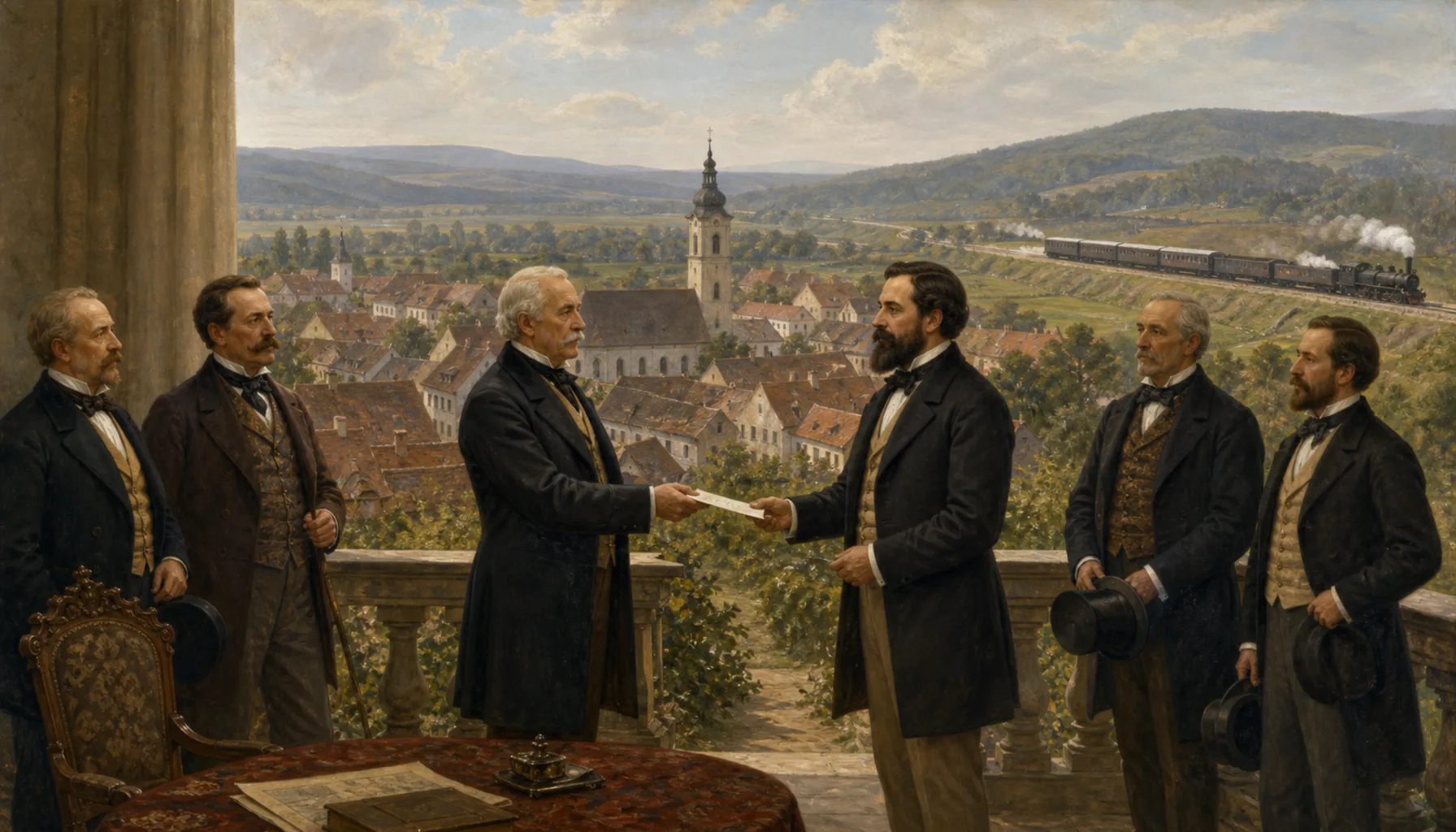
In 1867, the year the Compromise turned the empire into Austria-Hungary, the estate passed from the Pálffys to the Károlyi family. The other thing that happened in these decades mattered even more, and it happened five kilometres away: the main line from Bratislava to Břeclav, built between 1889 and 1891, was laid across the open plain through Zohor, not through Stupava under the hills. Towns on the line grew factories; Stupava kept its gardens, its jug-makers and its road, and sent its vegetables to the markets of the city instead. You can still see that decision in the timetable, because the nearest station is at Zohor to this day.V roku 1867, keď sa rakúsko-uhorským vyrovnaním zmenila ríša na Rakúsko-Uhorsko, prešlo panstvo z Pálfiovcov na Károlyiovcov. Ešte dôležitejšia vec sa však v tých rokoch stala päť kilometrov odtiaľto: hlavnú trať z Bratislavy do Břeclavi, postavenú v rokoch 1889 – 1891, položili po otvorenej rovine cez Zohor, nie cez podhorskú Stupavu. Mestá na trati dostali továrne; Stupave zostali záhrady, džbankári a cesta — a zeleninu vozila na trhy do mesta. To rozhodnutie vidno v cestovnom poriadku dodnes: najbližšia stanica je stále v Zohore.