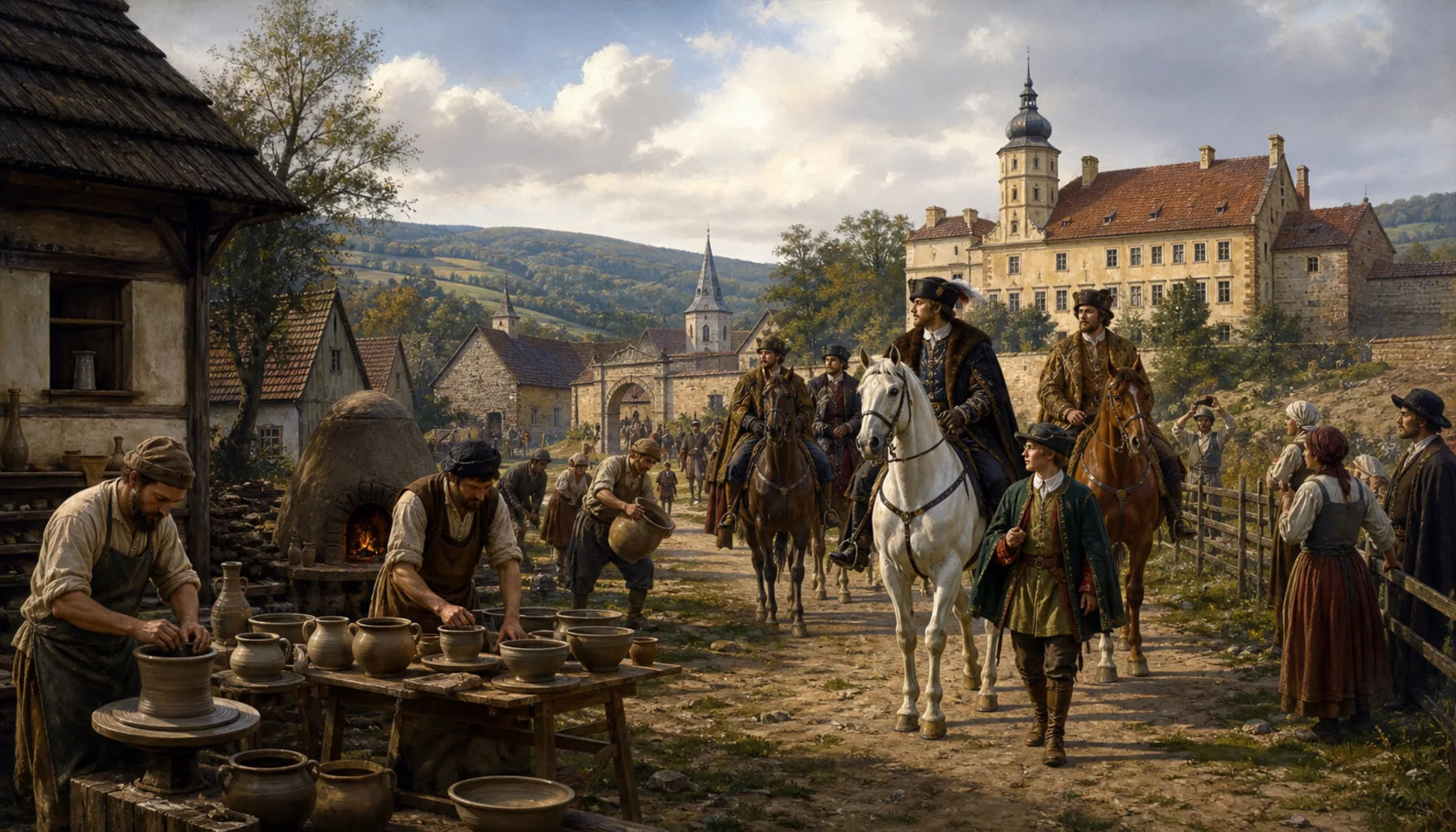
When the counts' line ended the estate passed through the Serédy family to the Salms, and from 1592 to the Pálffys, who would hold it for nearly three hundred years. The Ottoman front lay far to the south-east, so this was rear country — but rear country fills up with people the war has moved. Among them were the Habans, Anabaptist refugees driven out of Moravia and the Tyrol, whom the Pálffys settled at Veľké Leváre to the north; they were superb potters, and their tin-glazed blue-and-white ware set the standard for every workshop in Záhorie. The Kostka family of Stupava, who would make the town famous three hundred years later, traced their own craft back to that Haban line.Keď rod grófov vymrel, panstvo prešlo cez Serédyovcov na Salmovcov a od roku 1592 na Pálfiovcov, ktorí ho držali takmer tristo rokov. Osmanský front ležal ďaleko na juhovýchode, takže toto bolo zázemie — a zázemie sa plní ľuďmi, ktorých vojna pohla z miesta. Patrili k nim habáni, novokrstenskí utečenci vyhnaní z Moravy a Tirolska, ktorých Pálfiovci usadili severnejšie vo Veľkých Levároch; boli to vynikajúci hrnčiari a ich cínovo glazovaná modro-biela fajansa určila latku pre každú dielňu na Záhorí. Stupavskí Kostkovci, ktorí mesto o tristo rokov neskôr preslávili, odvodzovali svoje remeslo práve od tejto habánskej vetvy.