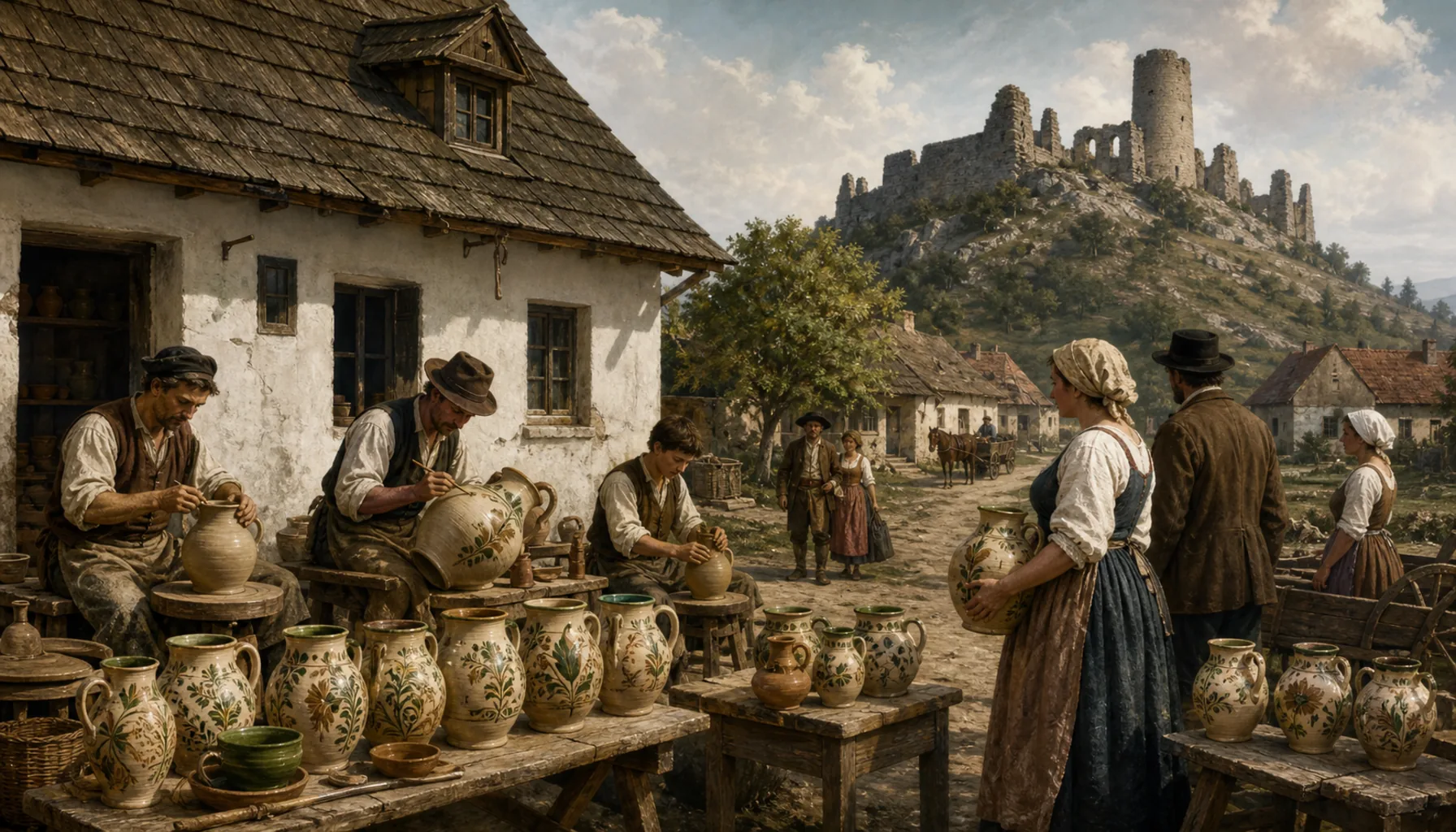
In the calmer eighteenth century the pottery trade here expanded, and Stupava became a town of jug-makers working in the glazed technique the Habans had brought. Down in the village the old water castle was rebuilt into a comfortable country house with a park, because a lord no longer needed a moat to sleep safely. Pajštún, up on its rock, burned in the middle of the century and was only patched up afterwards. It was finished off in 1809 — not by Turks, as such ruins are usually said to have been, but by Napoleon's soldiers, who demolished the walls, and it has stood as a ruin ever since.V pokojnejšom 18. storočí sa tunajšie hrnčiarstvo rozrástlo a zo Stupavy sa stalo džbankárske mestečko, ktoré pracovalo glazovanou technikou prinesenou habánmi. Dolu v dedine prestavali starý vodný hrad na pohodlný kaštieľ s parkom — pán už na pokojný spánok vodnú priekopu nepotreboval. Pajštún hore na brale v polovici storočia vyhorel a potom ho už len provizórne opravili. Dorazili ho v roku 1809, a nie Turci, ako sa o takých zrúcaninách zvykne hovoriť, ale Napoleonovi vojaci, ktorí múry rozobrali a vyhodili do vzduchu; odvtedy je z hradu ruina.