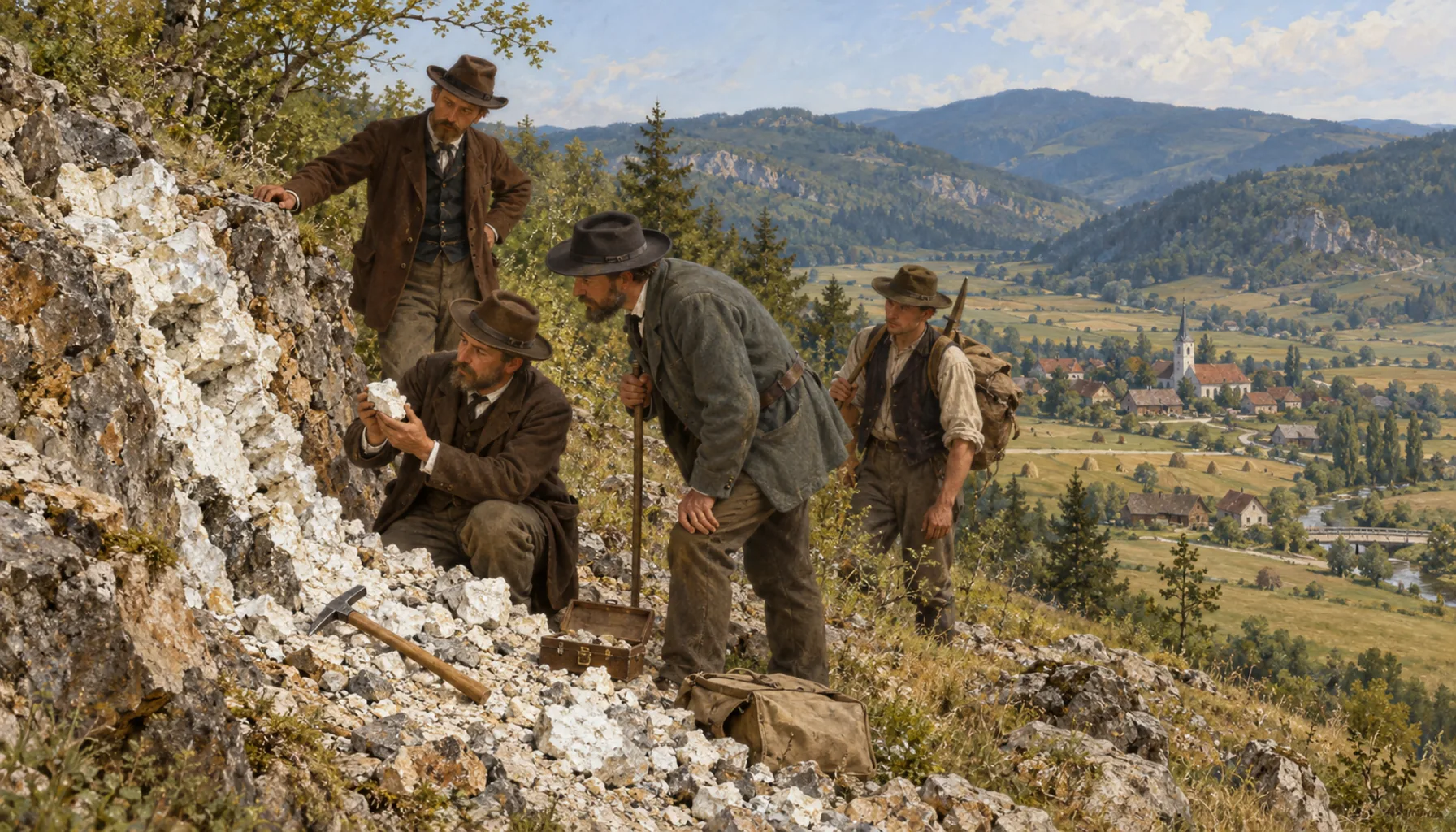
Magnesite was identified in the hills around Jelšava in 1880, and in 1894 the first magnesite works on the territory of present-day Slovakia was built here, at a place called Teplá voda. Magnesite is burned at high temperature to make magnesia, the refractory lining that steel furnaces and cement kilns cannot work without — an unglamorous material that every steel industry has to buy. The deposits here turned out to be among the more important in Europe. Almost everything about modern Jelšava follows from that one mineral lying under this particular valley.Magnezit našli v kopcoch okolo Jelšavy roku 1880 a roku 1894 tu postavili prvý magnezitový závod na území dnešného Slovenska, v polohe Teplá voda. Magnezit sa páli pri vysokej teplote na magnéziu — žiaruvzdornú vymurovku, bez ktorej sa nezaobíde ani oceliarska pec, ani cementárska rotačka. Nie je to efektná surovina, no kúpiť si ju musí každé oceliarstvo. Ložiská pri Jelšave patria k významnejším v Európe. Takmer všetko, čím je dnešná Jelšava, vyplýva z toho, že práve pod touto dolinou tá jedna surovina leží.