Banská Bystrica region · TownsBanskobystrický kraj · Mestá
JelšavaJelšava
A magnesite town on the Muráň river in Gemer, working one of the more important deposits of the mineral in Europe; an old county market town with a derelict manor house and very high unemployment.Magnezitové mesto na rieke Muráň v Gemeri, kde sa ťaží jedno z významnejších európskych ložísk tohto nerastu; staré stoličné trhové mestečko so schátraným kaštieľom a veľmi vysokou nezamestnanosťou.
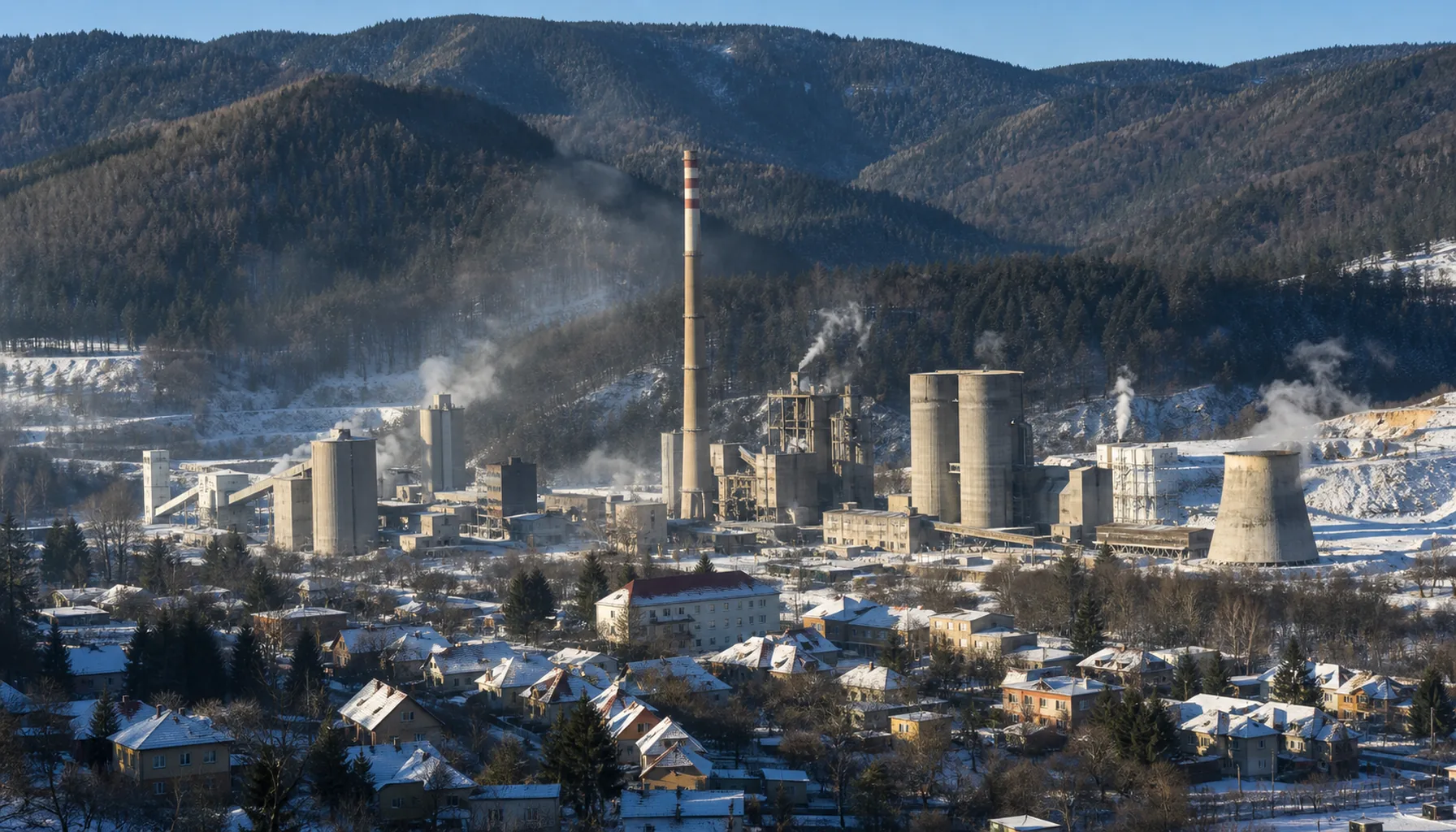
The magnesite works on the floor of the Muráň valley at JelšavaMagnezitový závod na dne Muránskej doliny pri Jelšave
Where it standsKde leží
Jelšava lies on the Muráň river in western Gemer, about ten kilometres downstream from Revúca on the road towards Tornaľa. Wooded ridges of the Revúcka vrchovina close the valley on both sides, the limestone plateau of the Muránska planina stands to the north-east, and the country only opens out well to the south, where the Muráň runs down to join the Slaná.Jelšava leží na rieke Muráň v západnom Gemeri, asi desať kilometrov po prúde od Revúcej na ceste smerom na Tornaľu. Dolinu z oboch strán zvierajú zalesnené chrbty Revúckej vrchoviny, na severovýchode stojí vápencová plošina Muránskej planiny a krajina sa otvára až ďaleko na juhu, kde Muráň steká do Slanej.
Coming down the valley, the first thing to catch the eye is not a church tower but the works: kilns, silos and stacks on the valley floor, and the pale dust of burnt magnesite settling on the verges and the roofs nearest to them.Pri ceste dolinou neupúta pozornosť ako prvá kostolná veža, ale závod: pece, silá a komíny na dne doliny a svetlý prach z páleného magnezitu, ktorý sadá na krajnice a na najbližšie strechy.
The storyHistória
Jelšava is documented from the thirteenth century and spent most of its history as a market and craft town of Gemer, serving the villages of the Muráň valley and the estates around them. For a long stretch it was one of the towns where the county's business was done, before that role settled permanently on Rimavská Sobota, and the square, the town hall and the churches on it were built for a place with more standing than it has now.Jelšava je doložená od 13. storočia a väčšinu svojich dejín prežila ako trhové a remeselnícke mesto Gemera, ktoré obsluhovalo dediny Muránskej doliny a panstvá v ich okolí. Dlhý čas patrila k mestám, kde sa vybavovali stoličné záležitosti, kým sa táto úloha natrvalo neusadila v Rimavskej Sobote — a námestie, radnica i kostoly na ňom sú stavané pre miesto s väčšou vážnosťou, než akú má dnes.
The valley was run from above by the Muráň lordship, held in the nineteenth century by the Coburg family, and the manor house at the edge of the town is what that ownership left behind. Magnesite changed everything else. The deposits worked around Jelšava and neighbouring Lubeník are among the more important in Europe, and from the early twentieth century the mine and the works rebuilt the town around themselves — housing blocks, rail sidings, shift work, and labour drawn in from the villages.Dolinu zhora ovládalo muránske panstvo, ktoré v 19. storočí držali Coburgovci; kaštieľ na okraji mesta je tým, čo po tomto vlastníctve zostalo. Všetko ostatné zmenil magnezit. Ložiská ťažené pri Jelšave a v susednom Lubeníku patria k významnejším v Európe a od začiatku 20. storočia si baňa a závod prestavali mesto na svoj obraz — bytovky, vlečky, zmenová práca a robotníci privádzaní z okolitých obcí.
After 1989 the rest of the town's employment thinned out and never came back. Long-term unemployment in the Revúca district has been among the highest in Slovakia for three decades.Po roku 1989 sa ostatná zamestnanosť v meste stenčila a už sa nevrátila. Dlhodobá nezamestnanosť v revúckom okrese patrí tri desaťročia k najvyšším na Slovensku.
What to seeČo vidieť
The centre is a long open square with the town hall on it and low plastered burgher houses down its sides — a genuine market-town plan, protected as a conservation area and in visibly mixed repair. Nothing here has been tidied up for visitors.Centrom je dlhé otvorené námestie s radnicou a nízkymi omietnutými meštianskymi domami po stranách — pravý pôdorys trhového mesta, chránený ako pamiatková zóna a v očividne rôznom stave. Nič tu nie je upravené pre návštevníkov.
The building people photograph is the manor house on the edge of the town: a large empty mansion with its roof and windows failing, its restoration discussed for years without resolution. Look at it from outside. It is a derelict building, not a museum.Budovou, ktorú si ľudia fotia, je kaštieľ na okraji mesta: veľký prázdny objekt s rozpadajúcou sa strechou a oknami, ktorého obnova sa roky rieši bez výsledku. Obzerajte si ho zvonku. Je to schátraná stavba, nie múzeum.
Most of what earns the drive is around the town rather than in it: the Muránska planina national park up the valley, with Muráň castle on its rock and the half-wild Norik horses grazing the plateau; the Gothic village churches of Gemer, whose medieval wall paintings are among the best in Central Europe, scattered south and east; and beyond them the caves and gorges of the Slovak Karst.Väčšina toho, pre čo sa sem oplatí prísť, je skôr v okolí než v samotnom meste: národný park Muránska planina hore dolinou s Muránskym hradom na brale a s polodivými koňmi norikmi na planine; gotické dedinské kostolíky Gemera, ktorých stredoveké nástenné maľby patria k najlepším v strednej Európe, roztrúsené na juh a východ; a za nimi jaskyne a tiesňavy Slovenského krasu.
Work and industryPráca a priemysel
The magnesite works is the town. SMZ, the Slovak magnesite company based here, mines magnesite underground nearby and burns it into refractory magnesia for steelworks and cement kilns, which puts a small Gemer town among the larger European producers of the material. Lubeník, a few kilometres up the valley, has a plant of its own. The district's industry is therefore close to single-track: when the refractories market softens, the whole valley feels it.Mesto stojí a padá s magnezitovým závodom. Spoločnosť SMZ so sídlom v Jelšave ťaží magnezit v podzemí neďaleko mesta a páli z neho žiaruvzdorné magnezitové materiály pre oceliarne a cementárne, čím sa malé gemerské mesto zaraďuje medzi väčších európskych výrobcov tejto suroviny. Vlastný závod má aj Lubeník pár kilometrov vyššie v doline. Priemysel okresu je preto takmer jednoodvetvový: keď trh so žiaruvzdornými materiálmi ochabne, pocíti to celá dolina.
There is little else. Forestry and sawmilling in the hills, a scatter of small firms, the schools and the public offices, and a great deal of commuting to Revúca, Rožňava and further afield, or abroad. Any honest account of Jelšava has to say that work is the district's central problem.Inak je toho málo. Lesníctvo a píly v kopcoch, hŕstka malých firiem, školy a úrady a veľa dochádzania do Revúcej, Rožňavy a ešte ďalej — alebo do zahraničia. Poctivý opis Jelšavy musí povedať, že práca je hlavným problémom okresu.
Getting thereAko sa tam dostať
Jelšava is on the road down the Muráň valley between Revúca and Tornaľa, and buses from Revúca and Rimavská Sobota are the ordinary way in. A branch railway climbs the same valley from Plešivec on the Zvolen–Košice main line, but passenger services on it have always been sparse and have been suspended in the past, so check before you count on it.Jelšava leží na ceste Muránskou dolinou medzi Revúcou a Tornaľou a bežným spôsobom, ako sa sem dostať, sú autobusy z Revúcej a Rimavskej Soboty. Tou istou dolinou stúpa aj odbočná železnica z Plešivca na hlavnej trati Zvolen – Košice, osobná doprava na nej však bola vždy riedka a v minulosti aj prerušená — pred cestou si ju overte.
Explore JelšavaObjavujte Jelšava
Every part of this place with a page of its own.Každá časť tohto miesta, ktorá má vlastnú stránku.