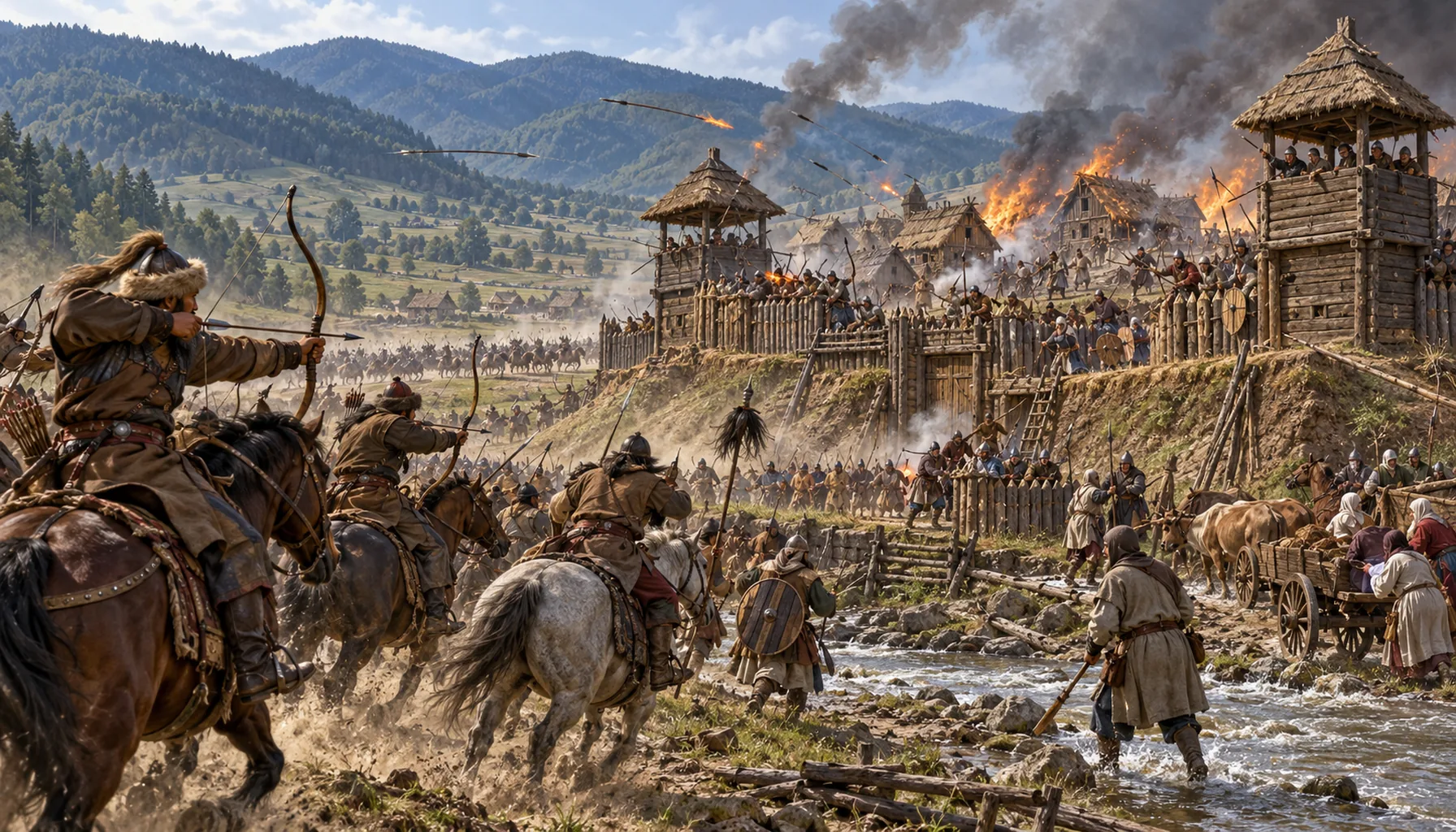
Jelšava's first appearance in writing is a direct consequence of the Mongol invasion. In 1241 a Mongol army destroyed most of the Kingdom of Hungary's wooden forts in a single season, and King Béla IV spent the years afterwards rewarding the men who had fought and pressing them to build in stone. His bull of 1243 granted part of the Muráň valley and the Štítnik estate to Filip and Detrich, ancestors of the Bebek family — and it names Jelšava. The town's documented history therefore begins not with its founding but with the paperwork of a disaster.Prvá písomná zmienka o Jelšave je priamym dôsledkom vpádu Mongolov. Roku 1241 zničilo mongolské vojsko za jedinú sezónu väčšinu drevených hradísk Uhorska a kráľ Belo IV. potom roky odmeňoval tých, ktorí bojovali, a tlačil ich stavať z kameňa. Jeho bula z roku 1243 darovala časť Muránskej doliny a štítnický majetok Filipovi a Detrichovi, predkom Bebekovcov — a Jelšavu v nej menuje. Doložené dejiny mesta sa teda nezačínajú jeho založením, ale úradným záznamom o katastrofe.