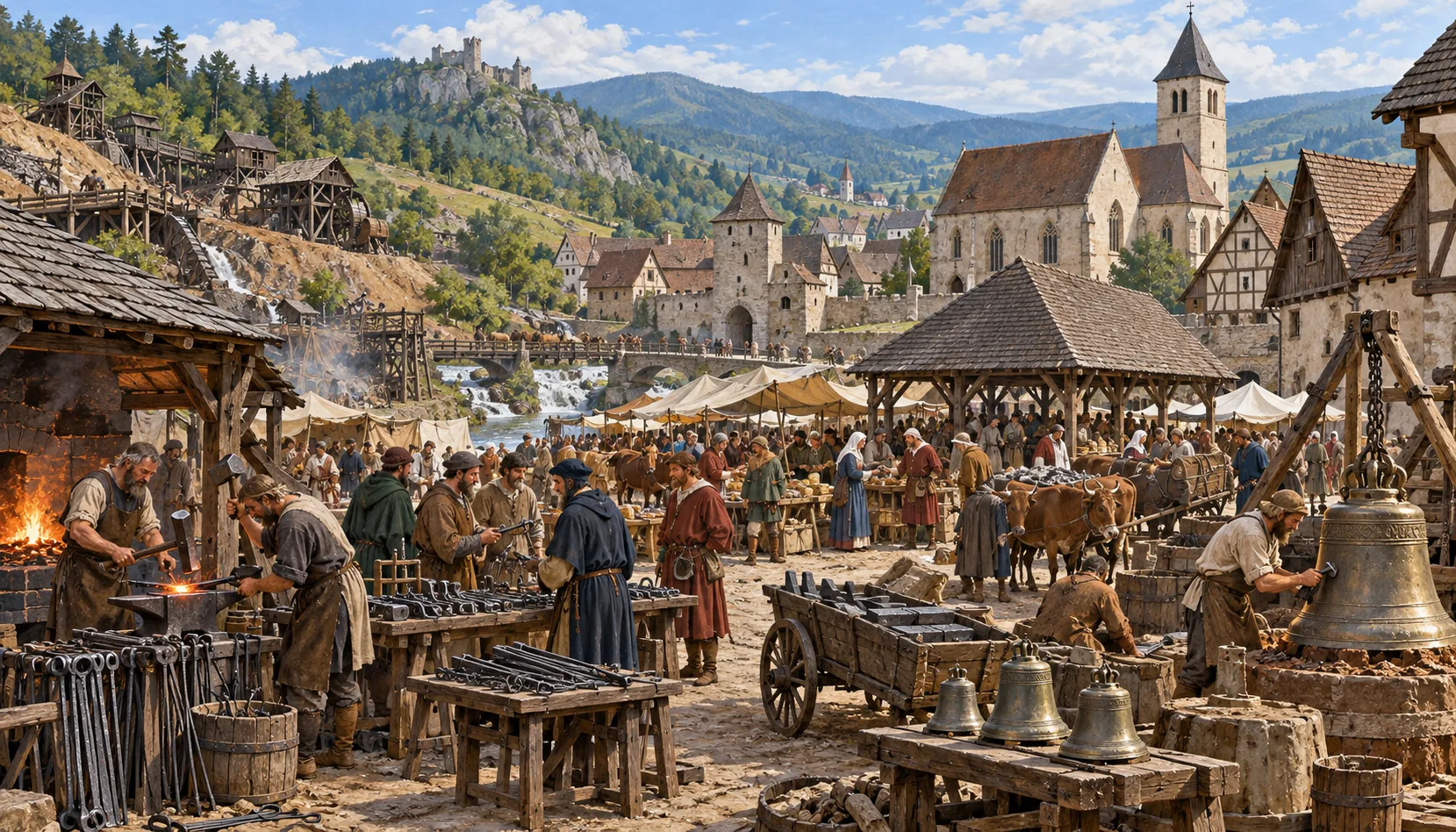
German settlers came to Jelšava in the fourteenth century, as they did across the mining districts, and the town grew into a market and craft centre for the whole valley. Iron was the business: ore from the hills, charcoal from the forests, hammer mills on the Muráň. Its guilds included bell-casters, whose work carried the town's name further than any of its lords did. The long open square in the middle of Jelšava is the shape that trade left behind, and it was laid out for a place with more standing than the town has now.Nemeckí osadníci prišli do Jelšavy v štrnástom storočí, tak ako do celého baníckeho kraja, a z mesta sa stalo trhové a remeselnícke stredisko celej doliny. Podnikalo sa so železom: ruda z kopcov, drevené uhlie z lesov, hámre na Muráni. Medzi cechmi boli aj zvonolejári, ktorých práca odniesla meno mesta ďalej než ktorýkoľvek z jeho zemepánov. Dlhé otvorené námestie v strede Jelšavy je tvar, ktorý po sebe zanechal obchod — a rozmerali ho pre miesto s väčšou vážnosťou, než akú má mesto dnes.