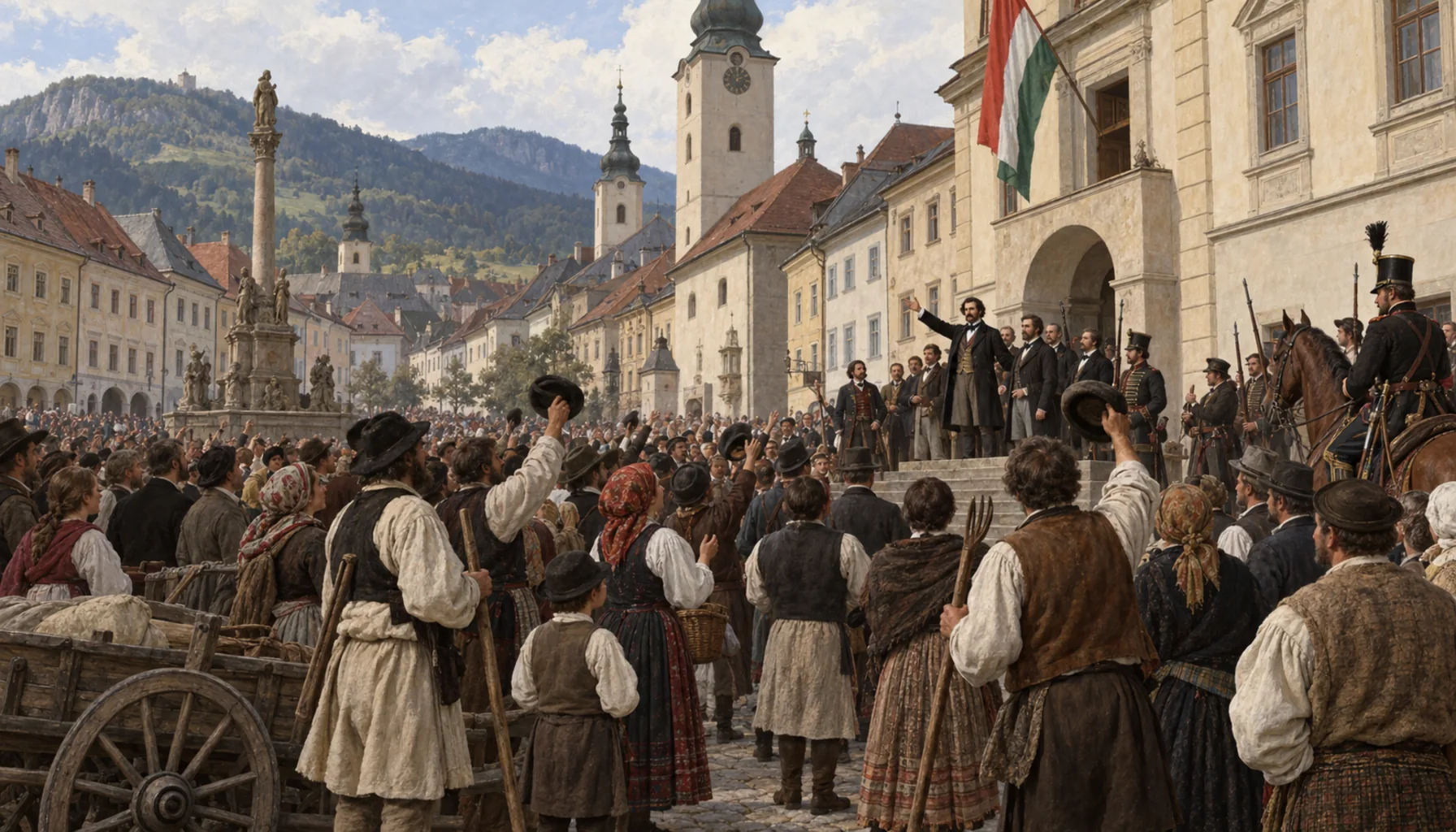
The revolution of 1848 abolished serfdom in Hungary and began dismantling the whole medieval order of estates, guilds and town privileges — and Banská Bystrica had been living on exactly those privileges since 1255. Being a free royal mining town stopped meaning very much; the guilds were wound up by law over the following decades; a miner became simply an employee, with no old brotherhood to stand behind him. What came in their place was banking and industry: a savings bank opened here in 1845 and a credit bank in 1872. It was the end of a five-hundred-year arrangement, and the town survived it only because it had already stopped depending on the mines.Revolúcia roku 1848 zrušila v Uhorsku poddanstvo a začala rozoberať celý stredoveký poriadok stavov, cechov a mestských výsad — a Banská Bystrica žila práve z takýchto výsad už od roku 1255. Byť slobodným kráľovským banským mestom prestalo veľa znamenať, cechy v nasledujúcich desaťročiach zrušil zákon a z baníka sa stal jednoducho zamestnanec, za ktorým už nestálo staré bratstvo. Namiesto toho prišli banky a priemysel: v roku 1845 tu otvorili sporiteľňu a v roku 1872 úverovú banku. Bol to koniec päťstoročného usporiadania a mesto ho prežilo len preto, že od baní už dávno nezáviselo.