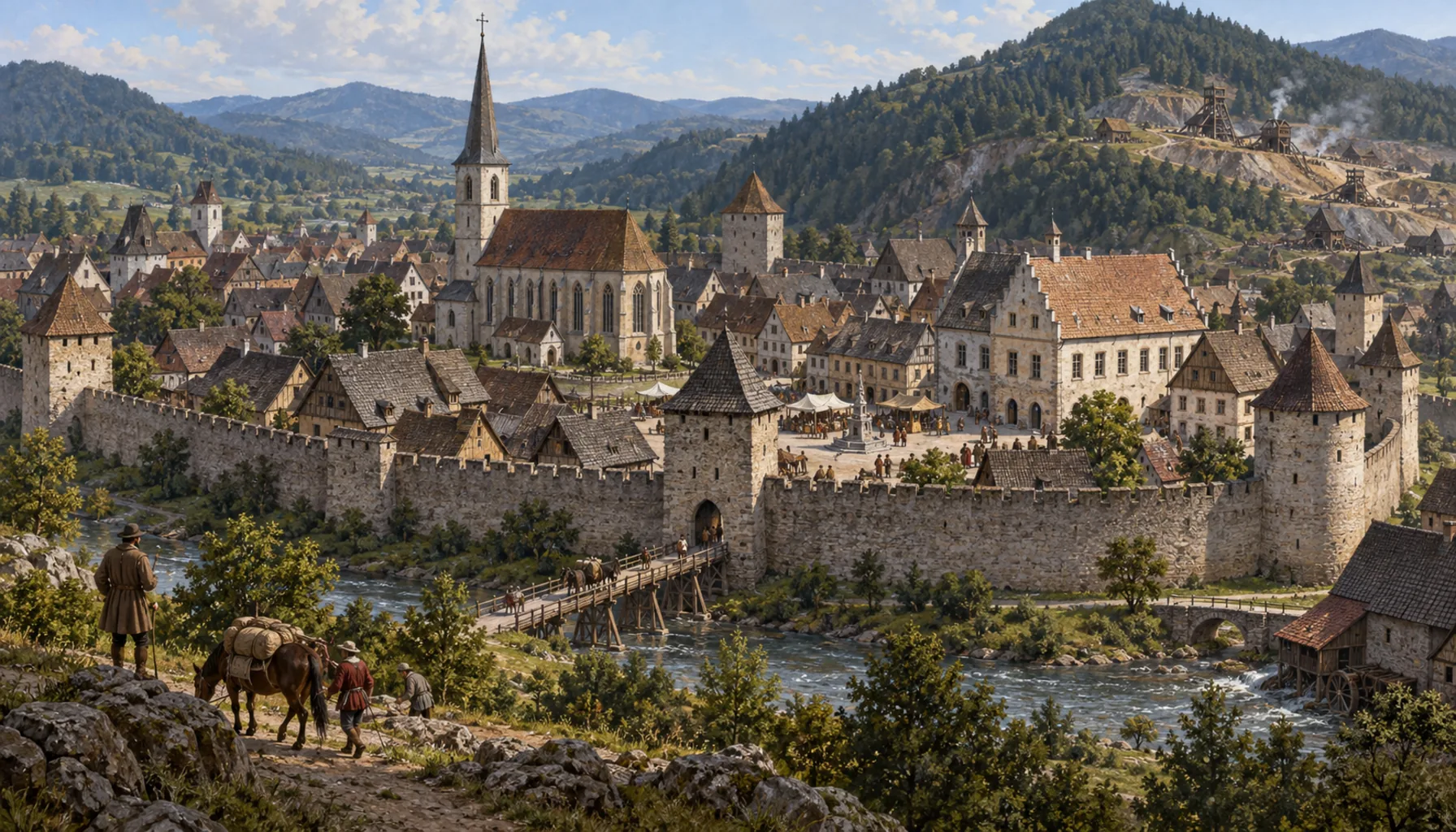
The German-speaking mining towns took up the Reformation quickly, and Banská Bystrica became one of the foremost Protestant centres in the kingdom of Hungary — church, school and council all Lutheran. Meanwhile the Ottoman frontier crept closer: Fiľakovo fell in 1554 and Modrý Kameň in 1575, a day's ride to the south. The Turks never took this town, but in 1589 it walled itself properly in stone against the danger. Two things everyone still photographs date from this period: the free-standing clock tower of 1552, which leans visibly out of true, and the Renaissance town hall of 1500 at the head of the square, now an art gallery.Nemecky hovoriace banské mestá prijali reformáciu rýchlo a Banská Bystrica sa stala jedným z popredných protestantských centier Uhorska — luteránsky bol kostol, škola aj mestská rada. Osmanská hranica sa medzitým blížila: v roku 1554 padlo Fiľakovo a v roku 1575 Modrý Kameň, deň jazdy na juh. Turci toto mesto nikdy nedobyli, ale v roku 1589 sa proti nebezpečenstvu poriadne opevnilo kamennými hradbami. Z tohto obdobia pochádzajú dve veci, ktoré dodnes fotografuje každý: voľne stojaca hodinová veža z roku 1552, viditeľne vychýlená zo zvislice, a renesančná radnica z roku 1500 na hornom konci námestia, dnes galéria.