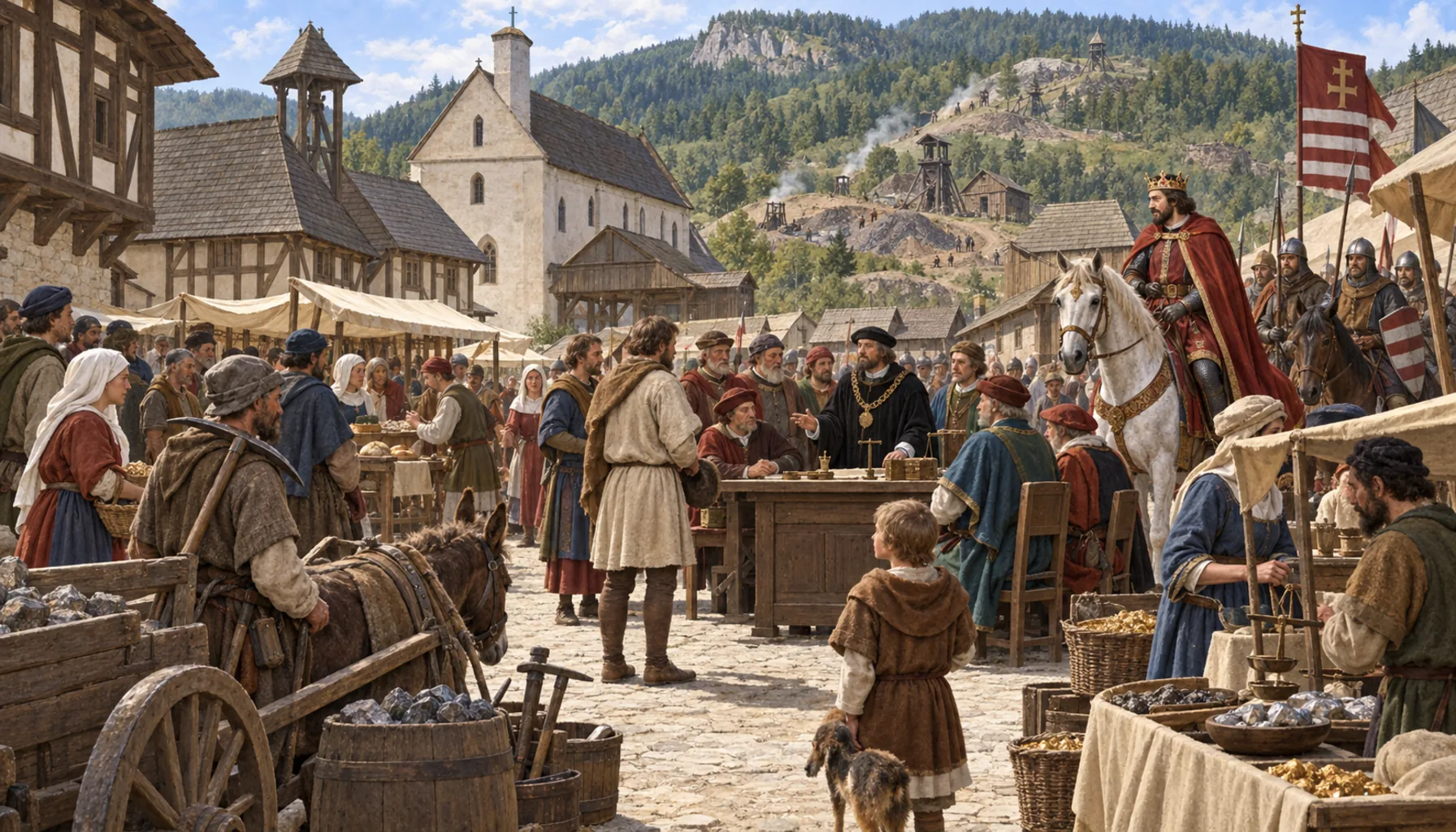
The charter turned the settlement into a free royal town: it elected its own council and judge, held markets, and answered to the king rather than to any lord. In the second half of the thirteenth century it built the Late Romanesque Church of the Virgin Mary and drew walls around it — the fortified precinct the town still calls the town castle, entered today through the barbican. It took a coat of arms modelled on the arms of the Árpád kings. And it acquired the three names it carried for centuries: Slovak Banská Bystrica, where the first word means 'mining'; German Neusohl, 'new Zvolen'; Hungarian Besztercebánya. Three names and one town, with no contradiction in it — that is what a medieval mining town in this kingdom looked like.Listina spravila z osady slobodné kráľovské mesto: volilo si vlastnú radu aj richtára, malo trhy a zodpovedalo sa kráľovi, nie zemepánovi. V druhej polovici 13. storočia postavilo neskoro románsky Kostol Panny Márie a obohnalo ho hradbami — opevnenému areálu dodnes hovoríme mestský hrad a vchádza sa doň cez barbakan. Mesto prijalo erb podľa znaku arpádovských kráľov. A dostalo tri mená, ktoré nosilo stáročia: slovenskú Banskú Bystricu, v ktorej prívlastok hovorí o baniach, nemecký Neusohl — „nový Zvolen“ — a maďarskú Besztercebányu. Tri mená, jedno mesto a nijaký rozpor v tom: presne tak vyzeralo stredoveké banské mesto v tomto kráľovstve.